KELOWNA, BC / ACCESSWIRE / December 8, 2022 / Diamcor Mining Inc. (TSXV:DMI)(OTCQB:DMIFF)(FRA:DC3A), (“Diamcor” or, the “Company”) announces today the results of its second and final tender and sale of rough diamonds recovered from the processing of quarry material from the Company’s Krone-Endora at Venetia Project (the “Project”) for the current quarter ended December 31, 2022. In the second and final tender and sale of its third fiscal quarter, the Company sold an additional 2,808.84 carats of rough diamonds generating gross revenues of USD $629,283.94, resulting in an average price of USD $224.04 per carat. This brings the total carats sold in the current quarter to 8,327.58, generating gross revenues of USD $2,054,248.33, resulting in an average price of USD $246.68 for the period. This represents a 121% increase compared to the total carats sold during the previous quarter ended September 30, 2022.
Highlights
Specials Category Diamonds. The results of the total tender and sale of rough diamonds for the current quarter included several larger gem quality rough diamonds in the Specials (+10.8 carats) category, with the largest individual diamond being 43.55 carats in size. The Company continues to recover these larger gem quality diamonds which is further confirmation of the potential for these types of rough diamonds to be recovered from the Project’s deposits.
Strong Initial Tender and Sale. The Company previously announced that in its initial tender and sale of rough diamonds for the current quarter ended December 31, 2022, a total of 5,518.74 carats were sold, generating gross revenues of USD $1,472,471.03, representing an average price of USD $266.81 per carat.
Strong Average Dollar Per Carat Continues. In the Company’s second and final tender and sale for the current quarter ended December 31, 2022, the Company sold an additional 2,808.84 carats, generating gross revenues of USD $629,283.94, representing an average price of USD $224.04 per carat.
Total Carats Sold Quarter over Quarter Increased by 121%. The combined total carats tendered and sold in the current quarter ending December 31, 2022, increased by 121% when compared to the 3,776.33 carats tendered and sold in the previous period ended September 30, 2022.
Balance of Rough Diamonds Recovered in Period. The Company has recovered and delivered approximately 1,025.35 carats of additional rough diamonds which were not tendered and sold in the two sales completed in the current quarter. These rough diamonds, along with additional rough diamonds recovered prior to December 31, 2022, will be recorded as stock on hand at the end of the current period, and are expected to be tendered in the Company’s next quarter.
Strong Revenues Continued in Current Quarter. The gross revenues from the two tenders and sales completed in the current quarter ending December 31, 2022, remained relatively consistent at USD $2,054,248.33 when compared with the previous period’s USD $2,099,951.32. The gross revenues generated in the current quarter were the result of the noted increase in total carats sold, as compared to the previous quarter where the Company sold fewer carats and the gross revenue was positively affected by the sale of a 59.35 carat gem quality special rough diamond.
“We are very pleased with the continued progress being made and our ability to achieve a 121% increase in the total carats sold quarter over quarter”, stated Mr. Dean Taylor, Diamcor CEO. “This increase in total carats tendered and sold during this quarter demonstrates the Company’s ability to generate significant revenues without the added benefit of any significant larger high-value rough diamonds, and the positive impact that achieving both of these scenarios could have for our Company moving forward. Our efforts remain focused on continuing to increase processing volumes and the recovery of larger high-valued rough diamonds moving forward.”
About Diamcor Mining Inc.
Diamcor Mining Inc. is a fully reporting publicly traded junior diamond mining company which is listed on the TSX Venture Exchange under the symbol V.DMI, and on the OTC QB International under the symbol DMIFF. The Company has a well-established operational and production history in South Africa and extensive prior experience supplying rough diamonds to the world market.
About the Tiffany & Co. Alliance
The Company has established a long-term strategic alliance and first right of refusal with Tiffany & Co. Canada, a subsidiary of world famous New York based Tiffany & Co., to purchase up to 100% of the future production of rough diamonds from the Krone-Endora at Venetia Project at then current prices to be determined by the parties on an ongoing basis. In conjunction with this first right of refusal, Tiffany & Co. Canada also provided the Company with financing to advance the Project. Tiffany & Co. is now owned by Moet Hennessy Louis Vuitton SE (LVMH), a publicly traded company which is listed on the Paris Stock Exchange (Euronext) under the symbol LVMH and on the OTC under the symbol LVMHF. For additional information on Tiffany & Co., please visit their website at www.tiffany.com.
About Krone-Endora at Venetia
In February 2011, Diamcor acquired the Krone-Endora at Venetia Project from De Beers Consolidated Mines Limited, consisting of the prospecting rights over the farms Krone 104 and Endora 66, which represent a combined surface area of approximately 5,888 hectares directly adjacent to De Beers’ flagship Venetia Diamond Mine in South Africa. On September 11, 2014, the Company announced that the South African Department of Mineral Resources had granted a Mining Right for the Krone-Endora at Venetia Project encompassing 657.71 hectares of the Project’s total area of 5,888 hectares. The Company has also submitted an application for a mining right over the remaining areas of the Project. The deposits which occur on the properties of Krone and Endora have been identified as a higher-grade “Alluvial” basal deposit which is covered by a lower-grade upper “Eluvial” deposit. The deposits are proposed to be the result of the direct-shift (in respect to the “Eluvial” deposit) and erosion (in respect to the “Alluvial” deposit) ofmaterial from the higher grounds of the adjacent Venetia Kimberlite areas. The deposits on Krone-Endora occur in two layers with a maximum total depth of approximately 15.0 metres from surface to bedrock, allowing for very low-cost mining to be employed with the potential for near-term diamond production from a known high-quality source. Krone-Endora also benefits from the significant development of infrastructure and services already in place due to its location directly adjacent to the Venetia Mine.
Qualified Person Statement:
Mr. James P. Hawkins (B.Sc., P.Geo.), is Manager of Exploration & Special Projects for Diamcor Mining Inc., and the Qualified Person in accordance with National Instrument 43-101 responsible for overseeing the execution of Diamcor’s exploration programmes and a Member of the Association of Professional Engineers and Geoscientists of Alberta (“APEGA”). Mr. Hawkins has reviewed this press release and approved of its contents.
This press release contains certain forward-looking statements. While these forward-looking statements represent our best current judgement, they are subject to a variety of risks and uncertainties that are beyond the Company’s ability to control or predict and which could cause actual events or results to differ materially from those anticipated in such forward-looking statements. Further, the Company expressly disclaims any obligation to update any forward looking statements. Accordingly, readers should not place undue reliance on forward-looking statements.
WE SEEK SAFE HARBOUR
Neither TSX Venture Exchange nor its Regulation Services Provider (as that term is defined in policies of the TSX Venture Exchange) accepts responsibility for the adequacy or accuracy of this release.
Vancouver, British Columbia–(Newsfile Corp. – November 14, 2022) – EMX Royalty Corporation (NYSE American: EMX) (TSXV: EMX) (FSE: 6E9) (the “Company” or “EMX”) is pleased to report results for the quarter ended September 30, 2022 (“Q3-2022”). The Company’s filings for the quarter are available on SEDAR at www.sedar.com, on the U.S. Securities and Exchange Commission’s website at www.sec.gov, and on EMX’s website at www.EMXroyalty.com. Financial results were prepared in accordance with International Financial Reporting Standards, as issued by the International Accounting Standards Board.
HIGHLIGHTS FOR Q3-2022
Financial Update
All dollar amounts in this news release are Canadian dollars (CDN) unless otherwise noted.
Revenue and other income for the three months ended September 30, 2022 was $9,338,000 which includes continuing royalty income from the Leeville, Gediktepe, and Balya royalty interests totaling $4,881,000. Other income of $4,113,000 relates to other property payments from partnered properties. Adjusted revenue and other income1 was $12,105,000 which included $2,767,000 for the Company’s share of royalty revenue from its effective Caserones copper royalty interest in Chile.
After recovering $4,210,000 from partners, the Company’s net royalty generation costs totaled $2,652,000.
General and administrative costs totaled $1,644,000. Impacting general and administrative costs, were higher investor relations costs for increased marketing and communications activities offset by a reduction in fees paid to consultants during the period.
Share-based payments totaled $481,000 for the period compared to $1,206,000 in Q3-2021. The aggregate share-based payments relate mainly to the fair value of stock options and restricted share units (“RSUs”) granted and vested during the period.
Finance expenses of $1,579,000 associated with the Sprott Credit Facility. The Company had repaid in full the SSR VTB note (including interest) totaling $10,774,000 in the previous quarter.
For the quarter, the Company had income from operations of $1,311,000 and a net loss of $16,346,000.
Other significant items affecting income for the three months ended September 30, 2022 included unrealized fair value losses on investments of $7,241,000, impairment charges of $7,130,000 primarily related to the Gediktepe royalty in Turkey, and foreign exchange adjustments of $518,000.
As at September 30, 2022, the Company had unrestricted cash and cash equivalents of $14,297,000, investments and long-term investments valued at $19,877,000, and a loan payable of $54,961,000.
Corporate Updates
Appointment of Independent Director In Q3-2022, EMX announced that Mr. Geoff Smith was appointed to the Board of Directors of the Company effective July 5, 2022. Mr. Smith brings to the board the benefit of 17 years of M&A and corporate finance experience having advised on or financed many of the largest, most complex and innovative streaming transactions in the past 10 years.
Purchase of Royalty Portfolio from Nevada Exploration In Q3-2022, EMX announced it had executed a purchase and sale agreement (the “Agreement”) for a portfolio of royalties, with Pediment Gold LLC, a wholly owned subsidiary of Nevada Exploration Inc. (“NGE”) for US$500,000. The portfolio consists of a 2% net smelter return royalty (“NSR”) on NGE’s Nevada gold exploration portfolio covering ~62.5 square miles in Nevada and includes four district-scale land positions as well as certain other interests. In addition, if NGE options, farms out, or sells a project, beginning on the first anniversary of the third-party agreement, EMX will receive AARs of US$20,000 that escalate US$10,000 per year and are capped at US$50,000. NGE has the right to buy back half of EMX’s 2% NSR by purchasing a 0.5% NSR interest for US$1,000,000 any time prior to the 7th anniversary of the Agreement and then, if the first NSR interest is purchased, purchasing the second 0.5% NSR interest any time prior to production for US$1,500,000.
Receipt of Initial Production Royalty Payments from Gediktepe In Q3-2022, EMX announced the receipt of initial royalty production payments from its Gediktepe royalty property in western Turkey. EMX holds a 10% NSR on oxide gold production at Gediktepe, a newly commissioned mine operated by Polimetal Madencilik Sanayi ve Ticaret A.S. (“Polimetal”), a private Turkish company. EMX has received payments for production from the months of June and July totaling US$1,842,452, inclusive of US$281,052 in Value Added Tax (“VAT”) for which EMX has credits to recover. These represent the first royalty production payments received from Gediktepe after receiving notice that the definition of commercial production had been satisfied in early June.
The June and July payments are based upon the sales of 4,490 ounces of gold and 23,309 ounces of silver in June and 4,030 ounces of gold and 44,164 ounces of silver in July. The payment for June was pro-rated for the portion of the month’s sales that took place after the satisfaction of the definition of commercial production in the royalty agreement, which took place on June 8th.
The Company has also taken an impairment in Q3-2022 against the carrying value of Gediktepe. While assessing whether any indications of impairment exist, consideration is given to external and internal sources of information. While the operation has only been in production for less than year, review of the oxide operation to date, potential for delay of the sulfide circuit along with revisions to metal pricing and Turkish royalty rates, the Company has reduced the value of Gediktepe by $7,092,000. Please refer to the Company’s interim financial statements for the nine months ended September 30, 2022 for additional information.
Receipt of Initial Production Royalty Payments from Balya North In Q3-2022, EMX announced the receipt of initial royalty production payments from its Balya North royalty property in western Turkey. EMX holds an uncapped 4% NSR royalty on metals production from Balya North, a newly commissioned lead-zinc-silver mine operated by Esan Eczacibaşi Endüstriyel Hammaddeler San. ve Tic. A.Ş. (“Esan”), a private Turkish company.
In the first half of 2022, Esan’s advancement of the Balya North asset consisted of mine development and opening of production headings and faces for exploitation in Q3 and Q4 of 2022. Production and processing of materials from Balya North in the first half of 2022 largely consisted of material stockpiled during the construction process. EMX received payments from the processing of this material totaling US$98,787, inclusive of US$15,069 in VAT. These royalty payments are from 30,223 tonnes of processed material averaging 1.68% lead, 1.34% zinc, and 39.9 g/t silver.
Receipt of Milestone Payment for the Parks-Salyer Royalty Property Subsequent to Q3-2022, EMX received a US$3,000,000 milestone payment from Arizona Sonoran Copper Company, Inc. (“ASCU”) for the Parks-Salyer royalty property (the “Royalty Property”) in Arizona. The Royalty Property was held under a lease arrangement by EMX’s wholly owned subsidiary Bronco Creek Exploration Inc. and was transferred to ASCU via Assignment and Royalty Agreements (the “Agreements”) executed earlier this year. EMX’s Royalty Property covers 158 acres of ASCU’s Parks-Salyer copper project. The milestone payment results from ASCU’s maiden resource estimate for the Parks-Salyer project that exceeds thresholds for contained copper included within EMX’s Royalty Property footprint. The Company also retains a 1.5% NSR covering the Royalty Property.
Impact of Covid 19 EMX continues to monitor developments regarding the ongoing coronavirus pandemic (“COVID-19”), with a focus on the jurisdictions in which the Company operates. EMX has implemented COVID-19 prevention, monitoring and response plans following the guidelines of international agencies and the governments and regulatory agencies of each country in which it operates. EMX’s priority is to safeguard the health and safety of its personnel and host communities, support government actions to slow the spread of COVID-19 and assess and mitigate the risks to business continuity.
Royalty and Royalty Generation Updates
EMX’s royalty and mineral property portfolio consists of 265 properties in North America, Europe, Turkey, Latin America and Australia (See Figure 1). The Company’s portfolio is comprised of the following:
Producing Royalties
5
Advanced Royalties
9
Exploration Royalties
152
Royalty Generation Properties
99
Figure 1. EMX’s royalty and mineral property portfolio.
During Q3-2022, the Company’s royalty generation business was active in North America, South America, Europe, Turkey, and Australia. The Company spent $6,862,000 and recovered $4,210,000 from partners. During the quarter the Company completed two new property agreements in Northern Europe and one new partnership in the US, and continued to grow the portfolio with new mineral property acquisitions.
Highlights from Q3-2022 include the following:
In the US the Company added to its growing royalty portfolio with the completion of one new royalty agreement on a copper project in Arizona, the advancement of ten partner-funded work programs, including five drill projects, the acquisition of four large royalty positions from Nevada Exploration covering key land positions in Nevada, and new generative work leading to the acquisition of a large (i.e., greater than 1950 hectares), prospective land position in the Silver Valley district in Idaho.
US highlights also include Arizona Sonoran Copper Company’s (“ASCU”) announcement of a maiden resource at the Parks-Salyer deposit (see ASCU news release dated September 28, 2022) and key drill intercepts within the EMX royalty footprint which include 162 meters at 1.10% copper in drill hole ECP-084 and 68.3 meters at 2.24% copper in drill hole ECP-086 (true widths unknown) (see ASCU news release dated September 7, 2022). As noted earlier, subsequent to Q3-2022, EMX received a US$3,000,000 Milestone Payment from ASCU resulting from the announced resource exceeding 200 million pounds of contained copper within the royalty footprint (see EMX new release dated October 4, 2022).
In Canada, EMX continued its summer work programs to advance and delineate targets on available properties in the portfolio as partners conducted multiple field programs, including drill programs on optioned and EMX royalty properties. EMX received $63,000 in cash payments and $4,000 in share equity payments during the quarter.
EMX’s Latin American royalty portfolio advanced through field programs at Morros Blancos and Morros Colorado by Austral Gold Limited, Block 4 by Pampa Metals Corporation, and drill programs conducted by AbraSilver Resource Corp., Aftermath Silver Ltd, and GR Silver Mining Ltd. Q3 drill programs at San Marcial, as well as Diablillos and Berenguela continue to produce significant results that expand known resources and add new discoveries at nearby targets. Highlights at San Marcial include the discovery of a new silver zone by GR Silver with a 250 meter step out drill hole intersecting 101.6 meters at 308 g/t silver with multiple higher grade sub-intervals (true width unknown) (see GR Silver news release dated August 8, 2022). An updated resource estimation for San Marcial is scheduled for Q1-2023.
As a subsequent event, AbraSilver announced an updated, open pit constrained mineral resource estimate for the Diablillos project’s Oculto deposit reported as measured and indicated of 51.3 Mtonnes averaging 66 g/t silver (109 Moz contained Ag) and 0.79 g/t gold (1.3 Moz contained Au), as well as inferred of 2.2 Mtonnes averaging 30 g/t silver (2.1 Moz contained Ag) and 0.51 g/t gold (37 Koz contained Au) (see AbraSilver news release dated November 3, 2022). The updated resource was based upon drilling through Phase II. The ongoing Phase III drill program is focused on the near surface, high-grade Southwest Zone discovery.
In Northern Europe the Company continued to expand its portfolio of projects, acquiring a gold-copper project in Sweden and a gold-cobalt project in Finland totaling nearly 20,000 hectares. Two Norwegian polymetallic projects were sold to Minco Silver in Q3 and eight partner funded projects advanced EMX royalty assets, including three drill programs. Overall, approximately US$2.3 million was spent by partners on EMX royalty properties in Northern Europe in Q3.
Drill results were announced at the Tomtebo Project in Sweden by District Metals in Q3. Highlights included 25.5 meters averaging 2.4% zinc, 2.05% lead and 65 ppm silver in drill hole TOM22-38 starting at 249 meters (true width unknown) (see District Metals news release dated August 17, 2022)2.
Drill programs were also completed in Norway at Playfair Mining’s RKV project and at Norden Crown Metals’s Burfjord project. Nineteen diamond drill holes totaling 1,107 meters were drilled at Playfair’s RKV Project and 18 diamond drill holes totaling 3,500 meters were drilled at Burfjord.
EMX continued to advance its understanding of the newly discovered cobalt enriched manganese mineralization at its 100% owned Yarrol Project in Australia. Soil sampling grids continued to expand the footprint of cobalt-rich mineralization and preparations for an upcoming drill program commenced in Q3.
Work also proceeded in the Balkans and in Morocco, where multiple exploration license applications have been filed by the Company, and new areas are being assessed for further acquisitions.
Financing Updates
Exercise of Stock Options granted by EMX Ending Q3-2022, 1,045,000 stock options were exercised at $1.20 per share pursuant to the Company’s Stock Option Plan, which generated proceeds of $1,254,000 to EMX.
Investment Updates As at September 30, 2022, the Company had investments totaling $19,877,000 which included $13,651,000 in various public and private entities, and $6,226,000 in non-current investments. The Company will continue to generate cash flow by selling certain of its investments when appropriate.
Strategic Investment in Premium Nickel Resources Between 2020 and 2022, EMX acquired 5,412,702 shares of Premium Nickel Resources Corporation, a private company with nickel-copper-cobalt assets in Botswana. On April 26, 2022, PNR announced the execution of a definitive agreement for a reverse takeover transaction (“RTO”) with North American Nickel Inc. (“NAN”) to create a new reporting entity, Premium Nickel Resources Ltd (“PNRL”). PNRL began trading on the TSX Venture Exchange in Q3, having completed the RTO process with NAN. As a result of the RTO transaction, EMX’s interests were converted to 5,704,987 shares of PNRL, which represents roughly 5% of the issued and outstanding shares of PNRL.
Subsequent to the listing transaction, PNRL announced initial results from its ongoing diamond drilling program at its 100% owned Selebi nickel-copper-cobalt project in Botswana (see PNRL news release dated August 17, 2022). Highlights included an intercept of 25.65 meters of 0.95% nickel, 2.03% copper and 0.04 % cobalt in drill hole SMD-22-001 starting at 1,374.5 meters (true width estimated to be 70-80% of drilled interval). This was the first hole drilled in the 2022 program, and on September 13, 2022, PNRL announced further intercepts from a wedge drilled off hole SMD-22-001 (hole SMD-22-001-W1) of 4.35 meters averaging 0.98% nickel, 1.61% copper and 0.02% cobalt starting at 1,363 meters and 12.55 meters of 0.39% nickel, 1.99% copper and 0.02% cobalt starting at 1,385.65 meters (true thicknesses estimated to be 70-80% of the drilled interval) (see PNRL news release dated September 13, 2022). Assay results from other holes are pending3.
OUTLOOK
This year will see an increase in revenue and other income coming from our cash flowing royalties, including Leeville in Nevada, Gediktepe and Balya in Turkey, potentially Timok in Serbia (pending conclusion of the royalty rate discussions with Zijin), and our effective royalty interest on Caserones in Chile. As in previous years, production royalties will continue to be complemented by option, advance royalty, and other pre-production payments from partnered projects across the global portfolio. As a royalty holder, the Company has limited, if any, access to information on properties for which it holds royalties. Accordingly, the Company has not, and does not anticipate that it will have the ability to, provide guidance or outlook as to future production.
So far in 2022, EMX has acquired an additional (effective) 0.3155% royalty interest on Caserones, completed a $12,580,000 (US $10,000,000) private placement with Franco-Nevada, made a strategic investment in PNR, and repaid in full the vendor take back note issued to SSR Mining Inc.
The Company will continue to strengthen its balance sheet over the course of the year by looking to retire portions of its long-term debt, continuing to evaluate equity markets (including the filing of a shelf prospectus), and the ongoing monetization of the Company’s marketable securities.
EMX is well funded to identify and pursue new royalty and investment opportunities, while further filling a pipeline of royalty generation properties that provide opportunities for additional cash flow, as well as exploration, development, and production success.
QUALIFIED PERSONS
Michael P. Sheehan, CPG, a Qualified Person as defined by NI 43-101 and employee of the Company, has reviewed, verified and approved the above technical disclosure on North America, Latin America, and Strategic Investments. Eric P. Jensen, CPG, a Qualified Person as defined by NI 43-101 and employee of the Company, has reviewed, verified and approved the above technical disclosure on Europe, Turkey, and Australia.
About EMX. EMX is a precious, base and battery metals royalty company. EMX’s investors are provided with discovery, development, and commodity price optionality, while limiting exposure to risks inherent to operating companies. The Company’s common shares are listed on the NYSE American Exchange and TSX Venture Exchange under the symbol “EMX”, and also trade on the Frankfurt exchange under the symbol “6E9”. Please see www.EMXroyalty.com for more information.
Neither the TSX Venture Exchange nor its Regulation Services Provider (as that term is defined in policies of the TSX Venture Exchange) accepts responsibility for the adequacy or accuracy of this release
Forward-Looking Statements This news release may contain “forward looking statements” that reflect the Company’s current expectations and projections about its future results. These forward-looking statements may include statements regarding perceived merit of properties, exploration results and budgets, mineral reserves and resource estimates, work programs, capital expenditures, timelines, strategic plans, market prices for precious and base metal, or other statements that are not statements of fact. When used in this news release, words such as “estimate,” “intend,” “expect,” “anticipate,” “will”, “believe”, “potential” and similar expressions are intended to identify forward-looking statements, which, by their very nature, are not guarantees of the Company’s future operational or financial performance, and are subject to risks and uncertainties and other factors that could cause the Company’s actual results, performance, prospects or opportunities to differ materially from those expressed in, or implied by, these forward-looking statements. These risks, uncertainties and factors may include, but are not limited to unavailability of financing, failure to identify commercially viable mineral reserves, fluctuations in the market valuation for commodities, difficulties in obtaining required approvals for the development of a mineral project, increased regulatory compliance costs, expectations of project funding by joint venture partners and other factors.
Readers are cautioned not to place undue reliance on these forward-looking statements, which speak only as of the date of this news release or as of the date otherwise specifically indicated herein. Due to risks and uncertainties, including the risks and uncertainties identified in this news release, and other risk factors and forward-looking statements listed in the Company’s MD&A for the quarter ended September 30, 2022 (the “MD&A”), and themost recently filed Annual Information Form (“AIF”) for the year ended December 31, 2021, actual events may differ materially from current expectations. More information about the Company, including the MD&A, the AIF and financial statements of the Company, is available on SEDAR at www.sedar.com and on the SEC’s EDGAR website at www.sec.gov.
1 Adjusted revenue and other income, and adjusted cash provided by (used in) operating activities are non-IFRS financial measures with no standardized meaning under IFRS and might not be comparable to similar financial measures disclosed by other issuers. Refer to the “Non-IFRS financial measures” section on page 24 of the Company’s MD&A for the period ended September 30, 2022 for more information on each non-IFRS financial measure. 2 EMX has not done independent and sufficient to work verify the drill results as published by District Metals, and these results should not be relied upon until they are confirmed. However, EMX believes these results to be reliable and relevant. 3 EMX has not done independent and sufficient to work verify the drill results as published by Premium Nickel Resources Ltd, and these results should not be relied upon until they are confirmed. However, EMX believes these results to be reliable and relevant.
KELOWNA, BC / ACCESSWIRE / November 14, 2022 / Diamcor Mining Inc. (TSX-V:DMI)(OTCQB:DMIFF)(FRA:DC3A), (“Diamcor” or, the “Company”) announces today the results of its first tender and sale of rough diamonds recovered from the processing of quarry material from the Company’s Krone-Endora at Venetia Project (the “Project”) held during the current quarter. In the first tender and sale of its third fiscal quarter, the Company sold a total of 5,518.74 carats of rough diamonds including several rough diamonds in the Specials (+10.8 carats) category, with the largest being 43.55 carats in size, generating gross revenues of USD $1,472,471.03, resulting in an average price of USD $266.81 per carat. The total carats sold in this initial sale of the current quarter represents a 148% increase in the carats sold during the previous quarter.
Highlights
Specials Category Diamonds. The results of the first tender and sale of the current quarter included several larger gem quality rough diamonds in the Specials category including a 43.55 carat diamond. The Company continues to recover these larger gem quality diamonds which is further confirmation of the potential for these types of rough diamonds to be recovered from the Project’s deposits.
148% Increase. In total, 5,518.74 carats have now been sold in the current quarter to date, generating gross revenues of USD $1,472,471.03 resulting in an average price of USD $266.81. The total number of carats sold to date this quarter is a 148% increase quarter over quarter. A second tender and sale is expected before the end of this year which would further increase volumes and revenues in the current quarter.
“We are very pleased with the processing plant refinements implemented to date resulting in the increased volumes delivered and sold at our latest tender and sale. Representing a 148% increase in carats sold quarter over quarter, we look forward to adding to this increase in our next sale before the year end”, stated Mr. Dean Taylor, Diamcor CEO. “Along with receiving a higher dollar per carat average that is more than double the world average from this current sale, the Company continues to recover large gem quality diamonds in the Specials category. We look forward to continuing our processing refinements with the potential of increasing processing volumes and resulting revenues, quarter over quarter going forward.”
About Diamcor Mining Inc.
Diamcor Mining Inc. is a fully reporting publicly traded junior diamond mining company which is listed on the TSX Venture Exchange under the symbol V.DMI, and on the OTC QB International under the symbol DMIFF. The Company has a well-established operational and production history in South Africa and extensive prior experience supplying rough diamonds to the world market.
About the Tiffany & Co. Alliance
The Company has established a long-term strategic alliance and first right of refusal with Tiffany & Co. Canada, a subsidiary of world famous New York based Tiffany & Co., to purchase up to 100% of the future production of rough diamonds from the Krone-Endora at Venetia Project at then current prices to be determined by the parties on an ongoing basis. In conjunction with this first right of refusal, Tiffany & Co. Canada also provided the Company with financing to advance the Project. Tiffany & Co. is now owned by Moet Hennessy Louis Vuitton SE (LVMH), a publicly traded company which is listed on the Paris Stock Exchange (Euronext) under the symbol LVMH and on the OTC under the symbol LVMHF. For additional information on Tiffany & Co., please visit their website at www.tiffany.com.
About Krone-Endora at Venetia
In February 2011, Diamcor acquired the Krone-Endora at Venetia Project from De Beers Consolidated Mines Limited, consisting of the prospecting rights over the farms Krone 104 and Endora 66, which represent a combined surface area of approximately 5,888 hectares directly adjacent to De Beers’ flagship Venetia Diamond Mine in South Africa. On September 11, 2014, the Company announced that the South African Department of Mineral Resources had granted a Mining Right for the Krone-Endora at Venetia Project encompassing 657.71 hectares of the Project’s total area of 5,888 hectares. The Company has also submitted an application for a mining right over the remaining areas of the Project. The deposits which occur on the properties of Krone and Endora have been identified as a higher-grade “Alluvial” basal deposit which is covered by a lower-grade upper “Eluvial” deposit. The deposits are proposed to be the result of the direct-shift (in respect to the “Eluvial” deposit) and erosion (in respect to the “Alluvial” deposit) of material from the higher grounds of the adjacent Venetia Kimberlite areas. The deposits on Krone-Endora occur in two layers with a maximum total depth of approximately 15.0 metres from surface to bedrock, allowing for a very low-cost mining operation to be employed with the potential for near-term diamond production from a known high-quality source. Krone-Endora also benefits from the significant development of infrastructure and services already in place due to its location directly adjacent to the Venetia Mine.
Qualified Person Statement:
Mr. James P. Hawkins (B.Sc., P.Geo.), is Manager of Exploration & Special Projects for Diamcor Mining Inc., and the Qualified Person in accordance with National Instrument 43-101 responsible for overseeing the execution of Diamcor’s exploration programmes and a Member of the Association of Professional Engineers and Geoscientists of Alberta (“APEGA”). Mr. Hawkins has reviewed this press release and approved of its contents.
This press release contains certain forward-looking statements. While these forward-looking statements represent our best current judgement, they are subject to a variety of risks and uncertainties that are beyond the Company’s ability to control or predict and which could cause actual events or results to differ materially from those anticipated in such forward-looking statements. Further, the Company expressly disclaims any obligation to update any forward looking statements. Accordingly, readers should not place undue reliance on forward-looking statements.
WE SEEK SAFE HARBOUR
Neither TSX Venture Exchange nor its Regulation Services Provider (as that term is defined in policies of the TSX Venture Exchange) accepts responsibility for the adequacy or accuracy of this release.
Continued Growth and Larger Diamonds result in Net Income of $1,016,568
KELOWNA, BC / ACCESSWIRE / October 26, 2022 / Diamcor Mining Inc. (TSXV.DMI)(OTCQB:DMIFF)(FRA:DC3A), (“Diamcor” or, the “Company”) today reported its quarterly financial statements and related management discussion and analysis for the quarter ended September 30, 2022.
Highlights
Operating results improved quarter over quarter with the tender and sale of 3,776.33 carats of rough diamonds for the interim period ended September 30, 2022 (3,061.70 – June 30, 2022), generating increased revenue of (USD) $2,099,951.32 ($557,559.22 – June 30, 2022), resulting in an average price of (USD) $556.08 per carat ($182.11 – June 30, 2022).
The Company recorded a net income of $1,016,568 for the interim period ended September 30, 2022, as compared to a net loss of $918,953 in the previous interim period ended June 30, 2022
The above total revenue and average price per carat was positively affected by the sale of a 59.35 carat gem quality special rough diamond.
The Company’s focus during the period continued to be on managing costs and remaining supply chain delays, the optimization of operational hours to minimize the effects of national load-shedding in South Africa by the state-run national power supplier (Eskom), and continued refinements to processing plants and equipment aimed at sustaining increased processing volumes for the long-term.
“We are very pleased with the continued quarterly growth achieved again for the period ending September 30, 2022, and remain optimistic given the recent announcement of the delivery of 5,833 carats for the first tender and sale of this quarter” stated Mr. Dean Taylor, Diamcor CEO.
The Company’s recently filed financial statements for the quarter ended September 30, 2022, and accompanying management discussion and analysis can be viewed by interested parties on SEDAR at www.sedar.com.
About Diamcor Mining Inc. Diamcor Mining Inc. is a fully reporting publicly traded junior diamond mining company which is listed on the TSX Venture Exchange under the symbol V.DMI, the OTCQB International under the symbol DMIFF, and on the Frankfurt Exchange under the symbol DC3A. The Company has a well-established operation in South Africa with a proven history of supplying rough diamonds to the world market. Diamcor has established a long-term strategic alliance with world famous luxury retailer Tiffany & Co. and is now in the final stages of developing the Krone-Endora at Venetia Project co-located with De Beer’s flagship Venetia mine.
About the Tiffany & Co. Alliance The Company has established a long-term strategic alliance and first right of refusal with Tiffany & Co. Canada, a subsidiary of world famous New York based Tiffany & Co., to purchase up to 100% of the future production of rough diamonds from the Krone-Endora at Venetia Project at then current prices to be determined by the parties on an ongoing basis. In conjunction with this first right of refusal, Tiffany & Co. Canada also provided the Company with financing to advance the Project. Tiffany & Co. is owned by Moet Hennessy Louis Vuitton SE (LVMH), a publicly traded company which is listed on the Paris Stock Exchange (Euronext) under the symbol LVMH and on the OTC under the symbol LVMHF. For additional information on Tiffany & Co., please visit their website at www.tiffany.com.
About Krone-Endora at Venetia In February 2011, Diamcor acquired the Krone-Endora at Venetia Project from De Beers Consolidated Mines Limited, consisting of the prospecting rights over the farms Krone 104 and Endora 66, which represent a combined surface area of approximately 5,888 hectares directly adjacent to De Beers’ flagship Venetia Diamond Mine in South Africa. On September 11, 2014, the Company announced that the South African Department of Mineral Resources had granted a Mining Right for the Krone-Endora at Venetia Project encompassing 657.71 hectares of the Project’s total area of 5,888 hectares. The Company has also submitted an application for a mining right over the remaining areas of the Project. The deposits which occur on the properties of Krone and Endora have been identified as a higher-grade “Alluvial” basal deposit which is covered by a lower-grade upper “Eluvial” deposit. The deposits are proposed to be the result of the direct-shift (in respect to the “Eluvial” deposit) and erosion (in respect to the “Alluvial” deposit) of material from the higher grounds of the adjacent Venetia Kimberlite areas. The deposits on Krone-Endora occur in two layers with a maximum total depth of approximately 15.0 metres from surface to bedrock, allowing for a very low-cost mining operation to be employed with the potential for near-term diamond production from a known high-quality source. Krone-Endora also benefits from the significant development of infrastructure and services already in place due to its location directly adjacent to the Venetia Mine.
Qualified Person Statement: Mr. James P. Hawkins (B.Sc., P.Geo.), is Manager of Exploration & Special Projects for Diamcor Mining Inc., and the Qualified Person in accordance with National Instrument 43-101 responsible for overseeing the execution of Diamcor’s exploration programmes and a Member of the Association of Professional Engineers and Geoscientists of Alberta (“APEGA”). Mr. Hawkins has reviewed this press release and approved of its contents.
On behalf of the Board of Directors Mr. Dean H. Taylor President & CEO Diamcor Mining Inc. www.diamcormining.com
For further information contact: Mr. Dean H. Taylor Diamcor Mining Inc DeanT@Diamcor.com +1 250 862-3212
This press release contains certain forward-looking statements. While these forward-looking statements represent our best current judgement, they are subject to a variety of risks and uncertainties that are beyond the Company’s ability to control or predict and which could cause actual events or results to differ materially from those anticipated in such forward-looking statements. Further, the Company expressly disclaims any obligation to update any forward-looking statements. Accordingly, readers should not place undue reliance on forward-looking statements.
WE SEEK SAFE HARBOUR
Neither TSX Venture Exchange nor its Regulation Services Provider (as that term is defined in policies of the TSX Venture Exchange) accepts responsibility for the adequacy or accuracy of this release.
KELOWNA, BC / ACCESSWIRE / October 19, 2022 / Diamcor Mining Inc. (TSXV:DMI), (OTCQB:DMIFF), (FRA:DC3A), (“Diamcor” or, the “Company”) announced today it has delivered approximately 5,593 carats of rough diamonds recovered from the processing of quarry material at the Company’s Krone-Endora at Venetia Project (the “Project”) for the Company’s first tender and sale of the current quarter ending December 31, 2022. The total includes several individual gem quality diamonds in the Specials (+10.8 carats) category, with the largest being 43.55 carats in size. Despite being the first of two planned tenders and sales in the quarter, the total rough diamonds delivered to date already represent an increase of 148% over the total carats sold in the previous quarter.
“This initial delivery of rough diamonds for the current quarter continues to demonstrate our Company’s ability to successfully adjust and refine operations as required to achieve sustained operational growth”, commented Diamcor CEO Mr. Dean Taylor. “The continued recovery of several individual gem quality rough diamonds in the +10.8 carat specials category, including the 43.55 carat stone, confirms the Project’s potential to achieve strong average dollar per carat results, and the recovery of larger, higher value, gem quality diamonds.“
About Diamcor Mining Inc.
Diamcor Mining Inc. is a fully reporting publicly traded junior diamond mining company which is listed on the TSX Venture Exchange under the symbol V.DMI, the OTCQB International under the symbol DMIFF, and on the Frankfurt Exchange under the symbol DC3A. The Company has a well-established operation in South Africa with a proven history of supplying rough diamonds to the world market. Diamcor has established a long-term strategic alliance with world famous luxury retailer Tiffany & Co. and is now in the final stages of developing the Krone-Endora at Venetia Project co-located with De Beer’s flagship Venetia mine.
About the Tiffany & Co. Alliance
The Company has established a long-term strategic alliance and first right of refusal with Tiffany & Co. Canada, a subsidiary of world famous New York based Tiffany & Co., to purchase up to 100% of the future production of rough diamonds from the Krone-Endora at Venetia Project at then current prices to be determined by the parties on an ongoing basis. In conjunction with this first right of refusal, Tiffany & Co. Canada also provided the Company with financing to advance the Project. Tiffany & Co. is owned by Moet Hennessy Louis Vuitton SE (LVMH), a publicly traded company which is listed on the Paris Stock Exchange (Euronext) under the symbol LVMH and on the OTC under the symbol LVMHF. For additional information on Tiffany & Co., please visit their website at www.tiffany.com.
About Krone-Endora at Venetia
In February 2011, Diamcor acquired the Krone-Endora at Venetia Project from De Beers Consolidated Mines Limited, consisting of the prospecting rights over the farms Krone 104 and Endora 66, which represent a combined surface area of approximately 5,888 hectares directly adjacent to De Beers’ flagship Venetia Diamond Mine in South Africa. On September 11, 2014, the Company announced that the South African Department of Mineral Resources had granted a Mining Right for the Krone-Endora at Venetia Project encompassing 657.71 hectares of the Project’s total area of 5,888 hectares. The Company has also submitted an application for a mining right over the remaining areas of the Project. The deposits which occur on the properties of Krone and Endora have been identified as a higher-grade “Alluvial” basal deposit which is covered by a lower-grade upper “Eluvial” deposit. The deposits are proposed to be the result of the direct-shift (in respect to the “Eluvial” deposit) and erosion (in respect to the “Alluvial” deposit) of material from the higher grounds of the adjacent Venetia Kimberlite areas. The deposits on Krone-Endora occur in two layers with a maximum total depth of approximately 15.0 metres from surface to bedrock, allowing for a very low-cost mining operation to be employed with the potential for near-term diamond production from a known high-quality source. Krone-Endora also benefits from the significant development of infrastructure and services already in place due to its location directly adjacent to the Venetia Mine.
Qualified Person Statement:
Mr. James P. Hawkins (B.Sc., P.Geo.), is Manager of Exploration & Special Projects for Diamcor Mining Inc., and the Qualified Person in accordance with National Instrument 43-101 responsible for overseeing the execution of Diamcor’s exploration programmes and a Member of the Association of Professional Engineers and Geoscientists of Alberta (“APEGA”). Mr. Hawkins has reviewed this press release and approved of its contents.
This press release contains certain forward-looking statements. While these forward-looking statements represent our best current judgement, they are subject to a variety of risks and uncertainties that are beyond the Company’s ability to control or predict and which could cause actual events or results to differ materially from those anticipated in such forward-looking statements. Further, the Company expressly disclaims any obligation to update any forward looking statements. Accordingly, readers should not place undue reliance on forward-looking statements.
WE SEEK SAFE HARBOUR
Neither TSX Venture Exchange nor its Regulation Services Provider (as that term is defined in policies of the TSX Venture Exchange) accepts responsibility for the adequacy or accuracy of this release.
Follow the authors@Edspencive+ Get alerts forEddie Spence+ Get alerts forSing Yee
In this article
There’s a global migration underway in the gold market, as western investors dump bullion while Asian buyers take advantage of a tumbling price to snap up cheap jewelry and bars.
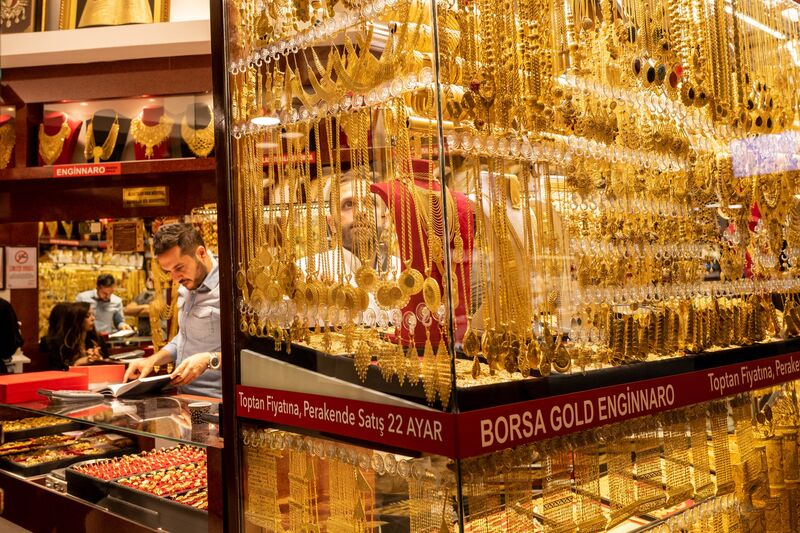
Rising rates that make gold less attractive as an investment mean that large volumes of metal are being drawn out of vaults in financial centers like New York and heading east to meet demand in Shanghai’s gold market or Istanbul’s Grand Bazaar.
In fact, it can’t move fast enough.
Logistical issues combined with quirks of the market are making it difficult for traders to get enough bullion where it’s wanted. As a result, gold and silver are selling at unusually large premiums over the global benchmark price in some Asian markets.
“The incentive to hold gold is a lot lower. It’s going from west to east now,” said Joseph Stefans, head of trading at MKS PAMP SA, a gold refining and trading firm. “We are trying to keep up as best we can.”
Gold items displayed in the window of a jewelry shop inside the Grand Bazaar in Istanbul, Turkey.Photographer: Nicole Tung/Bloomberg
The rotation of metal around the world is part of a gold-market cycle that has repeated for decades: when investors retreat and prices drop, Asian buying picks up and precious metals flow east — helping to put a floor on the gold price during times of weakness.Sponsored ContentWomen are Finding Their Voices in Financial PlanningFirst Horizon Bank
Then, when gold eventually rallies again, much of it returns to sit in bank vaults beneath the streets of New York, London and Zurich.
Since peaking in March, gold prices have tumbled 18% as the Federal Reserve’s aggressive rate hikes caused mass liquidation by financial investors.
More than 527 tons of gold has poured out of New York and London vaults that back the two biggest Western markets since the end of April, according to data from the CME Group Inc. and London Bullion Market Association.
At the same time, shipments are rising into big Asian gold consumers like China, whose imports hit a four-year high in August.
Gold Flows East
Asia has net-imported gold from the West since Aprilhttps://www.bloomberg.com/toaster/v2/charts/8e101e907831c2855279f794770d9a13.html?brand=business&webTheme=default&web=true&hideTitles=true
Source: Swiss Federal Customs Administration
Note: Data shows net-imports from Switzerland from May to August
While plenty of gold is heading east, it’s still not enough to meet demand. Gold in Dubai and Istanbul or on the Shanghai Gold Exchange has traded at multi-year premiums to the London benchmark in recent weeks, according to MKS PAMP — a sign that buying is outstripping imports.
“Demand typically picks up when prices fall,” said Philip Klapwijk, managing director of Hong Kong-based consultant Precious Metals Insights Ltd. “Buyers want to source metal at the lower price and in the local physical market in question there may not be sufficient metal available when the price falls, so the local premium increases.”
Gold in Thailand is also trading at a premium to London prices, due to a lack of supply and weakness in the local currency, according to Jitti Tangsithpakdi, the president of Thailand’s Gold Traders Association.
In India, it is silver that is seeing big premiums. The differential has soared recently to $1, more than triple the usual level, according to consultancy Metals Focus Ltd.
“Right now the demand for silver is huge as traders restock,” said Chirag Sheth, the firm’s principal consultant in Mumbai. “Premiums could remain elevated during the festival season that concludes with Diwali.”
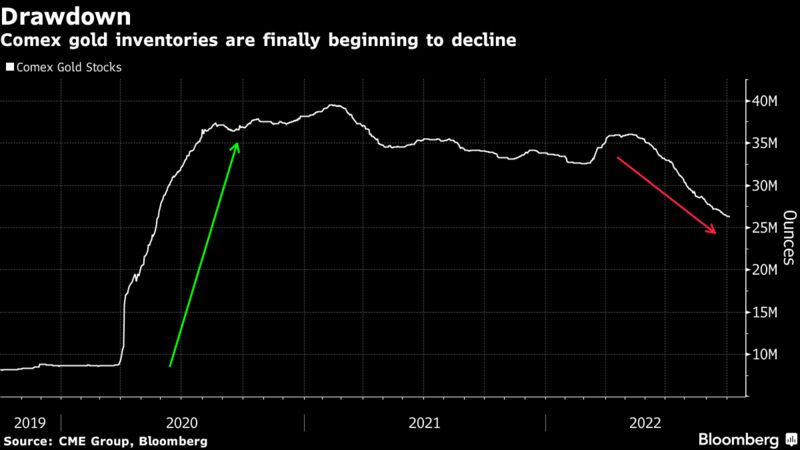
Analysts say that much of the precious metals feeding Asia’s appetite is coming out of vaults run by CME Group, which back the Comex futures market in New York.
Market dislocations early in the pandemic drove a massive surge in prices there, forcing banks to build large stockpiles to cover their futures positions. In recent months gold has traded at a discount on the Comex compared to London, and those inventories are now being drawn down to meet Asian demand.
However, it can be slow going, partly because Asian buyers tend to prefer one-kilogram bars over larger sizes. To fill a standard shipment box of 25 kg of gold, physical traders must take delivery of multiple Comex gold futures, often backed by bullion in different warehouses.
Traders say they are facing other logistical challenges as well, which are contributing to the high Asian premiums.
“Getting stuff on boats or on planes is a bit harder than it used to be,” said MKS PAMP’s Stefans. “It’s really just a classic example of demand far out-pacing supply.”
— With assistance by Swansy Afonso, Suttinee Yuvejwattana and Masumi Suga
Vancouver, British Columbia–(Newsfile Corp. – October 4, 2022) – EMX Royalty Corporation (NYSE American: EMX) (TSXV: EMX) (FSE: 6E9) (the “Company” or “EMX”) is pleased to announce that it will receive a US$3 million milestone payment from Arizona Sonoran Copper Company, Inc. (TSX: ASCU) (“ASCU”) for the Parks-Salyer royalty property (the “Royalty Property”) in Arizona. The Royalty Property was held under a lease arrangement by EMX’s wholly owned subsidiary Bronco Creek Exploration Inc., and was transferred to ASCU via Assignment and Royalty Agreements (the “Agreements”) executed earlier this year (see EMX news release dated February 10, 2022). EMX’s Royalty Property covers 158 acres of ASCU’s Parks-Salyer copper project. The milestone payment results from ASCU’s maiden resource estimate for the Parks-Salyer project that exceeds thresholds for contained copper included within EMX’s Royalty Property footprint. The Company also retains a 1.5% net smelter return (“NSR”) royalty covering the Royalty Property.
EMX’s Parks-Salyer Royalty Property provides an example of a significant pre-production payment to the Company resulting from its copper porphyry royalty generation program in Arizona. The Property’s porphyry targets, which are concealed beneath post-mineral cover, were identified by EMX based upon structural geological assessments of historical exploration data. The open ground covering these targets was acquired by EMX at minimal cost. The 158 acres transferred to ASCU complemented the property position at its Parks-Salyer project, while providing EMX with pre-production payments and exploration, development, and royalty upside optionality at no additional cost to the Company.
Commercial Terms and Property Summary (all dollar amounts in USD). The Agreements provided for a one-time cash payment to EMX for the assignment of EMX’s rights covering the Property, as well as the 1.5% NSR royalty interest (ASCU may buy back 1% of the royalty for $500,000), work commitments, annual advance royalty (“AAR”) payments, and the $3 million milestone payment to EMX based upon declared resources totaling 200 million pounds or more of contained copper covered by EMX’s Royalty Property. ASCU’s (global) maiden resources for its Parks-Salyer project were disclosed in a news release dated September 28, 2022.
Parks-Salyer is located approximately five kilometers northwest of Casa Grande, Arizona and approximately 1.5 kilometers southwest of the historical Sacaton open pit copper mine. Sacaton was a porphyry copper-molybedenum mine operated by Asarco (1974-1984), and is now being advanced by ASCU as the PEA stage Cactus Project. The Parks-Salyer deposit lies beneath post-mineral gravels and represents a tilted, and fault-displaced portion of the Casa Grande-Santa Cruz porphyry system.
Qualified Person. Michael P. Sheehan, CPG, a Qualified Person as defined by National Instrument 43-101 and employee of the Company, has reviewed, verified and approved the disclosure of the technical information contained in this news release.https://embed.fireplace.yahoo.com/embed?ctrl=Monalixa&m_id=monalixa&m_mode=document&site=sports&os=android&pageContext=%257B%2522ctopid%2522%253A%25221542500%253B1577000%2522%252C%2522hashtag%2522%253A%25221542500%253B1577000%2522%252C%2522wiki_topics%2522%253A%2522Arizona%253BCompany%253BCasa_Grande%252C_Arizona%253BCopper_Project%2522%252C%2522lmsid%2522%253A%2522a0V0W00000HOPDcUAP%2522%252C%2522revsp%2522%253A%2522newsfile_64%2522%252C%2522lpstaid%2522%253A%2522d7d1d544-54c0-352e-9892-db00e84c428c%2522%252C%2522pageContentType%2522%253A%2522story%2522%257D
About EMX. EMX is a precious, base and battery metals royalty company. EMX’s investors are provided with discovery, development, and commodity price optionality, while limiting exposure to risks inherent to operating companies. The Company’s common shares are listed on the NYSE American Exchange and the TSX Venture Exchange under the symbol EMX, and also trade on the Frankfurt exchange under the symbol “6E9”. Please see www.EMXroyalty.com for more information.
About Arizona Sonoran Copper Company. ASCU’s objective is to become a mid-tier copper producer with low operating costs, develop the Cactus and Parks-Salyer Project that could generate robust returns for investors, and provide a long term sustainable and responsible operation for the community and all stakeholders. The Company’s principal asset is a 100% interest in the Cactus Project (former ASARCO, Sacaton mine) and Parks-Salyer deposit which is situated on private land in an infrastructure-rich area of Arizona.
For further information contact:
David M. Cole President and Chief Executive Officer Phone: (303) 973-8585 Dave@emxroyalty.com
Scott Close Director of Investor Relations Phone: (303) 973-8585 SClose@emxroyalty.com
Neither the TSX Venture Exchange nor its Regulation Services Provider (as that term is defined in policies of the TSX Venture Exchange) accepts responsibility for the adequacy or accuracy of this release.
Forward-Looking Statements
This news release may contain “forward looking statements” that reflect the Company’s current expectations and projections about its future results. These forward-looking statements may include statements regarding perceived merit of properties, exploration results and budgets, mineral reserve and resource estimates, work programs, capital expenditures, timelines, strategic plans, market prices for precious and base metal, or other statements that are not statements of fact. When used in this news release, words such as “estimate,” “intend,” “expect,” “anticipate,” “will”, “believe”, “potential” and similar expressions are intended to identify forward-looking statements, which, by their very nature, are not guarantees of the Company’s future operational or financial performance, and are subject to risks and uncertainties and other factors that could cause the Company’s actual results, performance, prospects or opportunities to differ materially from those expressed in, or implied by, these forward-looking statements. These risks, uncertainties and factors may include, but are not limited to: unavailability of financing, failure to identify commercially viable mineral reserves, fluctuations in the market valuation for commodities, difficulties in obtaining required approvals for the development of a mineral project, increased regulatory compliance costs, expectations of project funding by joint venture partners and other factors.
Readers are cautioned not to place undue reliance on these forward-looking statements, which speak only as of the date of this news release or as of the date otherwise specifically indicated herein. Due to risks and uncertainties, including the risks and uncertainties identified in this news release, and other risk factors and forward-looking statements listed in the Company’s MD&A for the quarter ended June 30, 2022 and the year ended December 31, 2021 (the “MD&A”), and the most recently filed Revised Annual Information Form (the “AIF”) for the year ended December 31, 2021, actual events may differ materially from current expectations. More information about the Company, including the MD&A, the AIF and financial statements of the Company, is available on SEDAR at www.sedar.com and on the SEC’s EDGAR website at www.sec.gov.
Vancouver, British Columbia–(Newsfile Corp. – September 15, 2022) – EMX Royalty Corporation (NYSE American: EMX) (TSXV: EMX) (FSE: 6E9) (the “Company” or “EMX”) is pleased to announce the receipt of initial royalty production payments from its Balya North royalty property in western Turkey. EMX holds an uncapped 4% net smelter return (“NSR”) royalty on metals production from Balya North, a newly commissioned lead-zinc-silver mine operated by Esan Eczacibaşi Endüstriyel Hammaddeler San. ve Tic. A.Ş. (“Esan”), a private Turkish company.
In the first half of 2022, Esan’s advancement of the Balya North asset consisted of mine development and opening of production headings and faces for exploitation in Q3 and Q4 of 2022 (see EMX News Release dated December 20, 2021). Production and processing of materials from Balya North in the first half of 2022 largely consisted of material stockpiled during the construction process. EMX has received payments from the processing of this material totaling US$98,787, inclusive of US$15,069 in Value Added Tax (“VAT”). These royalty payments are from 30,223 tonnes of processed material averaging 1.68% lead, 1.34% zinc, and 39.9 g/t silver.
The Balya North Mine is now operational. From current technical information provided by the operator, EMX anticipates that production will now ramp up to reach a projected production total of approximately 170,000 tonnes of material in 2022. Further, EMX anticipates production of approximately 450,000 tonnes of material from Balya North in 2023. It should be noted that the grades of material mined so far at Balya North are from materials removed during the construction and development process. Grades are expected to be significantly higher as commercial production progresses.
Balya North Lead-Zinc-Silver Deposit: The Balya North lead-zinc-silver deposit is situated in the historic Balya mining district of northwestern Turkey. Mining at Balya has taken place since antiquity, with several generations of historical operations. The Balya North property contains extensive zones of shear-zone hosted and carbonate replacement style (“CRD”) lead-zinc-silver mineralization in addition to skarn and more copper-rich styles of mineralization developed at depth.
Esan acquired the EMX royalty property at the end of 2019 (See EMX news release dated January 7, 2020) and is a private Turkish company that operates 40 mines and eight processing plants. Most importantly, Esan operates a lead-zinc mine and flotation mill on the property immediately adjacent to EMX’s Balya North royalty property. The mineralization at Balya North is effectively an extension of the mineralization currently being mined by Esan in the main Balya deposit.
Esan is also continuing extensive exploration programs at Balya North to expand the currently defined zones of mineralization and to find new bodies of mineralization on the EMX royalty property.
More information on the Balya royalty asset can be found at www.EMXroyalty.com.
Dr. Eric P. Jensen, CPG, a Qualified Person as defined by National Instrument 43-101 and employee of the Company, has reviewed, verified and approved the disclosure of the technical information contained in this news release.
About EMX. EMX is a precious, base and battery metals royalty company. EMX’s investors are provided with discovery, development, and commodity price optionality, while limiting exposure to risks inherent to operating companies. The Company’s common shares are listed on the NYSE American Exchange and the TSX Venture Exchange under the symbol EMX, and also trade on the Frankfurt exchange under the symbol “6E9”. Please see www.EMXroyalty.com for more information.
For further information contact:
David M. Cole President and Chief Executive Officer Phone: (303) 973-8585 Dave@emxroyalty.com
Scott Close Director of Investor Relations Phone: (303) 973-8585 SClose@emxroyalty.com
Neither the TSX Venture Exchange nor its Regulation Services Provider (as that term is defined in policies of the TSX Venture Exchange) accepts responsibility for the adequacy or accuracy of this release.
Forward-Looking Statements
This news release may contain “forward-looking statements” that reflect the Company’s current expectations and projections about its future results. These forward-looking statements may include statements regarding perceived merit of properties, exploration results and budgets, mineral reserve and resource estimates, work programs, capital expenditures, timelines, strategic plans, market prices for precious and base metal, or other statements that are not statements of fact. When used in this news release, words such as “estimate,” “intend,” “expect,” “anticipate,” “will”, “believe”, “potential”, “go forward” and similar expressions are intended to identify forward-looking statements, which, by their very nature, are not guarantees of the Company’s future operational or financial performance, and are subject to risks and uncertainties and other factors that could cause the Company’s actual results, performance, prospects or opportunities to differ materially from those expressed in, or implied by, these forward-looking statements. These risks, uncertainties and factors may include, but are not limited to: unavailability of financing, failure to identify commercially viable mineral reserves, fluctuations in the market valuation for commodities, difficulties in obtaining required approvals for the development of a mineral project, increased regulatory compliance costs, expectations of project funding by joint venture partners and other factors.
Readers are cautioned not to place undue reliance on these forward-looking statements, which speak only as of the date of this news release or as of the date otherwise specifically indicated herein. Due to risks and uncertainties, including the risks and uncertainties identified in this news release, and other risk factors and forward-looking statements listed in the Company’s MD&A for the quarter ended June 30, 2022 (the “MD&A”) and the most recently filed Annual Information Form (the “AIF”) for the year ended December 31, 2021, actual events may differ materially from current expectations. More information about the Company, including the MD&A, the AIF and financial statements of the Company, is available on SEDAR at www.sedar.com and on the SEC’s EDGAR website at www.sec.gov.
Legendary Bob Moriarty of 321Gold sits down with us to discuss a number of geopolitical events ranging from Civil War, the Breakup of the EU, the World Economic Forum, President Biden, President Trump, Russia, Ukraine, Germany, Netherlands, the United States, and Precious Metals! Need I say more?
0:00 Introduction 1:00 Thoughts on Biden’s Attack on America at the Independence Hall 2:28 What is Next? 3:17 Praetorian Guards 5:00 Civil War 7:17 Why does Russia not what to supply gas to Germany 8:51 How are the sanctions impacting Russia 9:33 What is China doing 9:53 Wholesale Price of Electricity in France and Germany 10:33 Russia has given 2 important choices to Europe 10:55 EU Breakup 11:45 What are the European Governments doing to solve high energy costs 12:35 Use now Pay later 13:44 Is NATO going to break up 16:42 Who is the World Economic Forum (WEF), Klaus Schwab, Bill Gates, George Soros 18:02 What does history teach us about the WEF 18:47 Who is behind Antifa, BLM, Climate Change, Green Energy, The Flu, Ukraine 20:17 Direct relationship between fossil fuels and population 21:22 One set of rules from them, and one set of rules for us 22:16 Modern Monetary Theory 23:13 Why is the WEF targeting farmers in Europe 25:00 How does Money, Gold and Silver, fit into the narrative 27:15 Gold Backed Currency 27:55 Next 4 Months more change than in the last 50 years 28:25 What are you choices 29:07 Have the metals bottomed 30:00 What metals is Bob buying 30:50 The Art of Peace 31:30 Best place to buy Precious Metals (gold, silver, platinum, palladium, rhodium), Precious Metal IRA’s, and Segregated, Insured Storage with BRINKS 30:20 Listed to what Bob predicted in 2016 35:53 Where can you find Bob’s Books
Proven and Probable Where we deliver Mining Insights & Bullion Sales. I’m a licensed broker for Miles Franklin Precious Metals Investments, where we provide unlimited options to expand your precious metals portfolio, from physical delivery, offshore depositories, and Precious Metal IRA’s. Call me directly at (855) 505-1900 or you may email maurice@milesfranklin.com.
Proven and Probable provides insights on mining companies, junior miners, gold mining stocks, uranium, silver, platinum, zinc & copper mining stocks, silver and gold bullion in Canada, the US, Australia, and beyond.