
Expanding American Defense Manufacturing Through Vertically Integrated Ammunition Production, Strategic Partnerships and Next Generation Drone Technologies
HAGERSTOWN, MD / ACCESS Newswire / August 20, 2026 / First Breach Inc. (“First Breach” or the “Company”), an American-made defense technologies company focused on vertically integrated ammunition production and next-generation unmanned aerial systems, today announced that its common stock has commenced trading on the Nasdaq Capital Market under the ticker symbol “FBDT.”
The Nasdaq listing marks an important milestone in the Company’s evolution as it continues executing its strategy of expanding domestic ammunition manufacturing capacity to meet growing domestic and international demand across the defense, homeland security, law enforcement, and commercial markets. Operating from its manufacturing campus in Hagerstown, Maryland, First Breach has built a vertically integrated production platform capable of manufacturing critical ammunition components, finished ammunition, and advanced drone technologies within the United States.
“Beginning trading on Nasdaq represents a defining milestone in First Breach’s history,” said Jeffrey Low, Co-Founder and Chief Executive Officer of First Breach. “This listing reflects years of investment in building an American manufacturing platform designed to support critical defense and security markets. As demand continues to grow for domestically manufactured ammunition components, finished ammunition, and advanced unmanned systems, we believe First Breach is well positioned to capitalize on these long-term industry trends.”
“Our strategy extends well beyond becoming a publicly traded company. We are focused on expanding production capacity, executing on strategic partnerships, advancing our next generation drone technologies, and continuing to build one of the few vertically integrated American defense manufacturing platforms capable of supporting customers from component manufacturing through finished products. We believe these initiatives position First Breach to deliver sustainable long-term growth while creating lasting value for our shareholders.”
The Company is continuing to expand production capabilities through additional manufacturing lines and equipment designed to robotically increase throughput while maintaining rigorous quality standards. First Breach also continues to strengthen strategic industry relationships, including its partnership with Hellbender, Inc., which management believes will further enhance the Company’s ability to address evolving customer requirements for both drones and robotic manufacturing, and support future growth opportunities.
Growing geopolitical uncertainty, increased defense modernization initiatives, and renewed emphasis on strengthening domestic manufacturing and supply chain resilience continue to support favorable long-term market fundamentals for the Company’s products and technologies. First Breach believes its integrated manufacturing model, engineering expertise, and commitment to American production uniquely position the Company to participate in these expanding market opportunities.
About First Breach
First Breach Inc. is an ISO 9001:2015 certified, American-made defense technologies company of match-grade ammunition components, finished ammunition, and next-generation unmanned aerial systems for commercial, law enforcement, and military markets. The Company manufactures its products in-house at its Hagerstown, Maryland facility, where it produces brass cups, casings, projectiles, lead cores, lead wire, and completed ammunition with rigorous quality control standards. First Breach is also advancing its drone strategy through the development of U.S.-made unmanned systems, leveraging advanced engineering, robotics, ISR and sensor technologies, and precision manufacturing capabilities to address evolving defense, homeland security, law enforcement, and commercial requirements across domestic and international markets.
This press release contains forward-looking statements within the meaning of the Private Securities Litigation Reform Act of 1995. Forward-looking statements are not historical facts and include statements regarding the Company’s expectations, beliefs, plans, objectives, strategies, future events, future performance, business prospects, growth initiatives, acquisitions, market opportunities, capital resources, operational objectives, and other statements that are predictive in nature. Forward-looking statements may be identified by the use of words such as “anticipate,” “believe,” “continue,” “could,” “estimate,” “expect,” “forecast,” “intend,” “may,” “plan,” “potential,” “predict,” “project,” “seek,” “should,” “target,” “will,” “would,” and similar expressions, although not all forward-looking statements contain these identifying words.
Forward-looking statements are based on management’s current expectations, assumptions, and beliefs regarding future developments and their potential effect on the Company. These statements are not guarantees of future performance and involve known and unknown risks, uncertainties, assumptions, and other factors that may cause actual results, performance, or achievements to differ materially from those expressed or implied by such forward-looking statements.
Factors that could cause actual results to differ materially from those expressed or implied by forward-looking statements include, but are not limited to, changes in economic, business, market, competitive, regulatory, technological, legal, and geopolitical conditions; the Company’s ability to execute its business strategy; the successful integration of acquisitions and strategic transactions; access to capital and financing; customer demand; industry developments; and other risks and uncertainties described from time to time in the Company’s filings with the U.S. Securities and Exchange Commission, which are available for review at www.sec.gov.
Readers are cautioned not to place undue reliance on forward-looking statements, which speak only as of the date they are made. Except as required by applicable law, the Company undertakes no obligation to update, revise, or publicly disclose any revisions to any forward-looking statements to reflect events, circumstances, or changes in expectations occurring after the date of this press release.
The U.S. government’s debt has surpassed $40 trillion, according to the latest data from the Treasury. It’s a staggering, hard-to-process number, totaling over $359,000 in federal debt for every American taxpayer.
Bank of America’s chief equity strategist, Michael Hartnett, projects the number will swell to $50 trillion in less than three years.
“The problem with $40 trillion is not the number,” Stephen Innes, financial markets analyst and former investment bank trader, wrote in an analysis. “Markets have been watching the US debt clock spin higher for years and, for most of that time, the response has been little more than a shrug. Washington spends, Treasury issues, investors absorb it, and the machine keeps moving.”
The largest federal budget items are Medicare/Medicaid combined (nearly $2 trillion), Social Security (over $1.6 trillion), national defense ($946 billion) — and interest on the debt (over $1 trillion).
Innes believes interest costs will soon begin “eating the budget alive,” with the steep trajectory of the government debt making the interest expense “one of Washington’s largest single outlays.”
What does that mean for the stock and bond markets — and the cost of living?
For fiscal year 2026, the federal government is projected to collect $5.6 trillion in revenue while spending about $7.4 trillion. That results in a deficit of roughly $1.9 trillion, according to the Congressional Budget Office.
“In other words, the government is spending roughly $1.33 for every $1 collected,” Colin Slabach, clinical assistant professor at New York University’s School of Professional Studies, told Yahoo Finance in an email.
“The good news is that there is still plenty of demand for US government debt,” he added. “The problem is that if that changes in the future — and nations like Japan need to sell our debt to stabilize their own currency — it could lead to an overabundance of supply.”
That’s when the Treasury would have to pay increasingly higher interest rates to attract investments in the U.S. government, Slabach said.
As swelling government debt pushes bond yields higher, borrowing costs for consumers also rise.
“As the federal government runs a deficit, it must borrow the difference by issuing Treasury securities. Increased supply of U.S. Treasuries pushes yields higher to attract investors. Those yields then serve as a benchmark for interest rates across the economy,” the Peter G. Peterson Foundation, a nonpartisan economic think tank, wrote in an economic outlook.
As rising rates filter through the economy, the cost of living squeezes household budgets even tighter.
“Rising borrowing costs mean larger payments on mortgages, car loans, student loans, business loans, and credit card debt,” the report noted.
However, it’s not only about a higher monthly housing payment, Ethan White, co-founder of White Sands Tax Services in Long Beach, Calif., told Yahoo Finance.
When borrowing costs remain high, the “freedom to buy, move, downsize, or respond to a new job or caregiving need” is reduced.
“The debt becomes tangible not when Washington crosses another trillion-dollar milestone, but when an otherwise reasonable life decision no longer fits within the family budget,” White said.
The federal debt could ‘lower the standard of living for all Americans’
In June, the Government Accountability Office (GAO) came to a startling conclusion: At $31.3 trillion, the U.S. debt was roughly equal in size to the country’s economy. Within weeks, the debt quickly surpassed the U.S. Gross Domestic Product.
“When the federal government spends more than it collects in revenue, it borrows money to make up that deficit,” the GAO report said, adding that while the federal debt would often spike during an economic setback, over the past two decades, the deficit had grown even as the economy thrived.
One result: Businesses face higher borrowing costs. With less capital for operational costs, wages suffer, “leading to slower wage growth,” the GAO reported.
“If nothing is done to reduce deficits each year, we project that debt will grow about twice as fast as the economy over the next 10 years. In 30 years, that debt will likely be 2.5 times the size of the economy,” the GAO said. “What that means for you, and future generations, is that today’s deficits — if not addressed — could have lasting financial consequences. The federal government’s debt could ultimately lower the standard of living for all Americans.”
A growing deficit could bring another headache to taxpayers: “It could mean higher taxes with no additional services because the taxes will pay the interest on the debt,” Slabach said.
And investors are likely to see continued volatility in the markets.
“Higher rates can weigh on stocks because it makes borrowing more expensive for companies,” Robert Brokamp, CFP, a financial advisor with The Motley Fool, told Yahoo Finance. “When rates rise, the prices of current bonds drop since they are now less attractive than new bonds offering higher yields. Because rates have risen in 2026, the overall bond market has dropped approximately 2.5% so far this year. It’s not a devastating loss, but also not what many investors expect from ‘safe’ bonds.”
Brokamp recommends keeping any money you may need in the next three to five years in higher-yielding cash, money market funds, CDs, or short-term bonds, which are less sensitive to interest-rate moves.
Borrowers should watch debt levels as well.
“If rates remain elevated, carrying $25,000 on a variable-rate credit card or financing a car every few years becomes much more consequential,” Zachary Sahar, CPA, managing director at Capital Tax in Walnut Creek, Calif., said in an email. “I’d focus less on predicting Washington and more on reducing expensive variable-rate debt, maintaining liquidity, and avoiding new fixed expenses that only work if rates or economic conditions improve.”
Copper Is Reaching Record Highs for New Reasons: Despite mixed economic data, copper is benefiting from growing demand tied to energy security, AI, defense and electrical infrastructure.
Mine Supply Remains Constrained: Weak Chilean production, delayed mine recoveries and long development timelines continue to limit supply growth.
Concentrate Scarcity Is Shifting the Economics: Record-low treatment charges and spot-indexed contracts signal intensifying competition for concentrate and growing miner leverage.
Tariff Uncertainty Is Fragmenting Supply: Potential U.S. tariffs have drawn significant refined copper into the U.S., tightening availability elsewhere.
Power May Be AI’s Next Bottleneck: AI investment is expanding from chips to power generation, transmission and grid infrastructure, adding another copper-intensive source of demand.
Copper Miners Are Responding: After lagging in July, miners rallied sharply in early August as record copper prices and strong margins highlighted their operating leverage.
Performance for periods of less than one year is not annualized. Source: Bloomberg as of 7/31/2026. You cannot invest directly in an index. Past performance is no guarantee of future results.
Performance Overview: Copper Reaches Another Record High
Copper prices continued to advance in July, extending a rally that has increasingly diverged from the traditional industrial cycle. Copper ended the month at $13,836 per metric ton, gaining 3.65% in July and 11.10% year-to-date. The rally continued into August, with copper reaching a new all-time high of $14,334 per metric ton on August 10. A weaker U.S. dollar and persistent concerns over global mine supply helped support copper’s move. The U.S. copper premium also climbed back above 3%, reflecting continued positioning ahead of a potential tariff on refined copper imports.
Copper miners initially lagged the metal, gaining just 0.22% in July, before responding more strongly in August. As of August 10, copper miners had gained 12.96% month-to-date, while junior copper miners had risen 15.06%. The acceleration suggests that investors may be looking beyond near-term copper price volatility and focusing more closely on the earnings leverage available to producers if prices remain near historically elevated levels.
Copper is breaking away from the traditional industrial cycle.
Copper’s strength is particularly notable against an uneven economic backdrop. Chinese demand indicators remain mixed, elevated prices have pressured some fabricators and broader industrial activity has not provided an obvious cyclical catalyst. Yet copper continues to be one of the better-performing commodities. We believe this resilience reflects a structural shift in copper’s demand profile, with consumption increasingly driven not only by construction, manufacturing and consumer activity, but also by electricity networks, AI data centers, defense systems and energy infrastructure. These sources of demand are supported by government policy, national security priorities and long-term infrastructure investment, making them generally less sensitive to short-term economic conditions.
At the same time, supply constraints are emerging across multiple stages of the copper value chain. Mine production continues to underperform expectations, exceptionally low treatment charges (TCs; the fees mining companies pay smelters to process copper concentrate into refined metal) point to an acute shortage of concentrate, and tariff uncertainty has redirected refined copper toward the U.S. No single factor fully explains copper’s move to record highs. Collectively, however, they underscore the limited flexibility within the global copper supply system as structural demand growth, constrained supply and policy disruptions increasingly converge.
Looking at longer-term performance, copper miners have outpaced broader equities over the past five years (Figure 1).
Figure 1. Physical Copper and Copper Stocks Have Outperformed Other Asset Classes Over the Past Five Years (7/31/2021-7/31/2026)
Source: Bloomberg and Sprott Asset Management. Data as of 7/31/2026. Copper Miners are measured by the Nasdaq Sprott Copper Miners™ Index (NSCOPPT index); Junior Copper Miners are measured by the Nasdaq Sprott Junior Copper Miners™ Index (NSCOPJT index); U.S. Equities are measured by the S&P 500 TR Index; the Copper Spot Price is measured by LMCADY Comdty; and Commodities are measured by the Bloomberg Commodity Index (BCOM). Definitions of the indices are provided in the footnotes. You cannot invest directly in an index. Past performance is no guarantee of future results.
Market Drivers
Concentrate Scarcity Is Rewriting the Copper Market
Demand for copper concentrate continued to intensify in July as mine supply became increasingly difficult to secure. Spot treatment charges fell to another all-time low, while Chilean copper miner Antofagasta plc shifted its mid-year copper sales from fixed terms, which had long served as an industry benchmark, to prices linked to the copper spot market.6 Antofagasta’s contracting decisions matter because its terms have traditionally influenced pricing across much of the copper industry. Together, these developments suggest that concentrate is becoming increasingly scarce, bargaining power is shifting toward miners and long-standing industry practices are beginning to adjust to a tighter market.
Concentrate scarcity is shifting the balance of power decisively toward copper miners.
For much of the copper industry’s history, large miners and smelters negotiated annual or mid-year benchmark treatment and refining charges (TC/RCs). Once a leading producer and smelter reached an agreement, other market participants frequently adopted similar terms, providing greater pricing certainty across the industry.
Antofagasta has become the de facto leader on the mining side of these negotiations in recent years. Its move toward spot-index-linked pricing is therefore more significant than an isolated contract between a miner and a smelter. If similar arrangements become more common, they could weaken the traditional benchmark system and expose a larger share of the industry directly to prevailing concentrate scarcity. BHP, the world’s largest copper producer in 2025, has already priced substantial volumes of concentrate against spot indexes.
TC/RCs provide an important measure of the balance between concentrate supply and smelting capacity. When concentrate is abundant, smelters can charge miners more to process it. When concentrate becomes scarce, smelters must offer miners increasingly favorable terms to secure enough material to keep their facilities operating. Negative TC/RCs therefore indicate that the value of concentrate has risen significantly relative to refined copper.
The move from above $90 per metric ton in late 2023 to below -$150 today represents a reversal of more than $240 per metric ton. This extraordinary shift illustrates how decisively bargaining power has moved toward miners and provides a clearer indication of upstream scarcity than record-high refined copper prices alone.
Why Smelters Keep Competing for Scarce Concentrate
Given deeply negative treatment charges, an important question is why smelters have not responded by reducing production. Treatment charges have historically been an important source of smelter revenue, but they are only one component of a more complex earnings model. Smelters can also generate revenue from sulphuric acid produced during processing, payable and recoverable by-products such as gold and silver, copper recovered above contracted payable levels, cathode premiums and downstream products such as wire rod and tubing.
Sulphuric acid has been particularly important in sustaining smelter demand for concentrate. The Iran war disrupted trade from the Middle East, a region responsible for nearly half of global sulphur trade, while China’s suspension of sulphuric acid exports further tightened availability outside the country. Higher acid prices have had opposing effects across the copper supply chain: increasing costs and supply risks for acid-dependent solvent extraction and electrowinning mines while improving the economics of smelters that produce sulphuric acid as a valuable by-product.
Combined with elevated gold and silver prices, these revenues have allowed many smelters to remain profitable and continue competing aggressively for scarce concentrate despite deeply negative TC/RCs. This has delayed the production cuts that might otherwise have reduced competition for concentrate and allowed treatment charges to recover.
Copper miners are benefiting from scarcity on both sides of the market.
For copper miners, the result is particularly favorable. Smelters are offering increasingly attractive terms to secure scarce concentrate at the same time that refined copper prices are near record highs. Together, these conditions have pushed copper miners’ all-in sustaining cost margins to levels not seen in decades.
The resulting margin expansion highlights the operating leverage available to copper miners. Once a mine’s operating costs are covered, higher copper prices can flow disproportionately into earnings and cash flow. This leverage has historically allowed copper miners to outperform the metal during sustained bull markets, particularly when higher prices coincide with favorable concentrate terms and strong by-product revenues, as they do today.
We believe pure-play copper miners provide more direct exposure to copper’s constrained supply response and the resulting margin expansion, positioning them to benefit disproportionately if these conditions persist.
Figure 2. Record-Low Treatment Charges
Source: Bloomberg. China Treatment Charge measured by ZACNTC26 Index. Past performance is not indicative of future results.
U.S. Tariff Uncertainty Is Reshaping the Global Copper Market
The possibility of U.S. tariffs on refined copper has redirected significant volumes of metal into the country, creating a historically large domestic stockpile. In 2025, the U.S. Commerce Department recommended a universal tariff of 15% beginning January 1, 2027, rising to 30% on January 1, 2028. Although the Trump administration separately imposed a 50% tariff on semi-finished copper products, it did not immediately adopt the recommendation for refined copper, leaving the market uncertain about whether—and at what rate—imports might eventually be taxed.
Tariff uncertainty is pulling copper into the U.S. and reshaping global trade flows.
That uncertainty created a powerful incentive to move copper into the U.S. before any tariff took effect. Copper already inside the country could become considerably more valuable if future imports were taxed, supporting a premium for U.S. copper over metal traded on the London Metal Exchange (LME). When that premium was sufficient to cover freight, financing and storage costs, traders could profitably purchase copper abroad and deliver it to U.S. ports and warehouses.
The resulting inventory shift has been extraordinary. More than 200,000 metric tons of refined copper arrived at U.S. ports in July, the largest monthly inflow in data extending back to 2014.
The U.S. Commerce Department was expected to complete its Section 232 review by June 30, 2026, but no public decision followed. The market must therefore continue to weigh several potential outcomes, including the original phased tariff, a lower rate with exemptions or another delay. Each carries different implications for the value of copper already accumulated in the U.S.
Under normal conditions, COMEX copper trades at only a modest premium to LME copper. That changed dramatically in July 2025, when President Trump’s comments regarding a 50% copper tariff led traders to believe the levy could include refined copper, pushing the COMEX premium above 28%. The premium collapsed after refined copper was excluded but has recently begun to rebuild, rising above 3% as the market again prices in the possibility of future tariffs.
Copper already held inside the U.S. therefore retains valuable optionality. If a tariff is ultimately imposed, those inventories could become more valuable relative to copper outside the country. As long as policy remains unresolved, that possibility reduces the incentive to return metal to international markets.
U.S. Stockpiling Is Tightening Copper Markets Elsewhere
The U.S. stockpile has been built at the expense of availability elsewhere. Copper shipped to the U.S. has been diverted from other consuming regions, contributing to a sharp decline in available LME inventories. Nearby LME contracts have moved further into backwardation, indicating that copper available for immediate delivery is commanding a premium over future supply. Chinese buyers are also competing more aggressively for metal while domestic exchange inventories remain low.
Some copper may eventually return to international markets as trade flows normalize. But policy clarity cannot increase mine production, reverse declining ore grades or accelerate projects that can take more than a decade to develop. U.S. tariff uncertainty has amplified and regionalized copper’s tightness, but it has not created the underlying scarcity of mined copper.
Figure 3. U.S. Copper Shipments Surge as Tariff Decision Looms
Source: Bloomberg and HIS Markit. Copper Tariff Delay Raises Repricing Risk: Macro View.
Chile’s Production Downgrade Reinforces the Mine-Supply Challenge
Chile lowered its copper production forecasts after first-half output fell to its lowest level since 2018.7The world’s largest copper-producing country now expects output to decline in 2026 before recovering next year, with both forecasts reduced meaningfully from prior estimates. At a time when smelters are already struggling to secure concentrate, the loss of expected supply from Chile further tightens the upstream market.
The weakness reflects more than temporary maintenance or operational disruptions. Much of Chile’s major copper capacity was developed decades ago, and key operations are contending with declining ore grades, aging infrastructure, water constraints and increasingly complex investment requirements. National production remains below its 2018 peak and would still fall short of that level even if the revised recovery forecast is achieved.
Copper needs new supply, but new mines remain years away.
These challenges extend well beyond Chile. Mine disruptions exceeded their long-term average in both 2024 and 2025, while recoveries at major operations, including Grasberg and Kamoa-Kakula, have taken longer than expected. The market needs Chilean production to recover, disrupted mines to return and operating performance elsewhere to normalize simply to deliver the supply already embedded in forecasts.
Higher copper prices should encourage investment, but major mines can take 15 to 20 years to develop and require substantial capital. Much of the visible project pipeline is also needed simply to replace declining production at existing operations before it can generate meaningful net supply growth. Record copper prices are sending the necessary investment signal, but the supply response remains years away.
Copper enters the remainder of 2026 near record highs, but the market has yet to deliver the supply response those prices are intended to encourage. The most important near-term test will be whether production begins to recover. The market is relying on improved output from Chile and the gradual restoration of major operations, including Grasberg and Kamoa-Kakula. These recoveries, though reduced from original expectations, are already embedded in supply forecasts, leaving limited room for further disappointment at a time when record-low treatment charges indicate that smelters are already struggling to secure enough concentrate.
Meanwhile, strategic demand continues to build. AI was not the principal driver of copper’s recent rally, but its rapid expansion is exposing the limitations of global power systems. Data centers can be built faster than the generation, substations and transmission systems needed to supply them, shifting the potential bottleneck from computing hardware toward electricity infrastructure. Copper demand extends well beyond the metal contained within data centers to the much larger power systems required to operate them.
The copper market is tightening before power-related demand reaches full scale.
China is already investing at scale. As an energy-dependent nation, China’s expansion of domestic generation and transmission is fundamentally an energy-security strategy, reducing exposure to imported fuels while supporting industrial and technological growth. The U.S. faces similar pressure to expand its power system as AI, advanced manufacturing and defense requirements collide with aging grids and limited connection capacity.
AI does not need to become copper’s largest end market to have a meaningful effect. Even incremental demand can materially tighten a market in which existing mine supply is already falling short and new production remains slow to deliver.
Copper’s record price should therefore be viewed as a signal that significant investment is still required. The market is already competing intensely for limited concentrate before the next phase of power-related demand has fully arrived. With strategic uses expanding faster than mine supply can keep pace, the copper market appears to be moving deeper into a multi-year period of structural tightness.
Short-term volatility is likely, but the longer-term balance is becoming increasingly supportive. Copper miners offer leverage to that imbalance because higher realized prices can flow disproportionately into margins and cash flow. As supply remains inelastic and strategic demand accelerates, copper and copper miners remain well positioned to benefit through the remainder of 2026 and beyond.
Figure 5. Copper Reaches New All-Time Highs (2000-2026)
Source: Bloomberg as of 8/10/2026. Copper is measured by LMCADY Comdty. Past performance is not indicative of future results.
Footnotes
1
The copper spot price is measured by the LME Copper Cash ($), Bloomberg ticker LMCADY.
2
The Nasdaq Sprott Copper Miners™ Index (NSCOPP™) is designed to track the performance of a selection of global securities in the copper industry; the Index was co-developed by Nasdaq® and Sprott Asset Management LP.
3
Nasdaq Sprott Junior Copper Miners™ Index (NSCOPJ™) is designed to track the performance of mid-, small- and micro-cap companies in copper-mining related businesses; the Index was co-developed by Nasdaq® and Sprott Asset Management LP.
4
The Bloomberg Commodity Index (BCOM) is a broadly diversified commodity price index that tracks prices of futures contracts on physical commodities and is designed to minimize concentration in any one commodity or sector. It currently has 23 commodity futures in six sectors.
5
The S&P 500 or Standard & Poor’s 500 Index is a market-capitalization-weighted index of the 500 largest U.S. publicly traded companies.
Copper rose toward a record on the London Metal Exchange, with soaring price spreads highlighting an increasingly acute squeeze in near-term supply.
The metal’s spot price traded as much as $545 a metric ton above the three-month futures contract, the widest backwardation since a historic squeeze in 2021 prompted the adoption of emergency measures to contain a runaway rally. Other spreads have also surged, and futures are closing in on a $14,500-plus peak reached during a spike in January.
The current supply crunch is being fueled by a surge in shipments to the US in anticipation of a potential decision on import tariffs, while recent tightness in China has also drawn cargoes there. That has led stockpiles across the LME’s global warehousing network to shrink by almost half since mid-May.
Investors were already warming to the metal, whose biggest application is in electrical wiring. They cite longer-term themes of robust demand powered by the energy transition toward electrification, the need to build data centers and infrastructure for artificial intelligence, as well as the mounting industry challenge of finding and funding new mining pits.
The elevated premium for the near-term delivery of copper “points to continued scarcity of available metal,” said Ewa Manthey, a commodities strategist at ING Groep NV. “We expect these supply constraints to keep the market well supported in the near term, particularly if demand remains resilient.”
The fireworks on Monday came at a key moment in the LME’s calendar, just ahead of the third Wednesday of the month, which is the main focus of liquidity in the exchange’s contracts.
Traders and brokers with short positions on that date were trying to cover their positions by buying cash contracts and selling later-dated ones, driving spreads higher, according to market participants. On the other side, owners of metal have been reluctant to relinquish it given the lucrative arbitrage opportunities presented by a surge in US prices on speculation of tariffs.
LME warehouses are a crucial last-resort source of supply to the physical copper industry, and metal in its depots can also be used to close out expiring futures contracts.
Global benchmark three-month futures advanced as much as 1.7% to $14,396 a ton on the LME before paring gains to trade at $14,179 as of 4:09 p.m. in London. The gains build on a seven-week winning streak.
Stockpiles tracked by the LME are currently just above 200,000 tons, the lowest volume since February. On Monday, they rose slightly after a 42-day run of declines, the longest since 2014.
Unbalanced inventories
A quirk of the current situation is that total global inventories are not particularly low, but are concentrated in the US as traders bet on President Donald Trump slapping tariffs on the refined metal. In addition, demand in China is not seen as particularly strong, but smelters there have struggled with feedstock supplies, increasing the need for imports.
The White House has kept the market guessing on plans for levies on refined copper, with no announcement emerging about seven weeks after a deadline for the Commerce Department to make a recommendation. Meanwhile, flows to the US have continued as markets price in a potential tariff.
With the cash-to-three month spread spiking, attention is turning to whether more copper might emerge from China, which often happens during periods of short-term supply pinches.
Among other LME metals, aluminum rose 0.6%, while zinc was up 0.3%, with advances also driven by a weaker US dollar, which aids commodities priced in the currency.
DALLAS, TX / ACCESS Newswire / August 18, 2026 / AIAI Holdings Corporation (NASDAQ:AIAI) (“Ai2” or the “Company”), an AI-enabled diversified holding company utilizing Transformational AI (TAI) to enhance portfolio performance, today issues a shareholder letter from CEO Todd Furniss which can be read below.
Fellow Shareholders,
This is our first shareholder letter, and I am excited to share our vision and the foundation we are building for AIAI Holdings.
In just a few months as a public company, we have assembled a terrific Board, an experienced leadership team, established a diversified portfolio of operating businesses, and begun executing the strategy that is driving AIAI Holdings’ momentum with our technology in our operating companies.
Our Nasdaq listing and initial acquisitions were important milestones, but more importantly, they marked the beginning of executing our long-term vision. Our objective is straightforward: acquire businesses with durable fundamentals and create additional value through the integration of Transformational AI (TAI). We believe artificial intelligence creates its greatest impact not as a standalone product, but as a capability embedded within businesses to improve operations, enhance decision-making, and create lasting competitive advantages. We are not a company with a different kind of business model. We are a different kind of company.
Similarly, we are a different kind of a technology company. Specifically, we do not license technology to companies we do not own and we do not provide TAI implementation services to companies we do not own.
One principle defines how we operate: a bias toward action. We move quickly, learn continuously, and refine through execution. Speed is not a slogan for us; it is a competitive advantage.
Foundation Now in Place
On May 14, 2026, AIAI Holdings achieved a significant milestone when our Class A common stock began trading on the Nasdaq Global Market under the ticker symbol “AIAI.” Becoming a public company expands our access to capital, increases our visibility within the investment community, and strengthens our ability to pursue strategic acquisitions aligned with our long-term objectives.
We also assembled a distinguished Board of Directors and together our nine directors bring more than 130 years of combined experience spanning private equity, healthcare, artificial intelligence, data science, regenerative medicine, digital infrastructure, national security, finance, and global diplomacy. Their experience provides valuable oversight as we continue executing a disciplined acquisition strategy while integrating AI starting with our holding company and extending throughout our portfolio.
Executing Our AI Strategy
What differentiates AIAI Holdings is that we do not simply acquire companies, we transform them.
Earlier this quarter, we rolled out our proprietary AI Integration Playbook, a structured framework for identifying, prioritizing, and implementing AI-enabled operational improvements across our portfolio. The process begins with understanding each company’s operations, workflows, and data environment before deploying practical AI solutions designed to achieve the goals of improved efficiency, accelerated growth, and expanded EBITDA.
As I have often said:
“Transformational AI is intelligence grounded in a business’s actual operations, acting as a core driver of value rather than an add-on. At AIAI, we don’t sell this technology, we buy companies and bake it into their DNA, converting complex services into durable cash flows.”
The first implementation of our Playbook is already underway at C.C. Carlton Industries(CCCI), where we introduced Bid Accelerator, a proprietary TAI solution designed to improve estimating speed, consistency, and decision-making. Built using more than 1,500 historical bids representing over $7 billion in aggregate value, the platform identifies patterns that help estimators make better-informed bidding decisions, including what to bid on, what not to bid on and the confidence we have in performing the work on time and on budget. We believe this will enable us to put out more bids each year and win more of the bids we put out which will lead to more revenue and better margins.
Today, CCCI has the highest value of contracted awards in the first six months of a calendar year in its more than thirty-year history. While many factors contribute to operational success, this deployment demonstrates how thoughtfully applied AI can generate measurable business value.
Growing the Portfolio
Alongside our AI initiatives, we continued strengthening the capabilities of our operating companies.
Constellation Network expanded our presence in enterprise blockchain infrastructure and AI security through the launch of Gate AI, an enterprise security and audit gateway designed to help organizations deploy AI with greater transparency and governance. Gate AI also has the benefit of substantially reducing token costs, effectively lowering the cost of AI across every agent and application. The company also introduced Arca Wallet, extending its capabilities into secure consumer digital asset management, privacy and digital evidence. And most recently Constellation commercially launched Dôr Retail Intelligence, a platform for retail commerce that leverages our intelligence technology to help businesses better understand customer demand, improve operational performance and guide smarter decisions.
Within healthcare, MediGuide completed a significant modernization of its technology infrastructure, creating a scalable global healthcare services delivery platform for future AI innovation, redefining personalized healthcare by introducing precision healthcare and longevity solutions that combine advanced medical intelligence, world class physician expertise with AI-enabled clinical decision support. These investments position the business for continued growth while improving its ability to deliver personalized, data-driven care.
Our healthcare platform was further strengthened through Vanguard HCS, expanding our presence in primary care and clinical practice management and creating additional opportunities for organic growth, strategic partnerships, and future acquisitions.
Although these businesses operate in different industries, they all support the same objective: building a portfolio of companies that become more valuable through disciplined operations and the practical application of Transformational AI.
Positioned Now for Stronger Performance
We recently filed our second-quarter results, reporting over $120 million in pro-forma revenue for the first six months of the year from primarily pre-acquisition business within our portfolio.
As we enter the second half of the year, we are increasingly focused on the contributions from the initiatives and TAI implementations already underway, as well as the new product offerings from portfolio companies that I highlighted above.
Additionally, the second half of the year provides a stronger operating backdrop, with the temporary disruptions that impacted the first half largely behind us, positioning the Company for improved performance and momentum.
Based on our current visibility, we believe the second half of the year will operationally outperform the first, positioning us for a growth trajectory as we enter 2027 and beyond.
Looking Ahead
The question I am asked most often is what excites me most about the future. My answer is always the same: our acquisition pipeline and how our technology will redefine those companies we acquire.
Our investment criteria are intentionally disciplined. We seek businesses with positive EBITDA, scalable operations, experienced management teams, and opportunities where Transformational AI can create measurable operational improvements. We are not interested in acquiring companies in the hope that AI may eventually add value. We seek businesses where TAI can be embedded quickly to improve efficiency, strengthen decision-making, and accelerate growth.
The breadth of our Board’s relationships across private equity, technology, healthcare, government, and international markets provides access to opportunities that we believe are both differentiated and difficult to replicate.
We believe that many of the initiatives launched this year will begin contributing to operating and financial performance as they mature in the future, while successful execution remains our highest priority.
We are still at the beginning of our journey, but the foundation is in place. We have a clear strategy, an exceptional team, a growing portfolio of businesses, and a disciplined approach to creating value through Transformational AI.
On behalf of our Board of Directors and the entire AIAI Holdings team, thank you for your confidence, trust, and support. We look forward to updating you as we continue building AIAI Holdings into the leading AI-enabled acquisition platform.
This shareholder letter contains “forward-looking statements” or “forward-looking information” within the meaning of the Private Securities Litigation Reform Act of 1995, including statements regarding the plans, intentions, beliefs, and current expectations of the Company with respect to future business activities and plans of the Company. All statements contained in this press release that do not relate to matters of historical fact should be considered forward-looking statements, including without limitation statements regarding our expectations, intentions, beliefs, plans, objectives, goals, strategies, future events or performance, and underlying assumptions. Forward-looking statements are often identified by the use of words such as “may,” “will,” “expect,” “believe,” “anticipate,” “intend,” “would,” “could,” “should”, “estimate,” “plan,” “predict,” “project,” or “continue,” or similar expressions, including the negative of these terms or other comparable terminology.
Forward-looking statements are based on the Company’s current expectations regarding its strategy, plans, intentions, performance, or future occurrences or results, the information on which such expectations were based may change. These forward-looking statements rely on a number of assumptions concerning future events and are subject to a number of known and unknown risks, uncertainties, and other factors, many of which are outside of the Company’s control, that could cause actual results, performance, or achievements to materially differ from any future results, performance, or achievements expressed or implied by the forward-looking statements. Such risks, uncertainties and other factors include, but are not limited to our lack of operating history, our ability to attract new investments, our failure to manage growth effectively, our acquisition activities may pose risks that could harm our business, and our licensed AI may not perform up to the expected standards, as well as general business and economic conditions, competitive pressures, regulatory changes, technological developments, and other factors identified in the Company’s most recent filings with the U.S. Securities and Exchange Commission, including our Registration Statement on Form S-1, which are available for review at www.sec.gov. Furthermore, the Company operates in a competitive environment where new and unanticipated risks may arise. Accordingly, investors should not place any reliance on forward-looking statements as a prediction of actual results.
The forward-looking statements in this press release are based on information available to us as of the date hereof, and we disclaim any intention to, and, except as may be required by law, undertake no obligation to, update or revise forward-looking statements to reflect events or circumstances that subsequently occur or of which the Company hereafter become aware. These forward-looking statements should not be relied upon as representing our views as of any date subsequent to the date of this press release.
Vancouver, British Columbia–(Newsfile Corp. – August 17, 2026) – West Point Gold Corp. (TSXV: WPG) (OTCQX: WPGCF) (FSE: LRA0) (“West Point Gold” or the “Company”) is pleased to announce that it has entered into a Purchase and Sale Agreement and a Royalty Termination and Release Agreement (the “Agreements”) which accelerate the remaining payments, eliminate a future bonus payment, and eliminate the royalty related to 107 Bureau of Land Management (“BLM”) lode mining claims forming part of the Company’s Gold Chain Project located in Mohave County, Arizona. These claims include the Black Dyke target where the Company has had recent exploration success (press releases from March 17, 2026 and August 11, 2026), the Bull 8 target (June 4, 2026 press release) and the Gold Chain Hill target.
“The completion of these Agreements starts the process of simplifying the ownership structure of our landholdings at Gold Chain and eliminates future potential royalty and bonus payments related to these 107 claims. With the recent exploration success that we have had at Black Dyke and at Bull 8, the elimination of these future payments is expected to add long-term value,” stated Derek Macpherson, President and CEO.
These Agreements resulted in the acceleration of existing cash payments under the Option Agreement; the extinguishment of the 2% net smelter return royalty (“NSR”) on gold and silver production; and the removal of any bonus cash payment that may have become payable related to the determination of resources in any future Preliminary Economic Assessment compliant with National Instrument 43-101. Total consideration payable under the Agreements comprised a cash payment of US$960,000.
The 107 BLM claims relating to the Agreements comprise the western portion of the Gold Chain Project which hosts the Black Dyke, Bull 8, and Gold Chain Hill prospects. In total, the Gold Chain Project consists of 614 BLM claims covering approximately 4,539 hectares and 15 patented claims covering approximately 114 hectares, including the Tyro, Banner and Sheep Trail claim groups.
Black Dyke Target
Black Dyke has evolved from a historical prospect into a credible second potential resource-development area at Gold Chain, separate from Tyro. Its shallow, oxidized geometry could make it particularly attractive for potential open-pit development if additional drilling establishes sufficient scale and continuity. The zone is located approximately 4km west of the Tyro Main Zone along the Roadside Mine fault, which borders the southwest flank of the Katherine Horst. Geologically, Black Dyke contains a shallow, southwest-dipping vein-breccia system with fragments of chalcedony-rich hydrothermal breccia in a late-stage calcite matrix; the vein is hosted by Precambrian granite and spatially associated with rhyolitic intrusive/volcanic rocks. Alteration and vein textures observed in the shallow drilling suggest additional potential exists at depth, which remains largely untested. Initial RC drilling has defined a shallow-dipping zone of quartz veinlets and breccia approximately 7.6 to 36.6 m thick, extending for at least 200m along strike and approximately 250m down-dip. Importantly, mineralization begins at or near surface, is largely oxidized, and remains open to the west and down-dip to the southwest. Initial drilling returned encouraging, relatively consistent widths and grades, highlighted by 36.6 m at 1.04 g/t Au (GC26-095) from surface, 21.3 m at 0.92 g/t Au (GC26-098), 7.6 m at 1.56 g/t Au (GC26-099), and 12.2 m at 1.09 g/t Au (GC26-101).
Bull 8 Target
Bull 8 is an early-stage gold discovery located approximately 6 km northwest of the Tyro Zone. The prospect occurs along the northwest-trending Union Pass Fault Corridor characterized by strongly sheared, brecciated and altered Precambrian granite cut by fault-bounded dikes. Historical pits, adits and trenches occur throughout the prospect, with surface samples returning up to 2.09 g/t Au. Widespread quartz veining, hydrothermal alteration and anomalous gold occur along the broader Union Pass Fault Corridor, which extends for roughly 12 km across the property and is interpreted as a major structural control on the broader Gold Chain mineralizing system. The 2026 drilling consisted of six RC holes totalling 856 m, with gold mineralization intersected in every hole. The standout result was GC26-136: 21.4 m at 1.01 g/t Au, including an estimated 18 m true width, beginning at 71.6 m depth. A second hole, GC26-130, returned 12.2 m at 0.41 g/t Au from only 6.1 m depth, demonstrating that mineralization also occurs close to surface.
Gold Chain Hill Target
Gold Chain Hill is a historical gold prospect within the broader Roadside Mine structural corridor and represents another potential near-surface bulk-tonnage target outside of the Tyro Main Zone. Historical drilling returned a notable intercept of approximately 52.0 m grading 0.53 g/t Au (Fischer Watt, 1986), demonstrating broad gold mineralization at potentially economic grades. The target is characterized by quartz-chalcedony stockwork and breccia hosted within strongly silicified rhyolite and surrounding Precambrian granite. Mapping has identified a close relationship between gold mineralization and rhyolite dikes, a feature also observed throughout the Gold Chain project area. Gold occurs in surface exposures while historical drilling indicates that the mineralized system continues at depth.
Qualified Person
Robert Johansing, M.Sc. Econ. Geol., P. Geo., the Company’s Vice President, Exploration, is a qualified person (“QP”) as defined by NI 43-101 and has reviewed and approved the technical content of this press release. Mr. Johansing has also been responsible for overseeing all phases of the drilling program, including logging, labelling, bagging and transport from the project to American Assay Laboratories of Sparks, Nevada. Drillholes have a diameter of about 10cm, and samples have an approximate weight of 5 to 10kg. Samples were then dried, crushed and split, and pulp samples were prepared for analysis. Gold was determined by fire assay with an ICP finish, and over-limit samples were determined by fire assay and gravimetric finish. Silver plus 15 other elements were determined by Aqua Regia ICP-AES (IM-2A16), and over-limit samples were determined by fire assay and gravimetric finish. Both certified standards and blanks were inserted on site along with duplicates, standards and blanks inserted by American Assay. The results summarized above have been carefully reviewed with reference to the QA/QC results. Standard sample chain of custody procedures were employed during drilling and sampling campaigns until delivery to the analytical facility.
The QP has not completed sufficient work to verify the historical information received on the Black Dyke, Bull 8 and Gold Chain Hill targets, particularly with regard to historical drill results. However, the QP believes that prior drilling and analytical results were completed to industry standard practices at the time they were drilled.
About West Point Gold Corp.
West Point Gold is an exploration and development company focused on unlocking value across four strategically located projects along the prolific Walker Lane Trend in Nevada and Arizona, USA, providing shareholders with exposure to multiple discovery opportunities across one of North America’s most productive gold regions. The Company’s near-term priority is advancing its flagship Gold Chain Project in Arizona.
For further information regarding this press release, please contact:
Certain statements contained in this press release constitute forward-looking information. These statements relate to future events or future performance. Forward-looking statements include estimates and statements that describe the Company’s future plans, objectives or goals, including words to the effect that the Company or management expects a stated condition or result to occur. The use of any of the words “could”, “intend”, “expect”, “believe”, “will”, “projected”, “estimated” and similar expressions and statements relating to matters that are not historical facts are intended to identify forward-looking information and are based on the Company’s current belief or assumptions as to the outcome and timing of such future events including, among others, assumptions about future prices of gold, silver, and other metal prices, currency exchange rates and interest rates, timing of the Company’s maiden resource estimate, favourable operating conditions, political stability, obtaining government approvals and financing on time, obtaining renewals for existing licenses and permits and obtaining required licenses and permits, labour stability, stability in market conditions, availability of equipment, availability of drill rigs, and anticipated costs and expenditures. The Company cautions that all forward-looking statements are inherently uncertain, and that actual performance may be affected by a number of material factors, many of which are beyond the Company’s control. Such factors include, among other things: risks and uncertainties relating to West Point Gold’s ability to complete any payments or expenditures required under the Company’s various option agreements for its projects; and other risks and uncertainties relating to the actual results of current exploration activities, the uncertainties related to resources estimates; the uncertainty of estimates and projections in relation to production, costs and expenses; risks relating to grade and continuity of mineral deposits; the uncertainties involved in interpreting drill results and other exploration data; the potential for delays in exploration or development activities; uncertainty related to the geology, grade and continuity of mineral deposits; the possibility that future exploration, development or mining results may vary from those expected; statements about expected results of operations, royalties, cash flows, financial position may not be consistent with the Company’s expectations due to accidents, equipment breakdowns, title and permitting matters, labour disputes or other unanticipated difficulties with or interruptions in operations, fluctuating metal prices, unanticipated costs and expenses, uncertainties relating to the availability and costs of financing needed in the future and regulatory restrictions, including environmental regulatory restrictions. The possibility that future exploration, development or mining results will not be consistent with adjacent properties and the Company’s expectations; operational risks and hazards inherent with the business of mining (including environmental accidents and hazards, industrial accidents, equipment breakdown, unusual or unexpected geological or structural formations, cave-ins, flooding and severe weather); metal price fluctuations; environmental and regulatory requirements; availability of permits, failure to convert estimated mineral resources to reserves; the inability to complete a feasibility study which recommends a production decision; the preliminary nature of metallurgical test results; fluctuating gold prices; possibility of equipment breakdowns and delays, exploration cost overruns, availability of capital and financing, general economic, political risks, market or business conditions, regulatory changes, timeliness of government or regulatory approvals and other risks involved in the mineral exploration and development industry, and those risks set out in the filings on SEDAR made by the Company with securities regulators. Although the Company believes that the assumptions and factors used in preparing the forward-looking information in this corporate press release are reasonable, undue reliance should not be placed on such information, which only applies as of the date of this news release, and no assurance can be given that such events will occur in the disclosed time frames or at all. The Company expressly disclaims any intention or obligation to update or revise any forward-looking statements whether as a result of new information, future events or otherwise, other than as required by applicable securities legislation.
Neither the TSX Venture Exchange nor its Regulation Services Provider (as that term is defined in the policies of the TSX Venture Exchange) accepts responsibility for the adequacy or accuracy of this release.
Agreement expected to generate $250MM initial annual EBITDA and free cash flow as M42 explores strategic transaction with AIAI Holdings
DALLAS, TX / ACCESS Newswire / August 17, 2026 / Messier 42 LLC (“M42”), a private leading global artificial intelligence technology and digital transformation company, today announced that its Epirus Teaming Agreement (“ETA”) is projected to generate approximately $250MM of EBITDA and free cash flow within the next 12 months. The agreement, which was previously announced, involves its wholly owned subsidiary, Fairfax National Security Solutions LLC (“Fairfax”) and Epirus, a high-growth technology company dedicated to addressing the evolving challenges of modern national security.
Under the ETA, Fairfax is responsible for the compliant sales and marketing of select Epirus advanced counter-drone technologies to approved U.S. and allied government customers. Based on current visibility and preliminary projections, M42 management believes the agreement has the potential to scale to $500MM EBITDA annually by year three.
“We are pleased to provide an update on the progress and productive synergies emerging across our portfolio companies,” said John Rochon Sr., Chairman of M42. “We believe Epirus has established itself as the leading innovator in directed-energy and counter-drone technologies. Combined with Fairfax’s regulatory expertise, national security leadership, and international market access, we believe this collaboration has created a compelling platform for accelerated revenue growth, EBITDA expansion, cash flow generation, and long-term enterprise value creation.”
In addition, M42 notes that part of its core mission is to identify appropriate acquisitions for AIAI Holdings Corporation (Nasdaq:AIAI). In fact, the Company intends to explore all possible related-party opportunities involving AIAI Holdings pursuant to which M42 may sell one or more of its assets to AIAI Holdings, including the prospect of the sale of some or all of Fairfax and its operations. No such transaction has been formally proposed, negotiated, or agreed upon at this time. Any future transaction would be subject to customary review procedures, including receipt of a fairness opinion for both parties, and the receipt of all other required corporate and regulatory approvals.
M42 has retained an investment bank to advise on prospective transactions. Any agreement entered into will be subject to certain conditions precedent and would be expected to close before the end of the year.
###
About M42 M42 is a global leader in technology solutions and digital transformation, providing innovative services across various industries. As a syndicate leveraging AI to improve operating performance, M42 will always have a core focus of justice, truth and fairness. M42 combines deep expertise in artificial intelligence, cloud computing, and cybersecurity to drive growth and efficiency for its clients worldwide.
About Fairfax National Security Solutions Fairfax National Security Solutions is an elite advisory firm composed of former senior U.S. military and national security leaders. The Company provides strategic consulting, national security reviews, training, cybersecurity expertise development, and tailored mission support to allied government clients worldwide. Fairfax operates with strict confidentiality and regulatory compliance standards, including registration under U.S. ITAR guidelines.
Forward Looking Statements This document contains certain forward-looking statements within the meaning of Private Securities Litigation Reform Act of 1995. Forward-looking statements, including those related to M42, are statements that are based on current expectations as well as the beliefs and assumptions of management as of that time with respect to future events. These statements are subject to risks and uncertainties, many of which involve factors or circumstances that are beyond M42’s control. Except as required by law, M42 does not undertake any obligation to publicly update or revise any forward-looking statement, whether as a result of new information, future developments, or otherwise.
Platform Connects Customer Traffic With Point-of-Sale, Labor, Marketing and Weather Data to Identify Missed Demand, Explain Performance Shifts and Recommend Next Actions Across One Location or Hundreds
DALLAS, TX / ACCESS Newswire / August 11, 2026 / AIAI Holdings Corporation (NASDAQ:AIAI) (“Ai2” or the “Company”), an AI-enabled diversified holding company utilizing Transformational AI (TAI) to enhance portfolio performance, today announced that its portfolio company, Constellation Network has commercially launched Dôr Retail Intelligence, a platform for physical commerce powered by the industry’s first thermal-sensing, battery-operated people counter that is currently deployed in over 2,000 retail stores to help businesses better understand customer demand, improve operational performance and guide smarter decisions.
Built upon more than a decade of customer traffic analytics, Dôr Retail Intelligence combines traffic data with point of sale, e-commerce, labor, weather and other operational information to identify missed demand, explain business performance and recommend actionable next steps. The platform provides businesses with meaningful operational intelligence while integrating with the systems they already use.
“At AIAI, our objective is not simply to develop AI technology, but to create practical commercial applications that improve the performance of the businesses we own,” said Todd Furniss, Chief Executive Officer and co-founder of AIAI Holdings Corporation. “The launch of Dôr Retail Intelligence demonstrates how our exclusive Transformational AI platform can enhance existing businesses by turning fragmented operational data into actionable intelligence. We believe this approach strengthens our portfolio companies while supporting long-term shareholder value.”
Dôr Retail Intelligence is designed for multi-location retailers, restaurants, hospitality operators, museums and other physical commerce businesses seeking to better understand customer behavior and operational performance. By connecting traffic with sales, staffing, marketing and other business inputs, the platform provides operators with a more complete understanding of what has changed, why it changed and where opportunities exist to improve performance.
The platform builds on more than 10 years of operational experience serving physical businesses and has analyzed more than $5 billion in sales data across numerous commercial environments. Current deployments span restaurants, national retail organizations and cultural institutions, demonstrating the platform’s ability to operate across multiple industries and business models.
“Businesses have more operational data than ever before, but many still struggle to understand what it means,” said Michael Brand, COO of Constellation Network and Dôr Technologies. “Dôr Retail Intelligence brings those disconnected data sources together and helps operators understand not only what happened, but why it happened and what actions they should consider next.”
How It Works
The platform works in three moves:
First, Dôr’s wireless traffic-counting sensor measures customer entries and can be installed in approximately five minutes and be ready for integration.
Next, the platform connects that traffic with point-of-sale, e-commerce, historical files, products, labor, reservations, events, weather, marketing and other operational data.
Finally, AIAI’s Transformational AI identifies changes, relationships and missed opportunities, then presents findings through plain-language summaries and recommended next actions.
Dôr organizes information by location, time, source, product and category. It can map SKUs, categories, store codes and point-of-sale identifiers while preserving the history of renamed or discontinued products so performance remains comparable over time.
The platform can surface conversion, customer opportunity, demand, product and category momentum, staffing alignment and campaign attribution across one location or hundreds.
What Makes the Platform Different
Dôr makes powerful traffic intelligence remarkably simple to access. Its wireless traffic-counting sensor installs in approximately five minutes, with no wiring, on-site technician or specialized technical expertise required. Once installed, businesses gain direct access to the pulse of their operations: how many people enter, when traffic peaks and how customer opportunity changes throughout the day.
Traffic is the starting point. Dôr connects that opportunity with sales, products, staffing, weather, events and historical performance without requiring businesses to replace the systems they already use. AIAI’s Transformational AI then identifies patterns, explains changes in performance and recommends the next best action.
The platform is built to support one location or hundreds, providing store, regional and enterprise-level intelligence through Dôr dashboards, APIs and existing business intelligence environments such as Microsoft Power BI.
The commercial launch of Dôr Retail Intelligence represents another milestone in AIAI’s strategy of acquiring and enhancing businesses through the application of its exclusive Transformational AI platform. By embedding AI directly into operating companies, AIAI seeks to improve operating performance, accelerate innovation and create long-term value across its diversified portfolio.
Availability
Dôr Retail Intelligence is available now for single-location and multi-location businesses across retail, restaurants, hospitality, museums and other physical environments. Operators can begin with Dôr’s wireless traffic-counting sensor and expand into connected sales and operational intelligence as their needs grow.
To learn more or request a demo, visit getdor.com.
About Dôr Technologies
Dôr Technologies is the company behind Dôr Retail Intelligence, a customer-counting and business-intelligence platform for physical businesses. Dôr begins with a wireless traffic-counting sensor that can be installed in approximately five minutes, then connects customer traffic with sales and operational data to help operators understand performance and make better decisions across one location or hundreds. Dôr Technologies is a portfolio company of AIAI Holdings Corporation.
About AIAI Holdings Corporation
AIAI Holdings Corporation (Ai2) (NASDAQ:AIAI) is an AI-enabled diversified holding company that acquires and grows companies across multiple industries. We expect to drive revenue and earnings growth throughout our portfolio by applying exclusively licensed Transformational AI to enhance operational efficiency and financial performance.
Ai2 is building a next-generation model for technology-enabled business operations, which is expected to create sustainable value for shareholders through the strategic integration of artificial intelligence across diverse industries.
About Constellation Network
Constellation Network is a technology company developing products at the intersection of AI and blockchain. Its technology, including a native Layer 1 blockchain protocol, supports trusted data, verifiable provenance, and auditable flows for customers across retail intelligence, U.S. defense applications, AI security, and consumer applications. Constellation became part of the AIAI Holdings portfolio in May 2026 and continues to operate the Constellation Network protocol and ecosystem alongside the development of new commercial products including Constellation Gate AI and Arca Wallet, a self-custodial digital dollar wallet on iOS and Android featuring Arca Apps, a curated stablecoin marketplace of approved vendor partners. Learn more at https://constellationnetwork.io/.
This press release contains “forward-looking statements” or “forward-looking information” within the meaning of the Private Securities Litigation Reform Act of 1995, including statements regarding the plans, intentions, beliefs, and current expectations of the Company with respect to future business activities and plans of the Company. All statements contained in this press release that do not relate to matters of historical fact should be considered forward-looking statements, including without limitation statements regarding our expectations, intentions, beliefs, plans, objectives, goals, strategies, future events or performance, and underlying assumptions. Forward-looking statements are often identified by the use of words such as “may,” “will,” “expect,” “believe,” “anticipate,” “intend,” “would,” “could,” “should”, “estimate,” “plan,” “predict,” “project,” “estimate”, or “continue,” or similar expressions, including the negative of these terms or other comparable terminology.
Forward-looking statements are based on the Company’s current expectations regarding its strategy, plans, intentions, performance, or future occurrences or results, the information on which such expectations were based may change. These forward-looking statements rely on a number of assumptions concerning future events and are subject to a number of known and unknown risks, uncertainties, and other factors, many of which are outside of the Company’s control, that could cause actual results, performance, or achievements to materially differ from any future results, performance, or achievements expressed or implied by the forward-looking statements. Such risks, uncertainties and other factors include, but are not limited to our lack of operating history, our ability to attract new investments, our failure to manage growth effectively, our acquisition activities may pose risks that could harm our business, and our licensed AI may not perform up to the expected standards, as well as general business and economic conditions, competitive pressures, regulatory changes, technological developments, and other factors identified in the Company’s most recent filings with the U.S. Securities and Exchange Commission, including our Registration Statement on Form S-1, which are available for review at www.sec.gov. Furthermore, the Company operates in a competitive environment where new and unanticipated risks may arise. Accordingly, investors should not place any reliance on forward-looking statements as a prediction of actual results.
The forward-looking statements in this press release are based on information available to us as of the date hereof, and we disclaim any intention to, and, except as may be required by law, undertake no obligation to, update or revise forward-looking statements to reflect events or circumstances that subsequently occur or of which the Company hereafter become aware. These forward-looking statements should not be relied upon as representing our views as of any date subsequent to the date of this press release.
Vancouver, British Columbia and Salt Lake City, Utah–(Newsfile Corp. – August 10, 2026) – Sage Potash Corp. (TSXV: SAGE) (OTCQB: SGPTF) (“Sage Potash” or the “Company”) is pleased to provide an update following the successful completion of drilling operations at the Peterson 1 well, located at the Company’s flagship Sage Plain Potash Project in southeast Utah.
Drilling of the Peterson 1 exploration hole was completed on August 4, 2026, marking a key operational milestone for the project. During an initial onsite geological assessment of the recovered core, the Company confirmed the presence of sylvite mineralization within the two Cycle 18 potash horizons.
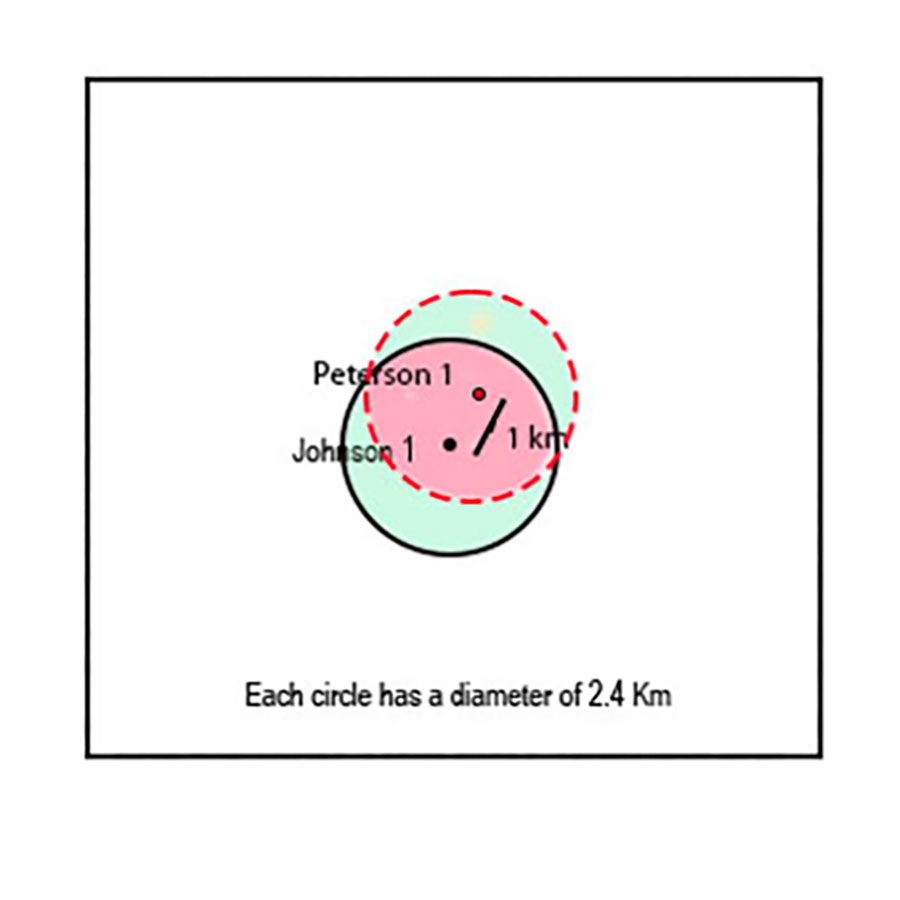
To complement the physical core recovery, the Company acquired a comprehensive suite of downhole geophysical logs to characterize subsurface stratigraphy and support interpretation of the targeted potash-bearing intervals. The completed geophysical dataset, received on August 7, 2026, provides further support for the presence of both the Upper and Lower Cycle 18 potash members at Peterson 1. Interpretation of the borehole geophysical responses indicates that the targeted intervals occur at depths and apparent thicknesses consistent with those identified in the previously completed Johnson 1 hole, located approximately 1.2 kilometres south of Peterson 1. Initial analysis of the gamma results from Peterson 1 shows favourable correlation with the high potash grades and thicknesses reported from the Upper and Lower Cycle 18 members in the original Johnson 1 results. Together, these results provide an important geophysical correlation between the two drill holes and further support the Company’s interpretation of Cycle 18 stratigraphic continuity across this portion of the Sage Plain Potash Project. When combined with core from the key intervals, the logs and core provide the technical team with increased confidence that the area has the potential to support a significant resource and the Company’s envisioned mining operation.
Recovered core from Peterson 1 has been shipped to the Saskatchewan Research Council laboratory in Saskatoon, Saskatchewan, where detailed core logging and assay work will be completed.
Patricio Varas, Chief Executive Officer of Sage Potash, commented:
“We are very pleased with the results of the drill program at the Sage Plain Project,” said Patricio Varas, Chief Executive Officer of Sage Potash. “I commend our technical team and drilling contractors for the safe, effective and professional execution of this program, which recovered potash core as planned and anticipated. We look forward to receiving the assay data as Sage focuses on delivering an upsized and upgraded resource estimate.”
The Company will continue to provide updates as results become available.
Qualified Person
The scientific and technical information contained in this news release has been reviewed and approved by Greg Vogelsang, P.Geo., P.Eng., the Qualified Person as defined by National Instrument 43-101 Standards of Disclosure for Mineral Projects. Mr. Vogelsang is Vice President, Project Development for the Company.
About Sage Potash Corp.
Sage Potash Corp. (TSXV: SAGE) (OTCQB: SGPTF) is dedicated to developing its flagship Sage Plain Potash Project, located in the Paradox Basin in Utah. With a large, high-grade resource base, the Company is advancing toward its goal of establishing a secure and sustainable domestic potash production platform in the United States. Sage Potash is committed to food security, environmental stewardship, and creating value for shareholders and stakeholders.
On behalf of the Board of Directors,
J. Patricio Varas, CEO and Director
1 (236) 521-1521
Website: www.sagepotash.com
For media inquiries, please contact:
Marcus van der Made, Investor Relations
IR@sagepotash.com
Neither the TSX Venture Exchange nor its Regulation Services Provider (as that term is defined in the policies of the TSX Venture Exchange) accepts responsibility for the adequacy or accuracy of this release.
This news release contains “forward-looking information” and “forward-looking statements” within the meaning of applicable securities legislation. The forward-looking statements herein are made as of the date of this news release only, and the Company does not assume any obligation to update or revise them to reflect new information, estimates or opinions, future events, results or otherwise, except as required by applicable law. Often, but not always, forward-looking statements can be identified by the use of words such as “plans”, “expects”, “is expected”, “budgets”, “scheduled”, “estimates”, “forecasts”, “predicts”, “projects”, “intends”, “targets”, “aims”, “anticipates” or “believes”, or variations, including negative variations, of such words and phrases, or may be identified by statements to the effect that certain actions “may”, “could”, “should”, “would”, “might” or “will” be taken, occur or be achieved. Forward-looking information in this news release includes, but is not limited to, statements with respect to future events or future performance of Sage Potash, including the future release of assay results and the Company’s ability to upgrade the upsize and upgrade Project’s potash resource estimate. Forward-looking statements and information are subject to various known and unknown risks and uncertainties, many of which are beyond the Company’s ability to control or predict, that may cause the Company’s actual results, performance or achievements to differ materially from those expressed or implied thereby. Such statements are developed based on assumptions about such risks, uncertainties and other factors set out herein, including, but not limited to, the risk factors set out under the heading “Risk Factors and Uncertainties” in the Company’s Management’s Discussion & Analysis available for review under the Company’s profile at www.sedarplus.ca. Such forward-looking information represents management’s best judgment based on information currently available. No forward-looking statement can be guaranteed, and actual future results may vary materially. Accordingly, readers are advised not to place undue reliance on forward-looking statements or information.
Vancouver, British Columbia and Salt Lake City, Utah–(Newsfile Corp. – August 5, 2026) – Sage Potash Corp. (TSXV: SAGE) (OTCQB: SGPTF) (“Sage Potash” or the “Company”) is pleased to announce the successful completion of drilling operations at the Peterson 1 well, located at the Company’s Sage Plain Potash Project in southeast Utah.
The Peterson 1 well reached a total depth 2,248 metres, successfully intersecting the targeted Cycle 18 Upper and Lower potash-bearing beds. Continuous core has been recovered from both mineralized intervals and is being prepared for shipment to the Saskatchewan Research Council (“SRC”) in Saskatoon, Saskatchewan, where it will undergo detailed geological logging and assays.
In addition to the recovered core, the Company is currently completing a comprehensive suite of downhole geophysical surveys, including a gamma ray survey which identifies the presence of potash and provides valuable geological data to complement the laboratory results.
Patricio Varas, Chief Executive Officer of Sage Potash, commented:
“Our team is pleased to witness the successful recovery and logging of core from the potash beds and the completion of the drill program” commented Pat Varas, Chief Executive Officer of Sage Potash. “We look forward to the assay results in order to expand and upgrade the resource and confirm the quality of this outstanding Potash asset.”
The Peterson 1 drill program was designed to validate the continuity, thickness and grade of the Company’s potash mineralization while collecting critical geological information to support future resource updates, engineering studies and project development.
The Company will continue to provide updates as results become available.
Qualified Person
The scientific and technical information contained in this news release has been reviewed and approved by Greg Vogelsang, P.Geo., P.Eng. the Qualified Person as defined by National Instrument 43-101 Standards of Disclosure for Mineral Projects. Mr. Vogelsang is Vice President Project Development for the Company.
About Sage Potash Corp.
Sage Potash Corp. (TSXV: SAGE) (OTCQB: SGPTF) is dedicated to the development of its flagship Sage Plain Potash Project, located in the Paradox Basin, Utah. With a large and high-grade resource base, the Company is advancing toward its goal of establishing a secure and sustainable domestic potash production platform in the United States. Sage Potash is committed to food security, environmental stewardship, and creating value for shareholders and stakeholders alike.
On Behalf of the Board of Directors,
J. Patricio Varas, CEO and Director 1 (236) 521-1521
Website: www.sagepotash.com
For media inquiries, please contact:
Marcus van der Made, Investor Relations IR@sagepotash.com
Neither the TSX Venture Exchange nor its Regulation Services Provider (as that term is defined in the policies of the TSX Venture Exchange) accepts responsibility for the adequacy or accuracy of this release.
This news release contains “forward-looking information” and “forward-looking statements” within the meaning of applicable securities legislation. The forward-looking statements herein are made as of the date of this news release only, and the Company does not assume any obligation to update or revise them to reflect new information, estimates or opinions, future events or results or otherwise, except as required by applicable law. Often, but not always, forward-looking statements can be identified by the use of words such as “plans”, “expects”, “is expected”, “budgets”, “scheduled”, “estimates”, “forecasts”, “predicts”, “projects”, “intends”, “targets”, “aims”, “anticipates” or “believes” or variations (including negative variations) of such words and phrases or may be identified by statements to the effect that certain actions “may”, “could”, “should”, “would”, “might” or “will” be taken, occur or be achieved. Forward-looking information in this news release includes, but is not limited to, statements with respect to future events or future performance of Sage Potash, including the completion of downhole geophysical surveys, future release of assay results and the Company’s ability to upgrading the Project’s potash resource estimate. Forward-looking statements and information are subject to various known and unknown risks and uncertainties, many of which are beyond the ability of the Company to control or predict, that may cause the Company’s actual results, performance or achievements to be materially different from those expressed or implied thereby, and are developed based on assumptions about such risks, uncertainties and other factors set out herein, including, but not limited to, the risk factors set out under the heading “Risk Factors and Uncertainties” in the Company’s Management’s Discussion & Analysis available for review under the Company’s profile at www.sedarplus.ca. Such forward-looking information represents management’s best judgement based on information currently available. No forward-looking statement can be guaranteed and actual future results may vary materially. Accordingly, readers are advised not to place undue reliance on forward-looking statements or information.