Categories
Base Metals Energy Junior Mining Precious Metals Project Generators

Platinum: The Rarest Precious Metal

Video Transcript

As one of the lesser known but vital precious metals, Platinum has a long history of being used for jewelry and ornamentation, reaching back to the ancient Egyptian empire, having been discovered on a coffin unearthed in Thebes, estimated to be from the 7th century BC.

Platinum is a metal that represents power, prestige and a sense of great accomplishment. It has come to symbolize a high level of status in society, as evidenced by top-tier credit cards and membership programs using its name.

But Platinum has value beyond just being a status symbol. Modern-day uses of Platinum include being a key element in catalytic converters for vehicles, as it converts car exhaust gasses into less harmful substances, as a catalyst in the chemical industry and even in the creation of life-saving anti-cancer drugs.

Platinum was dubbed ‘platina’ or ‘little silver’ by the Spanish Conquistadors, and the truth is, it’s so much more than meets the eye.

But that’s just scratching the surface. On today’s episode, we explore this exclusive metal that befuddled miners and scientists alike when it was first discovered. Dubbed “platina” or “little silver” by the Spanish Conquistadors, the truth is, it’s so much more than meets the eye. Time to dig into Platinum on Commodity Culture.

What is Platinum?

Platinum is a gray-white precious metal and one of a group of six elements known as the Platinum Group Metals (PGM). The other metals in the group are iridium, osmium, palladium, rhodium and ruthenium. Platinum is the most common of the group and sees the most use.

Platinum’s atomic number is 78; it has an atomic mass of 195 units, a melting point of 1768 Degrees Celsius, and is resistant to corrosion, stable at high temperatures and has stable electrical properties.

The name Platinum comes from the Spanish word “platina,” basically translating to “little silver.” This somewhat derogatory word was coined by Spanish Conquistadors in the 16th century, as they had no idea of Platinum’s uses or true value and considered it an annoyance that interfered with their attempts to mine gold.

In those times, it was widely believed that “platina” was young gold and that, given time, it would turn yellow as it matured, but until then, better to toss it aside and get back to mining for the real thing.

Platinum is rarely found on its own; it is often deposited alongside gold, copper, iron, nickel, and the other Platinum Group Metals. When discovered, Platinum can be quite inconspicuous at first glance, with nuggets having a dull gray or black hue. One thing that can help identify platinum is its incredible heft when held and if iron is also present in the alloy, it will be slightly magnetic.

First Known Platinum Jewelry

Some of the first known Platinum jewelry was crafted by the ancient indigenous peoples of Ecuador, with estimates placing their culture several centuries before the Spanish conquest of South America in 1492. It was particularly in the province of Esmeraldas where some of the most striking pieces were found, leading anthropologist William Farabee to declare:

“The native Indian workers of Esmeraldas were metallurgists of marked ability; they were the only people who manufactured Platinum jewelry.”

Considering Platinum is far more difficult to forge and manipulate than gold or silver, the method these ancient peoples used to work such a problematic metal was incredible and a testament to their dedication to their craft.

Platinum fragments were coated with gold dust, then heated by blowpipe on pieces of wood charcoal. The molten gold then caused the platinum to sinter, meaning it coalesced into a porous mass through heating, which allowed it to be forged.

Being the rarest of all the precious metals, along with its incredible strength as the hardest among them, has led Platinum to be one of the preferred forms of jewelry throughout the ages. In addition, it is highly resistant to scratches and other blemishes and does not wear away easily.

Platinum’s Unique Properties

Platinum, along with the other Platinum Group Metals, has strong catalytic properties – meaning it can accelerate or trigger a chemical process without becoming permanently changed or consumed.

For this reason, Platinum is employed widely in the manufacturing of catalytic converters for use in exhaust systems in internal combustion vehicles. Platinum in exhaust systems helps curb vehicle pollution and contributes to enhanced air quality. Catalytic converters represent a whopping 50% of Platinum demand each year.

Due to its high melting point, Platinum is indispensable in chemical laboratories for electrodes and for crucibles and dishes in which materials can be heated to high temperatures.

In addition, Platinum is used in the chemicals industry as a catalyst to produce nitric acid, benzene and silicone. It is also used as a catalyst to improve the efficiency of fuel cells and for electrical contacts and sparking points, as it resists both the high temperatures and the chemical attack of electric arcs.

Platinum finds use in the electronics sector in the manufacturing of computer hard disks and thermocouples and is used to make optical fibers and LCD screens, turbine blades, spark plugs, pacemakers and, like other precious metals, is used widely in dentistry. Crowns, bridges, pins and other dental equipment, and fillings all employ Platinum as a key component.

Platinum is used as a catalyst in creating nitric acid, an essential ingredient in fertilizers, connecting Platinum to the creation of our food supply. But one of its more impactful uses to humanity is in the creation of chemotherapy drugs used to treat cancer, of which Platinum compounds are an important building block.

I’m willing to bet you didn’t think Platinum was such an essential element in our day-to-day lives, but the truth is, it’s a metal that is as practical as it is prestigious.

Next up, let’s explore the mining methods used to extract Platinum from the earth.

How is Platinum Mined?

Being one of the rarest metals on earth, Platinum is rarely found on its own but is generally found alongside Platinum Group Metals, nickel, iron, gold and other metals. Although pure Platinum deposits have been discovered, they are the exception rather than the rule.

One of the earliest Platinum mining methods is placer mining. Like gold, Platinum particles can accumulate in alluvial sands in rivers and streams. Placer deposits are minerals concentrated in streams and riverbeds from rock eroded from its source and further ground into pieces as it is washed away by the water.

Most of the world’s placer Platinum is found in Russia and back in the 19th century, alluvial deposits located in the Ural Mountains were heavily mined by both small-scale family operations and more official mining operations.

Placer mining for Platinum was also common in South America, especially in the Río de la Plata, or the River of Silver, located between Argentina and Uruguay.

Placer mining involves using dredges to scoop Platinum-bearing sand or gravel from riverbeds and washing it until Platinum grains or nuggets are captured and separated from the surrounding material. 

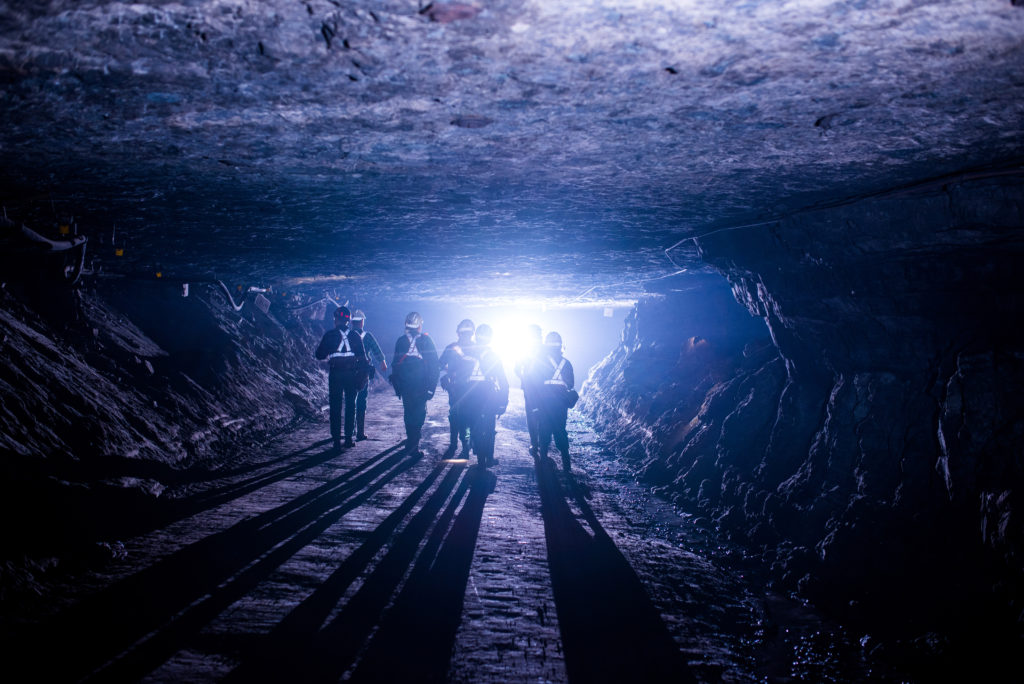
In today’s world, most Platinum deposits are located underground and are mined very similarly to gold, silver and other underground metal deposits, namely with strategically placed explosives.

Miners drill holes into the mine walls and pack explosives into them before detonating the rock, blasting it into small pieces and hauling it up to the surface to be loaded onto trucks, which then take it to a facility to be processed.

Most platinum mining in the modern era is done in South Africa, which accounts for a whopping 80% of world platinum production.

The story of the man who first identified Platinum and began to make it known to the greater world is no less fantastic than the element itself, involving an adventure across continents, a capture and daring escape on the high seas, and a scientific discovery that would begin Platinum’s journey to becoming the dynamic metal we know it as today.

The History of Platinum’s Discovery

Antonio de Ulloa of Spain was only 19 years of age when he was promoted to the rank of frigate lieutenant and sent on what would be a life-altering expedition to Quito in Ecuador, led by French geographers Charles Marie de la Condamine and Pierre Bouguer.

Antonio departed Spain in May of 1735, not knowing he wouldn’t see his motherland again for more than a decade. The mission was a monumental one: To help determine whether the earth was flat, as was popularly believed throughout most of human history up until that point, or whether it was a sphere, as suggested by Sir Isaac Newton.

To this end, it was necessary to measure the length of a degree of latitude at the equator, of which Quito was the closest city, and again at somewhere as near as possible to one of the poles. An expedition to the far north of Sweden was also dispatched for this purpose, but our story shall leave that journey to the pages of history.

As Antonio accompanied the geographers in Ecuador, their task proved epic indeed and with great struggle, they finally completed their work around 1745. Over the course of this decade, Antonio had plenty of time to explore the territory and the people there, recording his more interesting observations in various papers he carried with him.

As the expedition finally departed back to Spain, their mission accomplished, Antonio must have been filled with strong emotions as he was, at long last, headed home. Fate, however, had other plans in store for him.

As they made their way, sailing around Cape Horn, they were chased down north of the Azores by an English privateer and their ship was captured. However, they managed an escape and as luck seemed to be on their side, they evaded their captors and seemed to leave danger behind.

However, higher powers seemed intent on testing their wills and as they reached Louisbourg in Nova Scotia, their vessel was once again captured, this time by a British naval vessel and escape was out of the question. Antonio and his companions were taken to London and imprisoned, while the Admiralty confiscated nearly a decade’s worth of notes from Antonio’s time spent in Ecuador. Things looked grim for our frigate lieutenant as he sat in a cell awaiting his fate.

But this opened a window and good fortune came in the form of the President of the Royal Society, Martin Folkes, who came to know Antonio and his story and befriended him. The Royal Society was a group of natural philosophers and physicians, and not only did Martin free Antonio from his chains, but he also got all his papers returned to him and even made him a Fellow of the Royal Society in 1746. He was then allowed to return to Spain. 

Finally, after his long mission, Antonio set to work compiling an account of his adventures, which he published in 1748, first in Spanish and then translated into several other languages.

For our subject today, one passage, in particular, stands out:

“In the district of Choco are many mines of lavadero or wash gold. Several of the mines have been abandoned on account of the Platina, a substance of such resistance, that when struck on an anvil of steel, it is not easy to be separated; nor is it calcinable, so that the metal enclosed within this obdurate body could only be extracted with infinite labor and charge.”

Shortly after releasing his book, Antonio was tasked with a new mission by the King of Spain, King Ferdinand VI, to travel throughout Europe and study scientific developments across the continent.

Antonio’s travels brought him to Sweden in the autumn of 1751 and he was welcomed with open arms by Swedish scientists. Shortly after his arrival, he was duly elected to the Royal Swedish Academy of Sciences in October of the same year. During his time there, he met with mathematician and chemist H.T. Scheffer. Scheffer was a former mine and metal works manager and an assayer at the mint and so had a vested interest in metals.

There is no official record of what exactly was said in that meeting, but shortly after that in November of 1751, Scheffer produced a paper titled, “The White Gold, or 7th Metal, called in Spain’ Platina del pinto’ Little Silver of Pinto, its Nature Described,” and submitted it to the Academy.

Scheffer was already familiar with Platinum before encountering Antonio, as he had received samples of it just a year earlier in 1750 from the West Indies, but his time with Antonio undoubtedly influenced his writing. In his paper, he came to the following conclusions about Platinum:

“That this is a metal hard but malleable, but of the hardness of malleable iron.

“That it is a precious metal of durability, like gold and silver.

“That it is not any of the six old metals, since first it is wholly and entirely a precious metal, containing nothing of copper, tin, lead, or iron, because it allows nothing to be taken from it. It is not silver, nor is it gold; but it is a seventh metal among those which are known up till now in all lands.”

In addition, he recommended a potential practical application for Platinum when he wrote:

“This metal is the most suitable of all to make telescope mirrors because it resists as well as gold the vapors of the air, it is very heavy, very dense, colorless and much heavier than ordinary gold, which is rendered unsuitable for this particular use by lacking these two latter properties.”

Although attempts were made in the years that followed, Platinum never found its place in the telescopes of the era, although Scheffer would be delighted to know the metal did eventually find use in the construction of x-ray telescopes centuries later. Nonetheless, Scheffer’s paper sparked the imaginations of scientists around the world, and a flurry of research into Platinum began, leading it to establish itself as the multifaceted metal that we know in the modern era.

The Future of Platinum

Although the recent trend toward electrifying vehicles seemingly puts Platinum’s use in traditional gasoline-powered catalytic converters at risk, we need to step back and look at the bigger picture.

In the coming years, autocatalyst demand for Platinum is likely to rise as recent legislation to curb pollution from gasoline and diesel engines is boosting the demand for cleaner emissions, which is Platinum’s forte.

Either way, Platinum will have a role to play in a carbon-neutral future, as it is needed for hydrogen-powered fuel cell electric vehicles. These use a propulsion system similar to that of electric vehicles, where energy stored as hydrogen is converted to electricity by the fuel cell, and these vehicles are already becoming available in California and a few other places.

Platinum is also playing a role in the greater energy economy, as Platinum-based fuel cells are a cost-effective, clean and reliable off-grid power source that is currently seeing use in some remote areas, such as rural South Africa.

These fuel cells can help provide greater energy access to communities that might not normally be able to get a steady source of electricity. This includes electricity for schools, improving the quality of education and providing the ability to pump water for irrigation, facilitating agriculture.

Platinum’s other myriad uses also aren’t going away, and for this reason, Platinum will remain an essential metal to our modern civilization for as long as we can extract it from the earth.

More on Platinum

Subscribe to Insights

First Name*

Last Name*

Email Address*

Investor Type*                                  Asset Manager                 Financial Advisor                 Individual Investor                 Institutional Investor                 Other               

Country*                                  United States                 Canada                 Argentina                 Australia                 Austria                 Belgium                 Brazil                 China                 Denmark                 Finland                 France                 Germany                 India                 Ireland                 Italy                 Japan                 Netherlands                 New Zealand                 Norway                 South Africa                 Spain                 Sweden                 Switzerland                 United Kingdom                 Other               

I am not a robot.

Please slide to unlock.

I consent to Sprott Inc. and its subsidiaries sending me newsletters, fund information and other electronic messages (E-Communications)*

Please refer to our Privacy Policy or Contact Us for more information.

*Required

Jesse Day is not an employee or an affiliate of Sprott Asset Management LP. The opinions, estimates and projections (“information”) contained within this content are solely those of the presenter and are subject to change without notice. Sprott Asset Management LP makes every effort to ensure that the information has been derived from sources believed to be reliable and accurate. However, Sprott Asset Management LP assumes no responsibility for any losses or damages, whether direct or indirect, which arise out of the use of this information. Sprott Asset Management LP is not under any obligation to update or keep current the information contained herein. The information should not be regarded by recipients as a substitute for the exercise of their own judgment. Please contact your own personal advisor on your particular circumstances. Views expressed regarding a particular company, security, industry or market sector should not be considered an indication of trading intent of any investment funds managed by Sprott Asset Management LP. These views are not to be considered as investment advice nor should they be considered a recommendation to buy or sell.

Important Disclosure

Sprott Physical Platinum and Palladium Trust (the “Trust”) is a closed-end fund established under the laws of the Province of Ontario in Canada. The Trust is available to U.S. investors by way of a listing on the NYSE Arca pursuant to the U.S. Securities Exchange Act of 1934. The Trust is not registered as an investment company under the U.S. Investment Company Act of 1940.

The Trust is generally exposed to the multiple risks that have been identified and described in the prospectus. Please refer to the prospectus for a description of these risks. Relative to other sectors, precious metals and natural resources investments have higher headline risk and are more sensitive to changes in economic data, political or regulatory events, and underlying commodity price fluctuations. Risks related to extraction, storage and liquidity should also be considered.

Gold and precious metals are referred to with terms of art like store of value, safe haven, and safe asset. These terms should not be construed to guarantee any form of investment safety. While “safe” assets like gold, Treasuries, money market funds, and cash generally do not carry a high risk of loss relative to other asset classes, any asset may lose value, which may involve the complete loss of invested principal.

All data is in U.S. dollars unless otherwise noted. 

Past performance is not an indication of future results. The information provided is general in nature and is provided with the understanding that it may not be relied upon as, nor considered to be tax, legal, accounting or professional advice. Readers should consult with their own accountants and/or lawyers for advice on their specific circumstances before taking any action. Sprott Asset Management LP is the investment manager to the Trust. Important information about the Trust, including the investment objectives and strategies, applicable management fees, and expenses, is contained in the prospectus. Please read the prospectus carefully before investing. The indicated rates of return are the historical annual compounded total returns including changes in unit value and reinvestment of all distributions and do not take into account sales, redemption, distribution or operational charges or income taxes payable by any unitholder that would have reduced returns. You will usually pay brokerage fees to your dealer if you purchase or sell units of the Trusts on the Toronto Stock Exchange (“TSX”) or the New York Stock Exchange (“NYSE”). If the units are purchased or sold on the TSX or the NYSE, investors may pay more than the current net asset value when buying units or shares of the Trusts and may receive less than the current net asset value when selling them. Investment funds are not guaranteed, their values change frequently and past performance may not be repeated. The information contained herein does not constitute an offer or solicitation to anyone in the United States or in any other jurisdiction in which such an offer or solicitation is not authorized or to any person to whom it is unlawful to make such an offer or solicitation. Views expressed regarding a particular company, security, industry or market sector should not be considered an indication of trading intent of any investment funds managed by Sprott Asset Management LP. These views are not to be considered as investment advice nor should they be considered a recommendation to buy or sell.

Categories
Base Metals Energy Junior Mining Precious Metals

Riverside Resources Receives Conditional TSX-V Approval for Spin-Out of Ontario Gold Projects and Engages ICP Securities Inc. for Automated Market Making Services

Vancouver, British Columbia–(Newsfile Corp. – February 24, 2025) – Riverside Resources Inc. (TSXV: RRI) (OTCQB: RVSDF) (FSE: 5YY) (“Riverside” or the “Company”), is pleased to announce that it has received the TSX Venture Exchange’s conditional approval for the previously announced spin-out of Blue Jay Gold Corp. (“Blue Jay”) by way of a statutory plan of arrangement (the “Arrangement”) pursuant to the arrangement provisions of the Business Corporations Act (British Columbia). The Arrangement will be voted on by Riverside shareholders at its Annual General and Special Shareholder Meeting scheduled for March 31, 2025 (the “Meeting”). This potential share distribution offers Riverside shareholders, prior to the record date, a similar opportunity to the previous Capitan Silver (CAPT.V) spin-out. In that transaction, Riverside shareholders received shares of Capitan Silver, which have since doubled in value compared to their price at the time of the spinout.

The Arrangement aligns with Riverside’s strategic plans and key 2025 catalysts, positioning the company for continued progress in the coming months. As part of this strategy, Riverside will retain royalties on each of its Ontario gold projects-Pichette, Oakes, and Duc-adding to its growing portfolio of mineral royalties across the U.S., Canada, and Mexico. Additionally, Riverside is actively working on gold, copper, and rare earth element (REE) projects in British Columbia and Sonora, Mexico, with exploration programs funded by partners. These partnerships provide Riverside with carried interests and potential future royalties, further enhancing long-term value for shareholders. Additional information concerning the Arrangement is contained in Riverside’s news release dated January 28, 2025 and will be provided to Riverside shareholders in an information circular in respect of the Meeting.

“The spinout of Blue Jay Gold is an exciting opportunity for Riverside shareholders to gain direct exposure to a new, focused gold exploration company,” said John-Mark Staude, CEO of Riverside Resources. “Under the Arrangement, shareholders will receive one share of Blue Jay Gold for every five shares of Riverside held, giving them a stake in a company dedicated to advancing these high-potential Ontario gold projects. We’ve seen this strategy create additional value in the past. Our previous spinout of Capitan Mining gave shareholders direct ownership in a separate exploration company, and those shares went on to appreciate significantly. By structuring Blue Jay Gold in a similar way, we are unlocking the potential of these assets while allowing Riverside to retain upside through royalties. This approach can provide both immediate and long-term value for our shareholders.”

In a recent interview, John-Mark Staude, President of Riverside Resources, and Geordie Mark, CEO of Blue Jay Gold, discuss their 2025 plans, including the upcoming Blue Jay Gold spin-out and exploration initiatives in Ontario and Mexico. Listen to the full conversation here: https://www.kereport.com/2025/02/21/riverside-resources-plans-for-2025-blue-jay-gold-spin-out-update-ontario-gold-projects/.

The Company has taken an additional key step toward completing the spinout with the filing of the National Instrument 43-101 Technical Report for the Pichette Project in Ontario with the TSX Venture Exchange. This report provides scientific data and general context for interested parties to review. The filing aligns with the authorization process for Riverside’s planned Blue Jay Gold share spinout, which will be voted on at the AGM at the end of March. A similar approach was used for Capitan Mining.

The Company has engaged the services of ICP Securities Inc. (“ICP”) to provide automated market making services, including use of its proprietary algorithm, ICP Premium™, in compliance with the policies and guidelines of the TSX Venture Exchange and other applicable legislation. ICP will be paid a monthly fee of C$7,500, plus applicable taxes. The agreement between the Company and ICP was signed with a start date of February 24, 2025, and is for four (4) months (the “Initial Term”) and shall be automatically renewed for subsequent one (1) month terms (each month called an “Additional Term”) unless either party provides at least thirty (30) days written notice prior to the end of the Initial Term or an Additional Term, as applicable. There are no performance factors contained in the agreement and no stock options or other compensation in connection with the engagement. ICP and its clients may acquire an interest in the securities of the Company in the future.

ICP is an arm’s length party to the Company. ICP’s market making activity will be primarily to correct temporary imbalances in the supply and demand of the Company’s shares. ICP will be responsible for the costs it incurs in buying and selling the Company’s shares, and no third party will be providing funds or securities for the market making activities.

Qualified Person for the NI 43-101 Report on Pichette Project

Locke Goldsmith, P Geo, P Eng is the qualified person and independent of the Company for the purpose of this transaction and this technical report which has been submitted to the TSX Venture Exchange.

About ICP Securities Inc.

ICP Securities Inc. is a Toronto based CIRO dealer-member that specializes in automated market making and liquidity provision, as well as having a proprietary market making algorithm, ICP Premium™, that enhances liquidity and quote health. Established in 2023, with a focus on market structure, execution, and trading, ICP has leveraged its own proprietary technology to deliver high quality liquidity provision and execution services to a broad array of public issuers and institutional investors.

About Riverside Resources Inc.

Riverside is a well-funded exploration company driven by value generation and discovery. The Company has over $4M in cash, no debt and less than 75M shares outstanding with a strong portfolio of gold-silver and copper assets and royalties in North America. Riverside has extensive experience and knowledge operating in Mexico and Canada and leverages its large database to generate a portfolio of prospective mineral properties. In addition to Riverside’s own exploration spending, the Company also strives to diversify risk by securing joint-venture and spin-out partnerships to advance multiple assets simultaneously and create more chances for discovery. Riverside has properties available for option, with information available on the Company’s website at www.rivres.com.

ON BEHALF OF RIVERSIDE RESOURCES INC.

“John-Mark Staude”

Dr. John-Mark Staude, President & CEO

For additional information contact:

John-Mark Staude
President, CEO
Riverside Resources Inc.
info@rivres.com
Phone: (778) 327-6671
Fax: (778) 327-6675
Web: www.rivres.com

Eric Negraeff
Investor Relations
Riverside Resources Inc.
Phone: (778) 327-6671
TF: (877) RIV-RES1
Web: www.rivres.com

Certain statements in this press release may be considered forward-looking information. These statements can be identified by the use of forward-looking terminology (e.g., “expect”,” estimates”, “intends”, “anticipates”, “believes”, “plans”). Such information involves known and unknown risks — including the availability of funds, the results of financing and exploration activities, the interpretation of exploration results and other geological data, or unanticipated costs and expenses and other risks identified by Riverside in its public securities filings that may cause actual events to differ materially from current expectations. Readers are cautioned not to place undue reliance on these forward-looking statements, which speak only as of the date of this press release.

Neither the TSX Venture Exchange nor its Regulation Services Provider (as that term is defined in the policies of the TSX Venture Exchange) accepts responsibility for the adequacy or accuracy of this release.

To view the source version of this press release, please visit https://www.newsfilecorp.com/release/241826

Categories
Base Metals Energy Junior Mining Precious Metals

The ‘structural shift’ pushing gold higher in 2025

Gold (GC=F) prices are on track to achieve their eighth consecutive week of gains, with forecasts for further upside potentially reaching $3,100 per troy ounce by year-end. Daan Struyven, Goldman Sachs co-head of global commodities research, joins Market Domination hosts Julie Hyman and Alexandra Canal to discuss the details.

Struyven emphasizes how the shift in central bank behavior stems from Russia’s central bank reserves being frozen in 2022. This influenced investments in the US and Europe.

“It was a wake-up call to [emerging-market] EM central bank reserve managers because they realized that their assets would not necessarily be risk-free,” he explains. “So they have shifted part of their reserves to buying gold, an asset which cannot be frozen or confiscated.”

“We have seen a five-fold increase in the rhythm of gold purchases by central banks,” Struyven adds. “We think this is a structural shift, and we expect ongoing solid above-trend central bank purchases of gold to continue to push gold prices higher.”

Source: https://finance.yahoo.com/video/structural-shift-pushing-gold-higher-220821409.html

Categories
Base Metals Energy Exclusive Interviews

It’s Time to Buy Gold Now! – Maurice Jackson

In this insightful episode of Proven and Probable, host Maurice Jackson delves into the compelling reasons why now is an opportune time to invest in gold. He examines current economic indicators, market trends, and historical data that suggest a favorable environment for gold investments. Jackson also offers strategic insights on how to effectively incorporate gold into your investment portfolio.

Key Topics Discussed:

  • Impact of inflation and currency fluctuations on gold prices
  • Historical performance of gold during economic downturns
  • Strategies for diversifying portfolios with precious metals
  • Long-term benefits of holding gold assets

Whether you’re a seasoned investor or new to precious metals, this episode provides valuable perspectives to help you navigate the complexities of the current financial landscape.

Connect with Us:
Call Me Directly: 855.505.1900
Website: Proven and Probable
Twitter: @ProvenProbable
Facebook: Proven and Probable
Don’t forget to like, share, and subscribe for more expert insights on precious metals and resource investments.

Rumble

Categories
Base Metals Energy Junior Mining

Charted: Top Suppliers of Aluminum and Steel to the U.S.

Charted: Top U.S. Suppliers of Aluminum and Steel

This was originally posted on our Voronoi app. Download the app for free on iOS or Android and discover incredible data-driven charts from a variety of trusted sources.

U.S. President Donald Trump has imposed a 25% tariff on all steel and aluminum imports, marking one of the most discussed measures of his first month back in the White House.

But which countries are most affected by these tariffs?

This map illustrates the top suppliers of aluminum and steel to the United States in 2024. The data comes from the U.S. Census Bureau.

Canada: The Largest Partner

Canada is by far the top supplier of both steel and aluminum to the United States. The neighboring country exported $9.4 billion worth of aluminum to the U.S. in 2024, significantly ahead of the second-largest exporter, the European Union, which exported $1.5 billion.

Canada also exported $7.1 billion worth of steel last year, compared to $7 billion from the European Union.

CountrySteel Imports (USD)Aluminum Imports (USD)
🇨🇦 Canada$7.1B$9.4B
🇲🇽 Mexico$3.5B$397M
🇧🇷 Brazil$3.0B
🇨🇳 China$799M$809M
🇹🇼 Taiwan$1.3B
🇰🇷 South Korea$2.9B$781M
🇩🇪 Germany$1.9B$318M
🇯🇵 Japan$1.7B
🇮🇳 India$489M$445M
🇪🇺 European Union$7B$1.5B
🇦🇪 UAE$917M
🇧🇭 Bahrain$535M
🇦🇷 Argentina$468M
🇹🇭 Thailand$271M
🇬🇧 UK$440M

Mexico, South Korea, and Brazil are also among the top suppliers of steel to the United States. Meanwhile, the country imports aluminum from other key partners, including China, the United Arab Emirates, South Korea, Bahrain, and Argentina.

A recent report by the Center for Strategic and International Studies (CSIS) noted that the U.S. produces less than 2% of the world’s primary aluminum.

https://elements.visualcapitalist.com/charted-top-suppliers-of-aluminum-and-steel-to-the-u-s/?mc_cid=a6f94fc979&mc_eid=5c5bffba2f

Categories
Base Metals Energy Junior Mining Precious Metals

Exclusive-Barrick Gold signs agreement with Mali to end mining dispute

Prospectors and Developers Association of Canada (PDAC) annual conference in Toronto · Reuters

(Reuters) – Canadian miner Barrick Gold has signed a new agreement with the Malian government to end an almost two-year-old dispute over its mining assets in the West African country, two people familiar with the developments told Reuters on Wednesday.

Barrick signed the agreement and now it is up to the Mali government to formally approve the deal, the sources told Reuters. An official announcement could come as early as Thursday.

As part of the new agreement, Barrick will pay 275 billion CFA or $438 million to the Mali government, in return for the release of detained employees, seized gold, and restarting the operations at the Loulo-Gounkoto mine.

Barrick did not respond to an email query by Reuters. A spokesperson for Mali’s mines ministry declined to comment.

The Toronto-based miner and Mali have been locked in a dispute since 2023 over the implementation of the West African country’s new mining code that gives Mali government a greater share in the country’s gold mine.

(Reporting by Divya Rajagopal, Giulia Paravicini and Portia Crowe, editing by Silvia Aloisi)

https://finance.yahoo.com/news/exclusive-barrick-gold-signs-agreement-184750893.html

Categories
Base Metals Energy Junior Mining Precious Metals

Exclusive: Trump prepares to change US CHIPS Act conditions, sources say

By Mike Stone, Fanny Potkin and Wen-Yee Lee

WASHINGTON/SINGAPORE/TAIPEI (Reuters) -The White House is seeking to renegotiate U.S. CHIPS and Science Act awards and has signaled delays to some upcoming semiconductor disbursements, two sources familiar with the matter told Reuters.

The people, along with a third source, said the new administration is reviewing the projects awarded under the 2022 law, meant to boost American domestic semiconductor output with $39 billion in subsidies.

Washington plans to renegotiate some of the deals after assessing and changing current requirements, according to the sources. The extent of the possible changes, and how they would affect agreements already finalized, was not immediately clear. It was not known whether any action has yet been taken.

“The CHIPS Program Office has told us that certain conditions that do not align with President (Donald) Trump’s executive orders and policies are now under review for all CHIPS Direct Funding Agreements,” GlobalWafers spokesperson Leah Peng said in a statement to Reuters.

Taiwan’s GlobalWafers, which said it has not been notified directly by Washington of any changes to the conditions or terms of their awards, is set to receive $406 million in U.S. government grants for projects in Texas and Missouri. The company is currently set to receive subsidies only after it achieves specific milestones later in 2025.

Illustration picture of semiconductor chips on a circuit board

Each award recipient has distinct terms and milestones in their agreements.

Four sources with knowledge of the discussions told Reuters that the White House is concerned about many of the terms underpinning the $39 billion Chips and Science Act industry subsidies.

Those encompass additional clauses, including requirements added into contracts by the administration of President Joe Biden, including that recipients must use unionized labor to build factories and help provide affordable childcare for factory workers.

The White House and the U.S. Department of Commerce did not immediately respond to requests for comment.

The Semiconductor Industry Association, a trade group representing the chip industry, has started asking members how the program could be improved.

But David Isaacs, vice president of government affairs for the group, said: “It’s important both the manufacturing incentives and research programs proceed without disruption, and we stand ready to work with Commerce Secretary Nominee (Howard) Lutnick and other members of the Trump administration to streamline the program’s requirements and achieve our shared goal of strengthening U.S. leadership in chip technology.”

Since taking office, Trump has issued a series of executive orders aimed at dismantling diversity, equity and inclusion programs across the federal government and the private sector.

One of the sources said the White House is also frustrated by companies that accepted CHIPS Act subsidies and then announced significant overseas expansion plans, including in China. The law allowed some investments in China.

Intel (INTC), for example, announced a $300 million investment in a Chinese assembly and test facility in October, after saying in March that it had won a major award under the CHIPS Act.

Many of the biggest recipients of the CHIPS Act funding – including Intel, TSMC (TSM), Samsung Electronics and SK Hynix – all have major manufacturing facilities in China.

Intel disclosed it had received two payments totaling $2.2 billion in funding from the CHIPS Act, but declined to comment.

A TSMC spokesperson said the company had received $1.5 billion in CHIPS Act monies before the new administration came in as per the milestone terms of its agreement.

The spokesperson declined comment on any possible changes to its agreement under Trump but said the company is continuing to engage with the Chips Program Office.

Samsung, SK Hynix and Hemlock Semiconductor declined to comment, while Bosch referred Reuters to the Chips Office. Micron and GlobalFoundries did not respond to requests for comment.

(Reporting by Mike Stone and Karen Freifeld in Washington, Fanny Potkin in Singapore, Wen-Yee Lee in Taipei and Stephen Nellis and Max Cherney in San FranciscoWriting by Stephen Nellis and Fanny Potkin; Editing by Chris Sanders and Matthew Lewis)

Source: https://finance.yahoo.com/news/nissan-ceo-says-it-will-be-difficult-to-survive-without-partnerships-after-honda-merger-collapses-184244494.html

Categories
Base Metals Energy Junior Mining Precious Metals

Analysis-As gold eyes glittering milestone, bear case also rises

Production at Krastsvetmet precious metals plant in Krasnoyarsk · Reuters

By Polina Devitt

LONDON (Reuters) – Gold prices have marched into uncharted territory as bulls latch on to economic uncertainty created by U.S. import tariff plans, but behind the prize of hitting a record $3,000 per ounce, some flags of a bear case are also being planted.

Bullion has had a storming start to 2025, smashing eight records to rise more than 10% by February 11. That followed its biggest annual gain in 14 years in 2024, on a heady mix of strong central bank purchases, geopolitical uncertainties and monetary policy easing.

Gold’s appeal as a haven from risk strengthened further as newly elected U.S. President Donald Trump turned to tariffs to aid struggling domestic industry, despite the risk of sparking a trade war.

When Trump raised tariffs on steel and aluminium this week, spot gold hit a record $2,942.70 per ounce.

“What we have seen is the change in the motive for safe-haven buying – from being driven by the Middle East uncertainty to the threat and realisation of tariffs,” said Philip Newman, managing director at consultancy Metals Focus.

The scale of last year’s growth, which started before the Federal Reserve started easing interest rates, was unexpected, with investors apparently willing to disregard the opportunity cost of holding zero-yielding gold. The market also often de-coupled from other usual headwinds such as a stronger dollar.

“Strikingly, gold was rallying as inflation eased, and it looked as though all of our understanding of how gold prices behaved was being challenged,” said independent analyst Ross Norman.

Gold bulls have been emboldened by concerns that U.S. tariff plans could affect gold supplies to the United States, where Comex gold futures trade.

As a result, the premium at which most-active U.S. gold futures trade over the London spot price – historically just a few dollars – saw wild volatility and widened to $40 per ounce just before Trump’s inauguration on January 20 and more than $60 during the inauguration week.

Market players sought to benefit from a lucrative arbitrage opportunity or to cover their existing Comex positions, with the premium attracting massive deliveries to Comex gold inventories. These have jumped by 18.6 million troy ounces, worth $54 billion, since late November.

As bullion market players in London – home to the world’s largest over-the-counter gold trading hub – rushed to borrow gold from central banks storing bullion in Bank of England vaults, the waiting time to load gold out of the BoE swelled.

Switzerland and Asia-focused hubs saw a jump in supplies to the U.S., and gold lease rates surged both in London and India.

ACTIVITY PREDICTED TO FADE

But by Tuesday, the Comex premium had narrowed to $28 per ounce, and even while residuary inflows to Comex gold stocks continue, traders and analysts expect the activity to fade.

“Following a surge of gold imports into New York, it seems likely that the dislocation between New York futures prices and the London OTC market is nearing an end,” said John Reade, senior market strategist at the World Gold Council.

“As the next few weeks pass, queues getting gold from the Bank of England’s vaults should diminish, easing an apparent shortage of liquidity in the London market.”

Nicky Shiels, head of metals strategy at MKS PAMP SA, said that while prices could break out towards $3,200, resolution of physical gold dislocations attributed to tariffs and potential structural changes including reduced risk appetite, reduced participation and reduced liquidity are increasingly bearish.

She said her firm’s average price forecast for 2025 would remain at $2,750, with no intention to revise forecasts up. “If anything, the recent structural developments these past months have strengthened the bear case for gold,” she said.

Further pointing to potential easing in the rally once the situation with tariffs becomes clear, jewellery demand has been depressed by high gold prices, with discounts offered in key markets India and China. [GOL/AS]

Cartier maker Richemont said in November it was having to be “extremely cautious” about passing on soaring gold prices in its pricing of watches and jewellery.

Emerging market central banks, according to BofA Securities, are at risk of reducing gold buying if domestic currencies weaken on the U.S. tariffs.

Physically backed gold exchange-traded funds, which store bullion for investors, have also been relatively quiet, seeing inflows in Europe-listed funds but outflows in North America in January.

From a technical perspective, gold has been in the overbought zone of its relative strength index since the start of February. And gold can meet strong resistance around big milestones like $3,000 – gold faltered just above the $2,000 level several times before a decisive break last year.

(Reporting by Polina Devitt; Additional reporting by Ashitha Shivaprasad; Editing by Veronica Brown and Jan Harvey)

https://finance.yahoo.com/news/analysis-gold-eyes-glittering-milestone-140527286.html

Categories
Base Metals Junior Mining Precious Metals

Consumer prices rose more than expected in January

New inflation data out Wednesday showed headline consumer prices rose more than forecast in January as core prices reversed last month’s easing with the Federal Reserve’s path forward in focus.

The latest data from the Bureau of Labor Statistics showed that the Consumer Price Index (CPI) increased 3.0% over the prior year in January, an uptick from December’s 2.9% annual gain in prices.

The index rose 0.5% over the previous month, the largest monthly headline increase since August 2023 and a slight acceleration from the 0.4% rise seen in December. Economists had expected a 0.3% increase.

Seasonal factors like higher fuel costs and continued stickiness in food inflation kept the headline figures elevated. Notably, the index for eggs increased 15.2%, the largest increase since June 2015. It accounted for about two thirds of the total monthly food at home increase, according to the BLS.

On a “core” basis, which strips out the more volatile costs of food and gas, prices in January climbed 0.4% over the prior month, higher than December’s 0.2% monthly gain and the largest monthly rise since April 2023.

Core prices rose 3.3% over last year, marking an uptick from the 3.2% seen in December, which was the first time since July that year-over-year core CPI showed a deceleration in price growth.

Core inflation has remained stubbornly elevated due to sticky costs for shelter and services like insurance and medical care. Shelter did show some signs of easing last month, rising 4.4% on an annual basis, the smallest 12-month increase in three years.

It was a different story for used car prices, which saw another strong uptick for the fourth consecutive month. The index rose 2.2% in January after a 1.2% increase in December and a 2% monthly gain in November.

UNITED STATES - FEBRUARY 11: Federal Reserve Chairman Jerome Powell testifies during the Senate Banking, Housing and Urban Affairs Committee hearing titled
UNITED STATES – FEBRUARY 11: Federal Reserve Chairman Jerome Powell testifies during the Senate Banking, Housing and Urban Affairs Committee hearing titled “The Semiannual Monetary Policy Report to the Congress,” in Hart building on Tuesday, February 11, 2025. (Tom Williams/CQ-Roll Call, Inc via Getty Images) · Tom Williams via Getty Images

Although inflation has been slowing, it has remained above the Federal Reserve’s 2% target on an annual basis with economists and Fed officials pointing to a “bumpy” road ahead.

“There’s no sugarcoating this. This is not this is not a good print,” Claudia Sahm, chief economist at New Century Advisors and former Federal Reserve economist, told Yahoo Finance’s Morning Brief program.

“The one thing to say is this is a familiar disappointment,” she continued, noting the start of a new year has previously contributed to upside surprises. “Having a hot print in January in recent years has been a common occurrence. It’s also been a common occurrence that’s dissipated as the year has gone on. So this isn’t a deal breaker for the year as a whole, but it is certainly not a good way to start things off.”

Seema Shah, chief global strategist at Principal Asset Management, agreed, adding “seasonality and one-off factors may have played some role in the upside surprise.”

However, “the combination of average earnings growth surprising to the upside last week, the supercore services inflation number moving sharply higher today, and the government’s policy agenda threatening to raise inflation expectations, is almost too convincing to dismiss,” she said.

Fed’s complicated path forward

The ascension of Donald Trump to the presidency has further muddied the inflation outlook, with economists arguing the US could face another inflation resurgence as Trump commits to a protectionist trade policy. That’s likely to complicate the central bank’s path forward for interest rates.

On Monday, President Trump announced global 25% tariffs on steel and aluminum imports, which will take effect on March 12. 25% tariffs on Mexico and Canada are set to come next month, while 10% duties on China have already been implemented.

Shortly after the release, traders scaled back expectations of a Fed rate cut, pricing in just one cut from the central bank this year. Stock futures also sold off on the news.

“The Fed is never going to overreact to one month of data,” Sahm said. “They’ve been telling us since December that they are in no hurry to adjust rates again and that will be reinforced today.”

“We’re back in the case of last year where we’re going to have to see months and months — getting out of the first quarter — of better inflation data before the Fed gets comfortable with it. So it really does push the timeline probably into the second half of the year [if] this ends up being the outlier.”

Alexandra Canal is a Senior Reporter at Yahoo Finance. Follow her on X @allie_canalLinkedIn, and email her at alexandra.canal@yahoofinance.com.

https://finance.yahoo.com/news/consumer-prices-rose-more-than-expected-in-january-133419198.html

Categories
Base Metals Energy Junior Mining Project Generators

F3 Encounters Encouraging Geology in Final Drillholes of 2024 Program

Kelowna, British Columbia–(Newsfile Corp. – February 12, 2025) – F3 Uranium Corp (TSXV: FUU) (OTCQB: FUUFF) (“F3” or “the Company“) is pleased to announce that persistent prospective geological characteristics were intersected in the last eight drill holes of the 2024 program focused on continued exploration and expansion of the B1 conductor and A1 extension, as well as further testing of the Harrison Fault area. Geochemistry and assay results from 25 drill holes from 2024 JR Zone and exploration drilling are still outstanding and will be incorporated into the 2025 drill planning and released as they come available.

B1 Conductor:

PLN24-188 tested the B1 conductor 120m north of PLN24-168 (currently the southernmost hole to intersect B1); the drillhole was lost in unconsolidated sand. Retested with hole PLN24-195 which intersected strong bleaching, clay and hematite alteration. PLN24-190 on line 3360S targeted between strong boron anomalies intersected in both PLN24-122 and PLN24-135. The hole intersected strong sandstone dissolution, graphitic faulting in basement and up to 420cps at 568.5m within a hematite altered fault zone. PLN24-193 attempted to test the Athabasca Sandstone above the B1 conductor in an area devoid of previous drilling. The hole intersected strong sandstone alteration and sulfides in the sandstone.

A1 Extension south of Harrison Fault:

PLN24-189 tested the A1 extension on line 3450S approximately 200m along strike south of radioactivity intersected in PLN24-187. The hole intersected 360cps at a depth of 419m and a strongly hematite, clay and sericite rich fault zone from 503.4-537.1m, interpreted to be the continuation of the A1 structure, extending the fault zone to nearly 620m south of Harrison Fault. PLN24-191 was abandoned prior to target depth due to excessive drillhole deviation.

Harrison Fault Area:

PLN24-192 tested the basement wedge along the Harrison Fault between holes PLN24-146 and PLN24-162. The hole successfully intersected the wedge and strong associated alteration, with the lower Athabasca Sandstone displaying strong alteration and dravite breccias (See Image 1). PLN24-194 was planned 100m northeast of hole PLN24-142, testing the Harrison Fault further to the northwest. The hole successfully intersected the fault zone from 266-335.5m containing strong graphite and sulphide alteration. The intersection of the Harrison Fault and the A1 and B1 conductors continues to display very encouraging alteration and large-scale complex structures supported by strong geochemistry, such as in drillhole PLN24-152. The area remains a high priority exploration target.

Map 1. Patterson Lake North, 2024 Scintillometer Results

To view an enhanced version of this graphic, please visit:
https://images.newsfilecorp.com/files/8110/240184_d88abf7e443e3af9_002full.jpg

Table 1. Drill Hole Summary and Handheld Spectrometer Results

To view an enhanced version of this graphic, please visit:
https://images.newsfilecorp.com/files/8110/240184_d88abf7e443e3af9_003full.jpg

Handheld spectrometer composite parameters:
1: Minimum Thickness of 0.5m
2: CPS Cut-Off of 300 counts per second
3: Maximum Internal Dilution of 2.
0m

Image 1: Brecciated Athabasca Sandstone in PLN24-192

To view an enhanced version of this graphic, please visit:
https://images.newsfilecorp.com/files/8110/240184_d88abf7e443e3af9_004full.jpg

Natural gamma radiation in the drill core that is reported in this news release was measured in counts per second (cps) using a handheld Radiation Solutions RS-125 scintillometer. The Company considers greater than 300 cps on the handheld spectrometer as anomalous, >10,000 cps as high grade and greater than 65,535 cps as off-scale. The reader is cautioned that scintillometer readings are not directly or uniformly related to uranium grades of the rock sample measured and should be used only as a preliminary indication of the presence of radioactive materials.

Samples from the drill core are split into half sections on site. Where possible, samples are standardized at 0.5m down-hole intervals. One-half of the split sample is sent to SRC Geoanalytical Laboratories (an SCC ISO/IEC 17025: 2005 Accredited Facility) in Saskatoon, SK while the other half remains on site for reference. Analysis includes a 63 element suite including boron by ICP-OES, uranium by ICP-MS and gold analysis by ICP-OES and/or AAS.

The Company considers uranium mineralization with assay results of greater than 1.0 weight % U3O8 as “high grade” and results greater than 20.0 weight % U3O8 as “ultra-high grade”.

All depth measurements reported are down-hole and true thicknesses are yet to be determined.

About the Patterson Lake North Property:

The Company’s 42,961-hectare 100% owned Patterson Lake North Project (PLN) is located just within the south-western edge of the Athabasca Basin in proximity to Paladin’s Triple R and NexGen Energy’s Arrow high-grade uranium deposits, an area poised to become the next major area of development for new uranium operations in northern Saskatchewan. The PLN Project consists of the 4,074-hectare Patterson Lake North Property, the 19,864-hectare Minto Property, and the 19,022-hectare Broach Property. All three properties comprising the PLN Project are accessed by Provincial Highway 955; the new JR Zone uranium discovery on the PLN property is located 23km northwest of Paladin’s Triple R deposit.

Qualified Person:

The technical information in this news release has been prepared in accordance with the Canadian regulatory requirements set out in National Instrument 43-101 and approved on behalf of the company by Raymond Ashley, P.Geo., President & COO of F3 Uranium Corp, a Qualified Person. Mr. Ashley has verified the data disclosed.

About F3 Uranium Corp.:

F3 Uranium is a uranium exploration company, focusing on the recently discovered high-grade JR Zone on its Patterson Lake North (PLN) Project in the Western Athabasca Basin. F3 Uranium currently has 3 properties in the Athabasca Basin: Patterson Lake North, Minto, and BroachThe western side of the Athabasca Basin, Saskatchewan, is home to some of the world’s largest high grade uranium deposits including Triple R and Arrow and poised to become the next major area of high grade uranium operations in the world.

Forward-Looking Statements

This news release contains certain forward-looking statements within the meaning of applicable securities laws. All statements that are not historical facts, including without limitation, statements regarding future estimates, plans, programs, forecasts, projections, objectives, assumptions, expectations or beliefs of future performance, including statements regarding the suitability of the Properties for mining exploration, future payments, issuance of shares and work commitment funds, entry into of a definitive option agreement respecting the Properties, are “forward-looking statements.” These forward-looking statements reflect the expectations or beliefs of management of the Company based on information currently available to it. Forward-looking statements are subject to a number of risks and uncertainties, including those detailed from time to time in filings made by the Company with securities regulatory authorities, which may cause actual outcomes to differ materially from those discussed in the forward-looking statements. These factors should be considered carefully and readers are cautioned not to place undue reliance on such forward-looking statements. The forward-looking statements and information contained in this news release are made as of the date hereof and the Company undertakes no obligation to update publicly or revise any forward-looking statements or information, whether as a result of new information, future events or otherwise, unless so required by applicable securities laws.

The TSX Venture Exchange and the Canadian Securities Exchange have not reviewed, approved or disapproved the contents of this press release, and do not accept responsibility for the adequacy or accuracy of this release.

F3 Uranium Corp.
750-1620 Dickson Avenue
Kelowna, BC V1Y9Y2

Contact Information
Investor Relations
Telephone: 778 484 8030
Email: ir@f3uranium.com

ON BEHALF OF THE BOARD
“Dev Randhawa”
Dev Randhawa, CEO

To view the source version of this press release, please visit https://www.newsfilecorp.com/release/240184