
I. THE NUMBER
Here is a number that doesn’t happen. Thirty patent applications filed. Thirty patents issued. Zero denied.
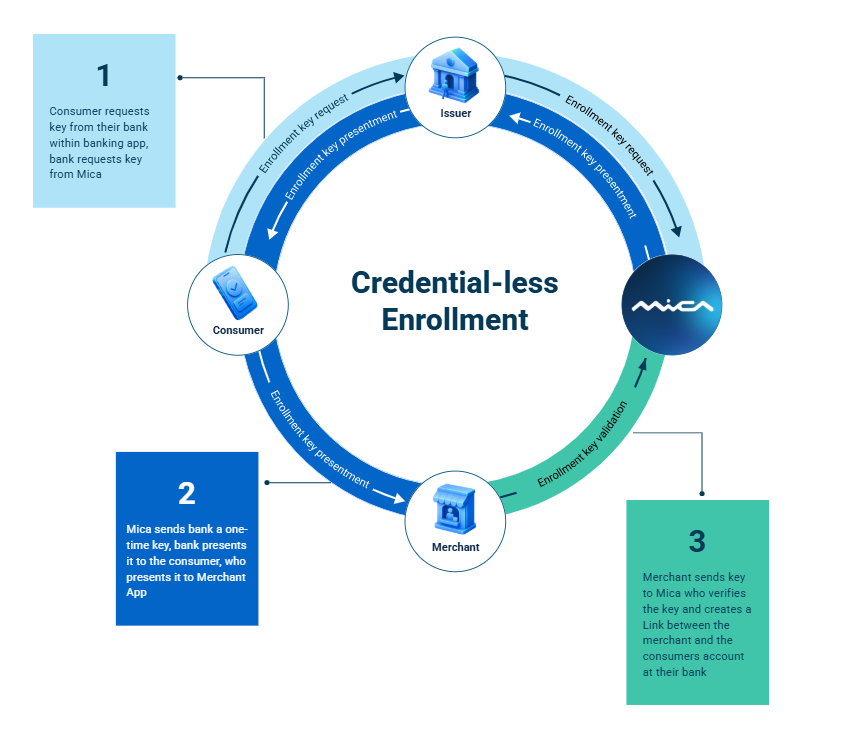
Patent examiners are paid to push back. For a claim to survive, it must cover patentable subject matter, be new, non-obvious, technically enabled, and practically useful — not one bar, five. Mica has cleared all five, thirty times — spanning Credential-less Payments, Credential-less Enrollment, N-Character PIN, Coupons and Rewards as Currency, Multi-Tender Payments, and many others.
Alston & Bird, one of the most respected intellectual property practices in the country, became Mica’s legal partner — building the patent portfolio jurisdiction by jurisdiction, claim by claim, across ten markets.
“Behind every issued patent is a challenge overcome and an innovative idea brought to life. Mica’s expanding patent portfolio reflects a relentless drive to innovate, reinforcing its position as a market leader and advancing transformative solutions that are shaping the future of the industry.”
— Dane Baltich, Partner, Alston & Bird
II. TRUE INNOVATION DOESN’T LAYER. IT REBUILDS.
There is a pattern to technological shifts that actually redefine industries. When an old foundation is structurally flawed, you don’t build a better layer on top of it. You pull it out by the roots.
Steve Jobs didn’t build a better Nokia. He looked at the phone — keyboard, carrier relationships, software, the whole thing — and decided the right answer was to throw it all out and rebuild from scratch. Every smartphone manufacturer in the world had been layering features onto existing form factors. Jobs built a new foundation, and the old one became irrelevant.
For decades, fintech has followed a predictable playbook: build a shinier interface or a faster tokenization layer over legacy transaction rails. But every one of those layers inherits the exact same original sin — the persistent credential. Whether it’s a credit card number, a bank routing code, or a proxy token sitting in a vault, it remains an attack surface waiting to be exploited.
Mica co-founders Christopher Petersen and Tim Kuchlein understood this. Having previously designed the core digital wallet architecture that became Google Wallet, they knew exactly where the old rails hit the wall. They didn’t set out to build onto an existing network. They built a new network.
III. TRANSACTION INFRASTRUCTURE, REBUILT
Mica is a ground-up transformation of transaction infrastructure that redefines authorization.
- Zero Credentials, Eliminated Credential Risk: Instead of shielding or masking card numbers, Mica eliminates them entirely from the authorization flow using Universally Unique Ephemeral Keys (UUEKs). Identity is addressed, never stored, removing credential-based fraud exposure at the architectural layer.
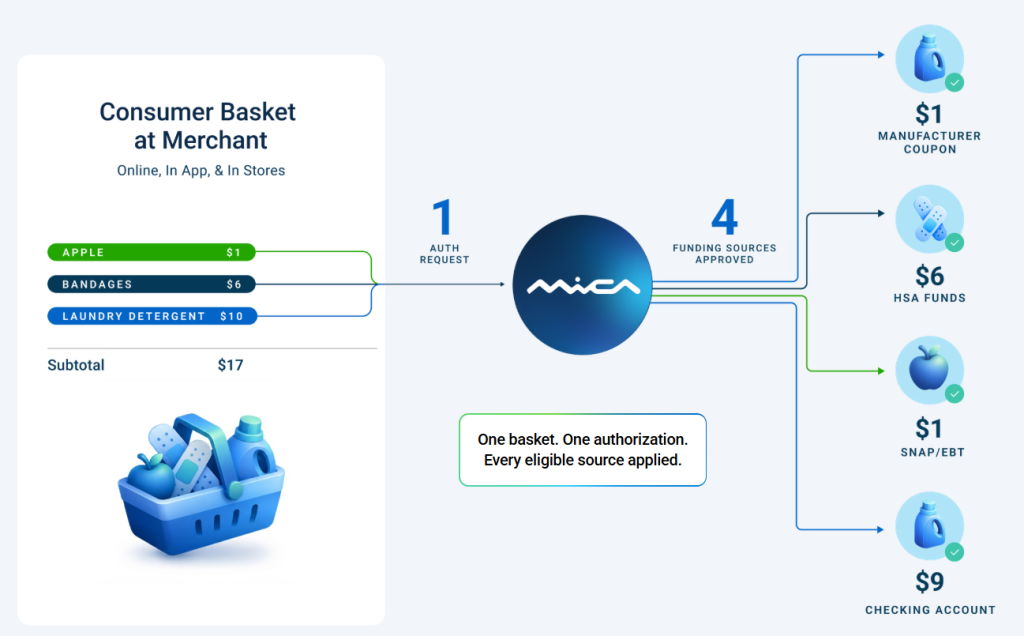
- Universal Authorization: Where existing networks are siloed by use case — credit cards, ACH or rewards — Mica treats all values natively. Bank accounts, loyalty and coupons can seamlessly orchestrate into a single transaction authorization in under 900 milliseconds.
- Intelligence at the Core: Legacy infrastructure moves money and stops, leaving data resolution to third-party software. Mica introduces SKU-level transaction transparency and automated adjudication directly into the network layer.
IV. THIRTY FOR THIRTY
The patents are the proof of work. Thirty times, Christopher, Tim and Alston & Bird put a piece of that infrastructure in front of the patent system — and thirty times, the answer came back the same.
Yes. This is new. This is yours.
With 60+ additional applications pending across ten jurisdictions, the portfolio is still growing.
Building new transaction infrastructure is one of the hardest things a company can attempt. You are asking every participant in an existing ecosystem to change. The people who came in early didn’t just believe in Mica. They’ve staked their reputations on it.
FT Partners, one of fintech’s most respected strategic investment banks.
“When we began working with Mica, it was immediately clear this wasn’t an incremental improvement to existing payment infrastructure — it was a ground-up redesign of how authorization works. The removal of reusable credentials from the transaction flow addresses the structural root cause of problems the industry has spent decades managing around. Reaching 30 issued patents is a meaningful milestone, but what it reflects is more significant: a defensible, novel architecture that incumbents cannot simply replicate. That combination of structural differentiation and a deepening intellectual property portfolio is exactly what we look for when we partner with a category-defining company.”
— Steve McLaughlin, Founder / CEO / Managing Partner, FT Partners
Editor’s note: By the time this article was finished, Mica received five more patents. The total is now 35. There are 60 pending. We’ve stopped being surprised.
Tokenization Was Supposed to Stop Fraud. It Didn’t. Here’s Why. ›
Source: https://mica.io/bigideas/posts/thirty-for-thirty-patents