Categories
Base Metals Energy Junior Mining Precious Metals Project Generators Top Bar

RIVERSIDE Stakes New Concession in Sonora and Samples High-Grade Gold


VANCOUVER, British Columbia, March 21, 2019 (GLOBE NEWSWIRE) — Riverside Resources Inc. (“Riverside” or the “Company”) (RRI.V) (RVSDF) (R99.F) is pleased to report initial results from the Company’s first-phase exploration program at the recently staked Sandy Project (the “Project”) located in northwestern Sonora, Mexico. Riverside continues to leverage its knowledge and experience in NW Mexico to cost-effectively acquire new prospective concessions with strong potential for new discoveries.

Riverside geologists have completed near surface sampling, mapping and geophysics to work up initial target areas at the Project. Riverside’s exploration team is targeting intrusion related and orogenic gold mineralization hosted by altered granite and linked with large structures adjacent to gneiss bedrock.

Riverside’s President and CEO, John-Mark Staude, stated: “The Sandy Project was a project the Company staked over a prospective area known to us from our past work in Sonora. We are pleased with the results from our first pass on the Sandy Project. Gold appears associated with large structures, intrusions and is an exciting potential step in the geologic deposit modeling for Sonora. We plan to follow up these positive results with some mapping and more sampling in 2019.”

The sampling done to date by Riverside has been concentrated on two areas in the center of the project with past historical mine workings (see Figure 1 below) associated with felsic intrusive stock and gneiss. A sample from one of these old workings returned 38.8 g/t Au. Chip channel samples of 1.5 meter in length returned gold results of 9.3 g/t, 4.7 g/t and 3.7 g/t Au. A total of 71 samples have been analyzed so far and further work at Sandy is anticipated to continue to define the structural nature and intrusion association to the gold.

Figure 1: Sandy Gold Target Areas and Geochemical Results.

Higher gold grades appear to be associated with intersecting structures within strongly foliated granitic intrusive bedrock. Primary structures strike NW-SE and dip between 40 and 70 degrees to the east in a general structural character with similar orientation and style to some of the shear zone gold mines in the region. Other smaller faults are noted striking roughly north-south and dipping steeply to the east which cut the main shear zone and could possibly hide extensive expansions of the gold system under shallow cover. The cross structures have been intruded by mafic dikes that show pervasive propylitic alteration indicating potential deeper intrusion related gold mineralization. The highest-grade gold material was found associated with a set of variously dipping felsic dikes which could be associated with the intrusive system. Silicification and minor quartz veining is noted associated with the structures and with through-going vein mineralization. The wall rock associated with these structures often shows sericitic and silica alteration.

Of note while visiting the property are the vast placer-gold workings immediately north of the project area. The source of the placer gold has not been determined and may be derived from intrusive bedrock within the Sandy project.

As can be seen in the district summary map (see Figure 1 above), the Riverside rock-chip samples confirm the existence of gold mineralization within the central part of the Company’s concession.

Click here to see the Sandy Project page on Riverside’s website.

Qualified Person & QA/QC:

The scientific and technical data contained in this news release pertaining to the Sandy Project was reviewed and approved by Freeman Smith, P.Geo, a non-independent qualified person to Riverside Resources, who is responsible for ensuring that the geologic information provided in this news release is accurate and who acts as a “qualified person” under National Instrument 43-101 Standards of Disclosure for Mineral Projects.

The rock chip samples collected by Riverside’s field crew at the Sandy Project were taken from 4 main showings on the western slopes of the property, with most individual samples consisting of composites of bedrock fragments hammer-chipped from 0.5 and 1.5-metre-long intervals across rock faces showing evidence of alteration and silicification. The highest-grade sample which assayed 38.8 g/t Au was a select grab sample of loose rock found within a small underground working which are believed to date back to the 1960’s. The one grab sample is not representative of the mineralization that was chip-sampled from actual outcrops, however, they do support Riverside’s view that the Sandy property has excellent potential for the discovery of intrusion-related gold and silver mineralization. All of Riverside’s rock samples were analyzed at the Hermosillo and Vancouver laboratories of Bureau Veritas where gold content was determined by fire assaying with atomic adsorption finish and ICP-mass spectrometry was used to analyze for 45 other elements. For quality control purposes, three standard samples were included with the batch of 71 field samples.

About Riverside Resources Inc.:

Riverside is an exploration company driven by value generation and discovery. The company has fewer than 65M shares issued and a strong portfolio of gold-silver and copper assets in North America. Riverside has extensive experience and knowledge operating in Mexico and leverages its large database to generate a portfolio of prospective mineral properties. In addition to Riverside’s own exploration spending, the Company also strives to diversify risk by securing joint-venture and spin-out partnerships to advance multiple assets simultaneously and create more chances for discovery. Riverside has additional properties available for option, with more information available on the Company’s website at www.rivres.com.

ON BEHALF OF RIVERSIDE RESOURCES INC.

“John-Mark Staude”

Dr. John-Mark Staude, President & CEO

For additional information contact:
John-Mark Staude Raffi Elmajian
President, CEO Corporate Communications
Riverside Resources Inc. Riverside Resources Inc.
info@rivres.com relmajian@rivres.com
Phone: (778) 327-6671 Phone: (778) 327-6671
Fax: (778) 327-6675 TF: (877) RIV-RES1
Web: www.rivres.com Web: www.rivres.com

Certain statements in this press release may be considered forward-looking information. These statements can be identified by the use of forward-looking terminology (e.g., “expect”,” estimates”, “intends”, “anticipates”, “believes”, “plans”). Such information involves known and unknown risks — including the availability of funds, the results of financing and exploration activities, the interpretation of exploration results and other geological data, or unanticipated costs and expenses and other risks identified by Riverside in its public securities filings that may cause actual events to differ materially from current expectations. Readers are cautioned not to place undue reliance on these forward-looking statements, which speak only as of the date of this press release.

Neither the TSX Venture Exchange nor its Regulation Services Provider (as that term is defined in the policies of the TSX Venture Exchange) accepts responsibility for the adequacy or accuracy of this release.

Categories
Junior Mining Top Bar

GREAT BEAR Drills Multiple High-Grade Gold Veins in Hinge Zone Including 30.15 g/t Gold Over 7.25 m


Vancouver, British Columbia–(Newsfile Corp. – March 21, 2019) – Great Bear Resources (TSXV: GBR) (the “Company” or “Great Bear”), today reported drill results from the Dixie Hinge Zone (“DHZ”) and Dixie Limb Zone (“DL”) at its 100% owned Dixie Project in the Red Lake District of Ontario.

Drilling continues to test along strike and at depth of the DHZ. Some of the DHZ drill holes also cross the adjacent DL at shallow depths and hence Great Bear is able to test both zones with the same drill holes. Hinge Zone drill results are provided in Table 1. Highlights of current drilling include:

  • Drill hole DHZ-031 intersected four significant gold bearing quartz veins along a 141 metre wide zone of increased quartz veining and alteration in the DHZ vein system.
  • Gold-bearing vein intercepts from DHZ-031 include:

a) 7.25 metres of 30.15 g/t gold, which includes 1.50 metres of 130.49 g/t gold,

b) 4.00 metres of 11.72 g/t gold, and

c) 0.50 metres of 60.72 g/t gold.

  • The high grade intercepts in DHZ-031 occur 20-60 metres west of previously reported drill hole DHZ-023 which included 3.40 metres of 31.60 g/t gold (see news release of February 21, 2019).
  • 26 of 42 drill holes (62%) completed by Great Bear along 240 metres of strike length of the DHZ that has been drilled to date have intersected intervals containing greater than 15 g/t gold.
  • Results of shallow drilling of the Dixie Limb Zone are also provided in Table 2.Highlights include 39.20 metres of 2.07 g/t gold starting at approximately 25 metres depth, including 9.20 metres of 5.43 g/t gold which includes 0.70 metres of 20.46 g/t gold.

Chris Taylor, President and CEO of Great Bear said, “The Hinge Zone continues to rapidly expand as we keep stepping out along strike and at depth. In our most recent results, drill hole DHZ-031 intersected a gold-bearing quartz vein network consisting of multiple high grade veins within a 141 metre (462 foot) wide drill interval. All current drilling is designed to cross the Hinge Zone at approximately right angles, meaning the interval widths are approximate true widths. The vertical depth of the DHZ-031 intervals ranges from approximately 60 to 190 metres from the surface. The scale and strength of near-surface multi-veined gold mineralization at the Hinge Zone continues to impress.”

An updated long section through the Hinge Zone is provided in Figure 1, showing the location of current reported drill intercepts. Images of high grade gold mineralization from DHZ-031 are shown in Figure 2.

The Company continues to undertake a fully funded, 30,000 metre drill program that is expected to continue through 2019. In order to accelerate the program, a second drill rig was added in early 2019. Approximately 13,000 metres of drilling remain in the current program.

Table 1: Most recent drill results from Hinge Zone drilling.

Drill Hole
From (m)
To (m)
Width* (m)
Gold (g/t)
Vein
Vertical Depth (m)
DHZ-026
269.10
271.10
2.00
8.07
1
218
including
269.10
269.60
0.50
24.27
DHZ-027
Anomalous
DHZ-028
192.00
192.50
0.50
4.63
1
165
and
206.20
208.25
2.05
10.94
2
177
including
206.20
207.20
1.00
22.07
and including
206.70
207.20
0.50
41.27
DHZ-029
174.80
175.30
0.50
32.60
1
158
and
222.00
227.50
5.50
2.01
2
201
including
226.50
227.50
1.00
6.27
and
248.60
257.70
9.10
3.52
3
224
including
248.60
249.90
1.30
21.02
and including
248.60
249.40
0.80
34.06
DHZ-030
156.40
159.30
2.90
1.63
1
140
including
158.80
159.30
0.50
4.90
and
170.90
171.60
0.70
4.97
2
153
DHZ-031
68.50
70.00
1.50
5.91
1
64
and
136.50
143.75
7.25
30.15
2
128
including
136.50
141.00
4.50
48.47
and including
136.50
139.75
3.25
66.62
and including
136.50
138.50
2.00
99.73
and including
137.00
138.50
1.50
130.49
and
181.00
181.50
0.50
60.72
3
169
and
198.00
209.50
11.50
4.36
4
191
including
204.50
209.50
5.00
9.70
and including
205.50
209.50
4.00
11.72

 * reported width is determined to be 90-95% of true width based on intersection points of the drill hole intercept with the geological model and oriented drill core data.

Drilling in the Dixie Limb continues to define shallow, wide intervals of gold mineralization, including high grade sub-intervals. The DL drill intervals are presented separately in Table 2. As drill holes like DHZ-026 are collared north of the DL and drill southwards into the DHZ at depth, these holes carry intervals from both zones.

Two exploratory step-out drill holes, DL-038 and DL-039 have encountered a new gold-mineralized silicified sediment zone similar to the DL. These holes were drilled from the DL across the D2 axial planar fault that divides the DL from the DHZ towards the south, into an area east of the DHZ. Results are included along with DL drill results in Table 2. These intercepts may represent a new zone of gold mineralized sediments, or may be an offset continuation of the Dixie Limb Zone in the footwall of the fault. Follow-up drilling is required to characterize this new discovery.

Two exploratory step-out drill holes, DHZ-024 and DHZ-025 were also completed east of the Hinge Zone fold closure (outside of the Hinge Zone) and encountered anomalous gold values of 0.92 metres of 1.46 g/t gold and 0.50 metres of 1.52 g/t gold, respectively, confirming gold is also present in this new area. Follow-up drilling is required to determine if significant gold-bearing quartz veining is also developed in this new area.

Table 2: Current drill results from the Dixie Limb Zone.

Drill Hole
From (m)
To (m)
Width* (m)
Gold (g/t)
Vertical Depth (m)
DHZ-026
40.80
80.00
39.20
2.07
34
including
56.80
80.00
23.20
3.19
47
and including
64.00
76.20
12.20
4.87
and including
67.00
76.20
9.20
5.43
56
and including
67.00
69.50
2.50
7.68
and including
74.50
76.20
1.70
11.62
62
and including
75.50
76.20
0.70
20.46
DHZ-027
48.50
63.15
14.65
1.12
43
including
61.15
63.15
2.00
5.19
54
and
72.40
85.00
12.60
3.45
64
DL-038**
347.55
349.05
1.50
0.34
324
DL-039**
219.75
224.75
5.00
2.27
195
including
219.75
221.25
1.50
4.51

 *All reported widths are drill indicated core length. Insufficient data has been collected at this time to determine true widths. **These drill holes have intersected mineralized sediments in the footwall of the local D2 axial planar fault located south the DL, and east of the DHZ. They may represent a new zone, or offset continuation of the DL.


Figure 1: Composite Long section through the DHZ (view to north) as drilled to-date showing currently reported drill results, and the location of recent step-out drilling. New results are highlighted in yellow.

Cannot view this image? Visit: https://media.zenfs.com/en-us/newsfile_64/62768e51023a6034f3ae4cb3ccaff309

To view an enhanced version of Figure 1, please visit:
https://orders.newsfilecorp.com/files/5331/43578_253d9f9b64bb4a09_002full.jpg

Figure 2: Images of high grade gold in drill core from DHZ-031. Interval returned 1.50 metres of 130.49 g/t gold.

Cannot view this image? Visit: https://media.zenfs.com/en-us/newsfile_64/e44a6fb7b77580519097968c3c2d8621

To view an enhanced version of  Figure 2, please visit:
https://orders.newsfilecorp.com/files/5331/43578_greatbear2enhanced


About Great Bear

The Dixie property is located approximately 15 minutes’ drive along Highway 105 from downtown Red Lake, Ontario. The Red Lake mining district has produced over 30,000,000 ounces of gold and is one of the premier mining districts in Canada, benefitting from major active mining operations including the Red Lake Gold Mine of Goldcorp Inc., plus modern infrastructure and a skilled workforce. The Dixie property covers a drill and geophysically defined 10 kilometre gold mineralized structure similar to that hosting other producing gold mines in the district. In addition, Great Bear is also earning a 100% royalty-free interest in the West Madsen, Pakwash, Dedee and Sobel properties, which cover regionally significant gold-controlling structures and prospective geology. All of Great Bear’s Red Lake projects are accessible year-round through existing roads.

Drill core is logged and sampled in a secure core storage facility located in Red Lake Ontario. Core samples from the program are cut in half, using a diamond cutting saw, and are sent to SGS Canada Inc. in Red Lake, Ontario, and Activation Laboratories in Ancaster Ontario, both of which are accredited mineral analysis laboratories, for analysis. All samples are analysed for gold using standard Fire Assay-AA techniques. Samples returning over 3.0 g/t gold are analysed utilizing standard Fire Assay-Gravimetric methods. Selected samples with visible gold are also analyzed with a standard 1kg metallic screen fire assay. Certified gold reference standards, blanks and field duplicates are routinely inserted into the sample stream, as part of Great Bear’s quality control/quality assurance program (QAQC). No QAQC issues were noted with the results reported herein.

Mr. R. Bob Singh, P.Geo, Director and VP Exploration, and Ms. Andrea Diakow P.Geo, Exploration Manager for Great Bear are the Qualified Persons as defined by National Instrument 43-101 responsible for the accuracy of technical information contained in this news release.

For further information please contact Mr. Chris Taylor, P.Geo, President and CEO at 604-646-8354, or Mr. Knox Henderson, Investor Relations, at 604-551-2360.

ON BEHALF OF THE BOARD

“Chris Taylor”

Chris Taylor, President and CEO

Inquiries:
Tel: 604-646-8354
Fax: 604-646-4526
info@greatbearresources.ca
www.greatbearresources.ca

Neither TSX Venture Exchange nor its Regulation Services Provider (as that term is defined in the policies of the TSX Venture Exchange) accepts responsibility for the adequacy or accuracy of this release.

This new release may contain forward-looking statements. These statements are based on current expectations and assumptions that are subject to risks and uncertainties. Actual results could differ materially because of factors discussed in the management discussion and analysis section of our interim and most recent annual financial statement or other reports and filings with the TSX Venture Exchange and applicable Canadian securities regulations. We do not assume any obligation to update any forward-looking statements.

We seek safe harbor

To view the source version of this press release, please visit https://www.newsfilecorp.com/release/43578

Categories
Junior Mining

MILES FRANKLIN As March 29th Approaches Central Banks Around the World Are Buying Gold – WHY?


David’s Commentary (In Blue)
I am on vacation this week and most of next week. I will be publishing my column just once this week and, only on Wednesday next week. I plan to be back to twice a week in April.
China just printed a trillion new dollars – in one month. Japan has kept their economy afloat for years with money creation – they buy a majority of their debt (bonds) every year, and stocks too. The Fed does whatever it has to keep the economy going, starting with their low interest rate policy. I’ll get back to this point shortly.
But first, Jim Sinclair pointed out how unrealistic it is to expect fiat paper to continue to be a store of value in the future. This is a charade that must come to an end. Of course the sixty-four-thousand-dollar question is “when?”
A friend of mine is my personal banker. A while ago I told him I wanted a six-figure line of credit. I didn’t have a need for it, but I thought it would be nice to have, just in case. He said the bank needed collateral so I decided to use some of my gold as backing for the line of credit. To my surprise, he would only allow me 60% of the value of the gold. I didn’t mind that the gold would be stored in the bank’s vault but it rubbed me the wrong way that the bank regulators did not allow banks to use gold as collateral at market value.
According to the Basil III Standards, gold is not as good as cash or government bonds.Isn’t that ridiculous. However, that’s about to change in April.
The BIS ruling states that Central banks and commercial banks will necessarily value their “financial” and real gold at market price.
The reason the Fed values its gold on its asset side at only $42 per ounce is because the gold is valued at book value by the Treasury, and the Fed’s gold is actually only gold certificates valued at no more than the statutory price of their issuance in 1934 which matches the book value of the Treasury gold. Will the Treasury revalue its physical gold at FRBNY and Fort Knox? Will the Treasury allow the Fed’s gold certificates to be valued at market? What are the implications if they don’t? Will they be forced to “audit” their physical gold holdings, that many believe are no longer there? This should be interesting. But finally, gold will be able to be used as collateral at market value.
Jay Taylor: Under “Basel III” Rules, Gold Becomes Money!
March 17, 2019
Excepted from Jay Taylor’s latest newsletter,
This also raises the question with regard to how much gold the U.S. actually holds as opposed to what it claims to hold. James Sinclair has always argued that the only way the world can overcome the debt that is strangling the global economy is to remonetize gold on the balance sheets of central banks at a price in many thousands of dollars higher. This would mean a major change in the global monetary system away from the dollar, as China has been pushing for the last decade or so.
If banks own and possess gold bullion, they can use that asset as equity and thus this will enable them to print more money. It may be no coincidence that as March 29th has been approaching banks around the world have been buying huge amounts of physical gold and taking delivery. For the first time in 50 years, central banks bought over 640 tons of gold bars last year, almost twice as much as in 2017 and the highest level raised since 1971, when President Nixon closed the gold window and forced the world onto a floating rate currency system.
It seems quite clear that someone or some group of individuals are motivated to cap the price of gold. Profit is a motive. In JPMorgan’s case, they have made billions by shorting gold and silver. The US Treasury and the Fed love to see cheap gold. A rising gold price usually is accompanied by rising interest rates and that is not in their best interest. But here is another reason, and it is tied to the new Basel 3 gold revisions.
Financial analysis published two weeks ago by a major Italian newspaper, Il Sole / 24 Ore (The Sun / 24 Hours), asserted frankly that central banks have been using gold futures and derivatives to suppress the monetary metal’s price so they can obtain more of the metal less expensively in advance of its remonetization under new rules promulgated by the Bank for International Settlements to take effect March 29.
Of course the new BIS rules, the “Basel 3” standards, declaring gold in the vault to be a superior asset, equivalent to cash and government bonds, are not news. What’s news here is that a mainstream financial news organization has nailed the deception and intrigue of central banks and accused them of rigging the international gold market.
Il Sole/24 Ore may be the first mainstream financial news organization to suggest that central banks are rigging the market so they might obtain more gold in anticipation of remonetizing it and pushing its price up, but the newspaper isn’t the first to reach this conclusion. The U.S. economists and fund managers Paul Brodsky and Lee Quaintance hypothesized as much in a study published in 2012 and called to your attention by GATA.
[Excepted from Jay Taylor’s latest newsletter]
In 2018, central banks added nearly 23 million ounces of gold, up 74% from 2017. This is the highest annual purchase rate increase since 1971, and the second-highest rate in history. Russia was the biggest buyer. And not surprisingly, the lion’s share of gold is flowing into central banks of countries that are in the sights of America’s killing machine-the Military Industrial Complex that Eisenhower warned us about in 1958.
The Bank for International Settlements (BIS), located in Basal, Switzerland, is often referred to as the central bankers’ bank. Related to this issue of central bank hoarding of gold is the fact that on March 29 the BIS will permit central banks to count the physical gold it holds (marked to market) as a reserve asset just the same as it allows cash and sovereign debt instruments to be counted.
There has been a long-term view that China and other nations dishoarding dollars in favor of gold have been quite happy about western banks trashing the gold price through the synthetic paper markets. But one has to wonder if that might not change, once physical gold is marked to market for the sake of enlarging bank balance sheets.
This also raises the question with regard to how much gold the U.S. actually holds as opposed to what it claims to hold. James Sinclair has always argued that the only way the world can overcome the debt that is strangling the global economy is to remonetize gold on the balance sheets of central banks at a price in many thousands of dollars higher. This would mean a major change in the global monetary system away from the dollar, as China has been pushing for the last decade or so.
If banks own and possess gold bullion, they can use that asset as equity and thus this will enable them to print more money. It may be no coincidence that as March 29th has been approaching banks around the world have been buying huge amounts of physical gold and taking delivery. For the first time in 50 years, central banks bought over 640 tonnes of gold bars last year, almost twice as much as in 2017 and the highest level raised since 1971, when President Nixon closed the gold window and forced the world onto a floating rate currency system.
But as Chris Powell of GATA noted, that in itself is not news. The move toward making gold equal to cash and bonds was anticipated several years ago. However, what is news is the realization by a major Italian Newspaper, II Sole/24 Ore, that “synthetic gold,” or “paper gold,” has been used to suppress the price of gold, thus enabling countries and their central banks to continue to buy gold and build up their reserves at lower and lower prices as massive amounts of artificially-created “synthetic gold” triggers layer upon layer of artificially lower priced gold as unaware private investors panic out of their positions.
This worthwhile commentary from Jay, which I’ve read in its entirety, was posted on the Zero Hedge website in abridged form at 11:29 a.m. EDT on Sunday morning — and the first reader that dropped it in my in-box was Judy Sturgis. Another link to it is here.
I write about bubbles and interest rates a lot. Recently a Fed bigwig wrote an article that stated the Fed cannot normalize policy EVER without blowing up all of the bubbles in the financial system. Keeping interest rates this low fosters speculation and will push the financial bubbles even further into never-never land. When this all comes to an end, it will be horrific. What better way to prepare for the inevitable than to own gold and silver? The bubbles are real. The debasement of currency and bonds are real. None of this is imagined. The Fed understands this and the danger in keeping rates low, but they finally are getting around to admitting that they have no choice.
Phoenix Capital
A Fed Insider Comes Clean on the Everything Bubble
The Fed just realized two things:
1)  It cannot normalize policy EVER without blowing up the Everything Bubble/ financial system.
2)  The Fed is well behind the curve when it comes to dealing with the next downturn.
Regarding #1, we’ve had some developments in the last month.
Recently, Dallas Fed President Robert Kaplan published an article on one of the Fed’s websites outlining the risks to the corporate bond market.
U.S. nonfinancial corporate debt as a percentage of GDP is now higher than the prior peak reached at the end of 2008…Nonfinancial corporate bonds outstanding in the U.S. grew from approximately $2.2 trillion in 2008 to approximately $5.7 trillion at year-end 2018…
Source: The Dallas Fed
Kaplan is here admitting that the US corporate space is now MORE leveraged to the real economy than it was in 2008. He notes, that as a result of this, the US economy is MUCH more sensitive to interest rates.
An elevated level of corporate debt, along with the high level of U.S. government debt, is likely to mean that the U.S. economy is much more interest rate sensitive than it has been historically.
Source: The Dallas Fed
Even more astonishing Kaplan stated that THIS was the reason why the Fed has decided to stop hiking interest rates!
In January I suggested this was the primary reason why the Fed made such an abrupt U-turn regarding monetary policy. It’s truly extraordinary that a Fed President is confirming this in public.
Remember, the primary mandate of the Fed is to maintain financial stability. This inherently means downplaying risks/ potential threats to the financial system/economy. So as much as you or I would like the Fed to be bluntly honest, the fact is that the Fed has to sugarcoat things to avoid panics.
With that in mind, the above admission by Fed President Kaplan is BEYOND extraordinary. Here we have the head of a regional Federal Bank admitting on record that the financial system, specifically the corporate bond market, is now MORE leveraged than it was in 2008 as direct result of Fed policy.
Even more astonishing for a Fed official, Kaplan is admitting that the US economy is now much more sensitive to interest rates. Put another way, the entire US economy/ financial system has become one gigantic bubble that requires extreme monetary policy (extraordinarily low interest rates) to NOT blow up.
This is literally the definition of the Everything Bubble.
If you aren’t actively taking steps to prepare for this, you need to start NOW.
On that note, we are putting together an Executive Summary outlining all of these issues as well as what’s coming down the pike when the Everything Bubble bursts.
It will be available exclusively to our clients. If you’d like to have a copy delivered to your inbox when it’s completed, you can join the wait-list here.
Best Regards
If you believe that there must be an endgame to all of this debt, money creation, and bubble-inducing madness, then I suggest that you also consider the following inevitable result on the precious metals market. Let me start by giving you an example. We have a client whose net worth is more than $350,000,000. He has already purchased $10,000,000 worth of gold. At the first sign of a credit collapse, interest rates rising rapidly out of control or of the dollar falling fast (having lost its Petro Dollar or Reserve Currency status), he is prepared to purchase an additional $50,000,000 worth of gold. If we had to go into the marketplace today and place an order of that size I don’t think we could fill it – at least not immediately. That would be just one order from one client.
When it becomes clear that the time to own gold and silver is actually upon us, one of two things will happen. The metals may not be available at all, you will have to pay a great deal more, and wait to take delivery.
We have already experienced several periods when gold or silver were not available from the primary distributors (Mints, Refiners, etc.). They were sold out and backordered. This happened when the prices dropped too low and while the demand rose. But when there is a stampede to buy gold and silver that is not precipitated by low prices, but rather by rapidly rising prices fostered by greed and fear of a collapse in the currency or credit markets, the demand will be much, much greater. You better have a very strong relationship with your dealer and hope that they can put you near the top of what will be a very long list of orders. This is not a scare tactic, it is a fact. It is exactly how the market will work. It will freeze up and supply will vanish, prices will rise. What is an ounce of gold or silver in scarce supply worth when people are desperate to unload their dollars to purchase it? Ask the people in Venezuela.
Are confident that you know how this must end up? The facts are adding up pointing to a very unhappy ending that is moving closer by the day. You should remind yourself that when you think it is convenient to take your position in gold and silver they may not be available for purchase, or if they are, you will have to wait a long time to take delivery paying a huge premium for the privilege of getting some precious metals at all.
I ask myself, why are we doing so much business in the last six months with gold and silver still so very much out of favor by the main stream? Because many of our clients are aware of what I just wrote (above). They understand that being early is the only safe option and they can see the handwriting on the wall. The stock market, the bond market and the dollar are ALL under pressure.
I will end this with a few comments from our friend Jim Sinclair – still “Mr. Gold” in our mind….
Jim Sinclair
WHEN WILL THE PARTY END?
The manipulators of paper gold can temporarily do anything. The operative word there in being temporarily.
The equation is gold versus run away insane debt levels, plus now we see QE in its true GLOBAL form as to INFINITY.
YOU NEED TO MAKE YOUR DECISION AND NOT OVER-INTELLECTUALIZE IT.
Do you really believe that fiat paper will maintain, and therefore store the value of what you have? Sorry, it simply will not.
As such GOLD is your savings account.
End of story!
Archived Newsletters
About Miles Franklin
Miles Franklin was founded in January, 1990 by David MILES Schectman. David’s son, Andy Schectman, our CEO, joined Miles Franklin in 1991. Miles Franklin’s primary focus from 1990 through 1998 was the Swiss Annuity and we were one of the two top firms in the industry. In November, 2000, we decided to de-emphasize our focus on off-shore investing and moved primarily into gold and silver, which we felt were about to enter into a long-term bull market cycle. Our timing and our new direction proved to be the right thing to do.
We are rated A+ by the BBB with zero complaints on our record. We are recommended by many prominent newsletter writers including Doug Casey, Jim Sinclair, David Morgan, Future Money Trends and the SGT Report.
For your protection, we are licensed, regulated, bonded and background checked per Minnesota State law.
Miles Franklin
801 Twelve Oaks Center Drive
Suite 834
Wayzata, MN 55391
1-800-822-8080
Copyright © 2019. All Rights
Categories
Blog Junior Mining

AGORA FINANCIAL Gold Speculator Portfolio Update


To get more great content from Agora Financial click here.
Riverside Resources (OTCBB: RVSDF)
Maintain Buy up to: $0.24
Position sizing: 1.5%

Riverside is a prospect generator that works mainly in northern Mexico, Sonora state. I’ve visited several of the company’s sites. In fact, I was down there this past weekend.
Shares traded down in the past month. Shares are slightly down over the past six months and year.
Riverside recently raised over $2 million via “oversubscribed” private placement. It’s a vote of confidence in the company and its CEO John-Mark Staude.
I visited a couple more Riverside mineral claims the other day down in Sonora. Let’s begin with this shot from the pickup truck… Indeed, you know you might be onto something when the roads are paved with copper ore!
IMG 1
Copper mineralization in road gravel. BWK photo.
The green stuff is malachite, mostly; it’s copper mineralization that coats gravel in an ancient outwash/conglomerate system. The source (the technical term is “up-gradient origin”) is a nearby, massive copper porphyry… a true mountain of copper ore.
There’s been a bit of historic mining in the area but not much. Indeed, most of the ore body has barely been picked over topside by miners of old, and almost none of it has felt the gentle touch of a drill bit. But Riverside has consolidated the hodgepodge of claims into a much better package for purposes of bringing in a partner. It’s ready to go now. (Note: I said “now.”)
During one stop along the field-trip route, John-Mark and I were literally walking on high-grade copper ore (the green stuff). Like this…
IMG 2
Your editor and Riverside CEO John-Mark Staude, walking on copper. BWK photo.
We were in the midst of a mineralized trend that’s literally miles-by-miles in dimension. It’s eastern Sonora, just west of the foothills of the mighty Sierra Madre mountain range. It’s volcanic caldera country — think of Yellowstone Park.
There’s placer gold mining in every streambed, water supply permitting. And there’s hard-rock mining to the east and west. The secret to success here is that much of the Riverside claim is buried, in some places under a thin layer of volcanic ash, like what you see here in this shot.
IMG 3
Your editor walks on volcanic ash, accompanied by a curious ranch dog. BWK photo.
Copper and gold. You want it? Right here… Riverside is absolutely ripe for a major combination with a larger company. The land position is second to none. The mineralization is vast, high grade, big size and eminently scalable. Company staff have done a splendid job of obtaining land position, permits, agreements with locals, nearby political support and more.
As a prospect generator, Riverside is in the business of developing multiple parallel stories, which add value. Stand by… That added value is likely to show up very soon! If you don’t own shares, get some. Maintain buy on Riverside up to $0.24.

Categories
Junior Mining Precious Metals

RISE GOLD Intersects 90 gpt Gold Over 4.3 meters at Idaho-Maryland

New drill intercept in Idaho Vein assays 90.4 gpt gold / 4.27 m (2.6 oz per ton / 14.0 ft)New drill intercept includes 458 gpt gold over 0.81 m (13.4 oz per ton / 2.7 ft) Additional drilling targeting Idaho #1 Vein currently in progressMultiple 52 Vein intersections assayed up to 15.4 gpt gold over 1.63 m (0.45 opt / 5.3 ft)A shallow vein near surface assayed 8.5 gpt gold over 2.88 m (0.25 opt / 9.4 ft)

Vancouver, British Columbia–(Newsfile Corp. – March 19, 2019) – Rise Gold Corp. (CSE: RISE) (OTCQB: RYES) (the “Company“) is pleased to announce additional assay results from on-going diamond core drilling at the Idaho-Maryland (“I-M”) Gold Project.

The exploration drill program at the Idaho-Maryland continues to be successful. Recent drilling intersected the Idaho #1 Vein below historic mining areas and intersected the 52 Vein area prior to reaching the Idaho #1 Vein target. A shallow vein was also intersected at 259 m.

TABLE 1 – New Drill Hole Intercept Highlights

Hole
From (m)
To (m)
Gold
(gpt)
Intercept
Length
(m)*
Vein
Idaho #1 Vein
I-18-11
1381.86
1384.33
3.6
2.47
Idaho #1
I-19-13
1007.97
1013.09
5.5
5.12
Idaho #1
I-19-13A
1005.31
1009.57
90.4
4.27
Idaho # 1
Including
1008.77
1009.57
458.0
0.81
Near Surface
I-18-11
259.16
262.04
8.5
2.88
?
Including
261.14
262.04
18.8
0.90
52 Vein Area
I-18-11
975.50
976.70
19.2
1.20
52
I-18-11
992.25
993.88
15.4
1.63
52
Including
992.70
993.22
35.6
0.52
I-18-11
1046.17
1052.58
3.9
6.42
52
I-18-11
1142.33
1144.08
5.4
1.75
52
I-18-12
950.50
960.49
2.6
9.98
52

*The Company is not able to estimate true widths for the intersected mineralization until further drilling is completed.

Very high-grade gold mineralization was encountered in drill hole I-19-13A which assayed 90.4 gpt gold over 4.27 m (2.6 oz per ton / 14 feet). Rise Gold has interpreted this intercept to represent a significant down-dip extension of the historic Idaho #1 Vein. The intercept in I-19-13A is near the elevation of the lowest haulage level of the mine accessed by the existing vertical mine shaft.

FIGURE 1 – Visible Gold in Drill Intercept I-19-13A (in retained half core)

Cannot view this image? Visit: https://media.zenfs.com/en-us/newsfile_64/eed21ca200e9ddb32b03302bbbe65f0d

To view an enhanced version of Figure 1, please visit:
https://orders.newsfilecorp.com/files/2255/43502_b873fb6414782965_002full.jpg

The Idaho #1 Vein was the most productive and highest-grade vein of the I-M Mine. Historic production from the Idaho #1 Vein is estimated at 935,000 oz of gold with an average head grade of 38.7 gpt (1.12 opt) gold. Total historic production from the Idaho Veins is estimated at 1,621,000 oz of gold with an average head grade of 28.4 gpt (0.74 opt) gold.

Idaho #1 Vein Drilling

The mineralized intercepts in drill holes I-19-13 and I-19-13A consist of a quartz shear vein and extensive zones of quartz-sericite-pyrite alteration in the walls of the vein.

  • Drill hole I-19-13A was wedged from drill hole I-19-13 and the holes are offset approx. 1.5 meters apart at the vein intersection
  • The vein in I-19-13 assayed 5.5 gpt gold over 5.12 m (0.16 opt / 16.8 ft)
  • The vein in I-19-13A assayed 90.4 gpt gold over 4.27 m (2.64 opt / 14.0 ft)
  • The weighted average of both holes is 44.1 gpt gold over 4.69m (1.29 opt / 15.4 ft)
  • I-19-13A includes a sample which assayed 458 gpt gold over 0.84 m (13.36 opt / 2.7 ft)
  • The vein in I-19-13A contains coarse visible gold in some samples of retained half core
  • A 40 m wide zone of alteration surrounds the vein with an average grade of ~1.5 gpt gold and individual samples assaying up to 12 gpt gold

Drill hole I-18-11 intersected the Idaho #1 Vein approx. 525 m along strike to the north-west and 200 m below I-19-13A. The intercept consists of a quartz shear vein and extensive zones of quartz-sericite-pyrite alteration in the walls of the vein.

  • The vein in I-18-11 assayed 3.6 gpt gold over 2.47 m (0.11 opt / 8.1 ft)
  • A 100 m wide zone of alteration surrounds the vein with an average grade of ~1.1 gpt gold and individual samples assaying up to 8 gpt gold
  • Additional drilling in the area of I-18-11 may reveal coarse gold similar to I-19-13A

Drill hole I-18-13A and I-18-11 are located 120 m and 320 m vertically below the I2400 level, the lowest level of exploration on the Idaho #1 Vein. Historic drifts were driven from each end of the vein and reported to be in gold mineralization at the time the mine was shut down.

  • I2400L West: historic channel samples of the vein and wallrock averaged 19.9 gpt gold over 1.93 m (0.58 opt / 6.4 ft) for a distance of 165 m to the final shutdown face
  • Channel samples include assays up to 481 gpt gold over 1.16 m (14.0 opt / 3.8 ft)
  • I2400L East: drifting in the Idaho #1 Vein was reported to be “well mineralized” over a distance of 76 m to the final shutdown face

Drill hole I-18-12 was designed to test the down-dip extension of the mineralization encountered in I-18-11 but significantly deviated and did not reach the intended Idaho #1 Vein target.

Rise Gold is currently drilling the Idaho #1 Vein target between I-19-13A and I-18-11 and utilizing directional drilling to improve the accuracy of drilling and expedite the next intercepts.

A summary of drill hole assay results from recent exploration diamond drilling on the Idaho #1 Vein target are presented in Table 1 and illustrated in Figure 2. A photo of coarse visible gold in drill hole I-19-13A is displayed in Figure 1.

The Isometric drawing (Figure 2) showing the recent drill hole intercepts in the Idaho area can be downloaded from the following link.

https://riseg.sharefile.com/d-s8bc52c537474e41a

FIGURE 2 – Idaho Vein Intercepts – Isometric View

Cannot view this image? Visit: https://media.zenfs.com/en-us/newsfile_64/49d5152bcf6ca4b4db89aa4ff96fcefa

To view an enhanced version of Figure 2, please visit:
https://orders.newsfilecorp.com/files/2255/43502_b873fb6414782965_003full.jpg


52 Vein Area Drilling

Drill holes I-18-11 and I-18-12 drilled though the 52 Vein area en route to the Idaho #1 Vein target.

Important gold mineralization related to the 52 Vein was intersected in drill holes I-18-11 & I-18-12. The 52 Vein intercepts are located approximately 242 m and 125 m north-east of the previous drill intercept in drill hole I-18-10.

A similar style of mineralization to I-18-10 was encountered with a wide flat lying shear vein and high-grade extensional veins in the walls of vein.

Drill hole I-18-10 assayed 149.3 gpt gold over 6.8 m, including 2,190 gpt gold over 0.47 m and was previously reported by news release on Dec 13th 2018.

https://www.risegoldcorp.com/uploads/content/Dec13RiseGoldIntersects149gptgoldover6.8metersatIdahoMaryland.pdf

The current drill program is focussed on the Idaho #1 Vein target and therefore the 52 Vein intercepts are incidental to the Idaho #1 Vein drilling. The 52 Vein represents a large and compelling target for a focussed drilling program in the future.

A summary of drill hole assay results from recent exploration diamond drilling on the 52 Vein target are presented in Table 1 and illustrated in Figure 3.

FIGURE 3 – 52 Vein Intercepts – Plan View

Cannot view this image? Visit: https://media.zenfs.com/en-us/newsfile_64/401c4b4a686e20d6fca42f6abe4b4cc3

To view an enhanced version of Figure 3, please visit:
https://orders.newsfilecorp.com/files/2255/43502_b873fb6414782965_004full.jpg


Quality Control and Assay Methods

Richard Lippoth, M.Sc, CPG, the qualified person for the exploration drill results disclosure contained in this news release, has studied the drill core discussed in this news release and has reviewed the analytical and quality control results. Mr. Lippoth has reviewed and approved the scientific and technical contents of this news release.

Benjamin Mossman, P.Eng, CEO of Rise Gold, is the qualified person for the historic production disclosure contained in this news release. Historic production at the Idaho-Maryland Mine is disclosed in the Technical Report on the Idaho-Maryland Project dated June 1st, 2017 and available on www.sedar.com.

Rise has implemented a quality control program for its drill program to ensure best practice in the sampling and analysis of the drill core. This includes the insertion of blind blanks, duplicates and certified standards. HQ- and NQ-sized drill core is saw cut with half of the drill core sampled at intervals based on geological criteria including lithology, visual mineralization, and alteration. The remaining half of the core is stored on-site at the Company’s warehouse in Grass Valley, California. Drill core samples are transported in sealed bags to ALS Minerals analytical assay lab in Reno, Nevada.

All gold assays were obtained using a method of screen fire assaying. This procedure involves screening a large pulverized sample of up to 1 kg at 100 microns. Any +100 micron material remaining on the screen is retained and analyzed in its entirety by fire assay with gravimetric finish and reported as the Au (+) fraction result. The -100 micron fraction is homogenized and two sub-samples of 30-50 grams are analyzed by fire assay with AAS finish. If the grade of the material exceeds 10 gpt the sample is re-assayed using a gravimetric finish. The average of the two results is taken and reported as the Au (-) fraction result. All three values are used in calculating the combined gold content of the plus and minus fractions.

About Rise Gold Corp.

Rise Gold is an exploration-stage mining company. The Company’s principal asset is the historic past-producing Idaho-Maryland Gold Mine located in Nevada County, California, USA. The Idaho-Maryland Gold Mine is a past producing gold mine with total past production of 2,414,000 oz of gold at an average mill head grade of 17 gpt gold from 1866-1955. Historic production at the Idaho-Maryland Mine is disclosed in the Technical Report on the Idaho-Maryland Project dated June 1st, 2017 and available on www.sedar.com. Rise Gold is incorporated in Nevada, USA and maintains its head office in Vancouver, British Columbia, Canada.

On behalf of the Board of Directors:

Benjamin Mossman
President, CEO and Director
Rise Gold Corp.

For further information, please contact:

RISE GOLD CORP.
Suite 650, 669 Howe Street
Vancouver, BC V6C 0B4
T: 604.260.4577
info@risegoldcorp.com
www.risegoldcorp.com

The CSE has not reviewed, approved or disapproved the contents of this news release.

Forward-Looking Statements

This press release contains certain forward-looking statements within the meaning of applicable securities laws. Forward-looking statements are frequently characterized by words such as “plan”, “expect”, “project”, “intend”, “believe”, “anticipate”, “estimate” and other similar words or statements that certain events or conditions “may” or “will” occur.

Although the Company believes that the expectations reflected in the forward-looking statements are reasonable, there can be no assurance that such expectations will prove to be correct. Such forward-looking statements are subject to risks, uncertainties and assumptions related to certain factors including, without limitation, obtaining all necessary approvals, meeting expenditure and financing requirements, compliance with environmental regulations, title matters, operating hazards, metal prices, political and economic factors, competitive factors, general economic conditions, relationships with vendors and strategic partners, governmental regulation and supervision, seasonality, technological change, industry practices, and one-time events that may cause actual results, performance or developments to differ materially from those contained in the forward-looking statements. Accordingly, readers should not place undue reliance on forward-looking statements and information contained in this release. Rise undertakes no obligation to update forward-looking statements or information except as required by law.

Corporate Logo
Corporate Logo

To view the source version of this press release, please visit https://www.newsfilecorp.com/release/43502

Categories
Base Metals Energy Junior Mining Precious Metals Project Generators

RIVERSIDE RESOURCES Inc. Closes $2.8 Million Private Placement

THIS NEWS RELEASE IS NOT INTENDED FOR DISTRIBUTION TO UNITED STATES NEWSWIRE SERVICES OR FOR DISSEMINATION IN THE UNITED STATES AND DOES NOT CONSTITUTE AN OFFER OF THE SECURITIES DESCRIBED HEREIN

VANCOUVER, British Columbia, March 19, 2019 (GLOBE NEWSWIRE) — Riverside Resources Inc. (“Riverside” or the “Company”) (RRI.V) is pleased to announce it has closed its previously announced private placement. The placement was over-subscribed and the Company issued 17,488,875 units at a price of $0.16 per unit for gross proceeds of $2,798,220 instead of the 9,375,000 units ($1,500,000) originally contemplated.

Each unit consists of one common share and one whole common share purchase warrant (“Unit”). Each common share purchase warrant is exercisable into one common share for a period of two (2) years from closing at a price of $0.22 (“Warrant”). If, at any time after July 20, 2019, the closing price of the common shares on the TSX Venture Exchange (“TSX-V”) trades at a VWAP equal or greater than $0.45 for 10 consecutive trading days, the Company may accelerate the expiry date of the Warrants by disseminating a press release announcing the new expiry date whereupon the Warrants will expire on the 30th trading day after the date on which such press release is disseminated.

Management and insiders subscribed for 845,000 Units for $135,200 in total proceeds to the Company.

With respect to a portion of the funds raised in the private placement, the Company paid finders’ fees of $87,312 to Sprott Global Resource Investments Ltd., $20,076.80 and 12,000 Units to Haywood Securities Inc., 16,000 Units to Canaccord Genuity, and  $1,280 to PI Financial Corp.

All securities issued pursuant to the private placement and as finders’ fees will be subject to a four-month hold period expiring on July 20, 2019.

The Company will use the proceeds of the financing to fund a focused drill program at the Cecilia Gold Project, additional project acquisitions and further target refinement on existing projects to advance towards new partnerships.

The securities being offered have not been and will not be registered under the U.S. Securities Act of 1933, as amended, and may not be offered or sold in the United States or to, or for the account or benefit of, U.S. persons without United States federal and state registration or an applicable exemption from registration requirements.

About Riverside Resources Inc.:
Riverside is an exploration company driven by value generation and discovery. The company has fewer than 65M shares issued and a strong portfolio of gold-silver and copper assets in North America. Riverside has extensive experience and knowledge operating in Mexico and leverages its large database to generate a portfolio of prospective mineral properties. In addition to Riverside’s own exploration spending, the Company also strives to diversify risk by securing joint-venture and spin-out partnerships to advance multiple assets simultaneously and create more chances for discovery. Riverside has additional properties available for option, with more information available on the Company’s website at www.rivres.com.

ON BEHALF OF RIVERSIDE RESOURCES INC.
“John-Mark Staude”
Dr. John-Mark Staude, President & CEO

For additional information contact:

John-Mark Staude
President, CEO
Riverside Resources Inc.
info@rivres.com
Phone:  (778) 327-6671
Fax:  (778) 327-6675
Web:  www.rivres.com
Raffi Elmajian
Corporate Communications
Riverside Resources Inc.
relmajian@rivres.com
Phone: (778) 327-6671
TF: (877) RIV-RES1
Web: www.rivres.com

Certain statements in this press release may be considered forward-looking information. These statements can be identified by the use of forward-looking terminology (e.g., “expect”,” estimates”, “intends”, “anticipates”, “believes”, “plans”). Such information involves known and unknown risks — including the availability of funds, the results of financing and exploration activities, the interpretation of exploration results and other geological data, or unanticipated costs and expenses and other risks identified by Riverside in its public securities filings that may cause actual events to differ materially from current expectations. Readers are cautioned not to place undue reliance on these forward-looking statements, which speak only as of the date of this press release.

Neither the TSX Venture Exchange nor its Regulation Services Provider (as that term is defined in the policies of the TSX Venture Exchange) accepts responsibility for the adequacy or accuracy of this release.

Categories
Junior Mining

NV Gold Arranges Private Placement of up to CDN$750,000

VANCOUVER, BC / ACCESSWIRE / March 19, 2019 / NV Gold Corporation (TSX-V: NVX; OTC Pink: NVGLF) (“NV Gold” or the “Company“) is pleased to announce it has arranged a non-brokered private placement of units of the Company for gross proceeds of up to CDN$750,000 (the “Placement”).

“The Company and our technical team are looking forward to what is shaping up to be a busy and exciting 2019 within our Nevada portfolio. After reviewing our project portfolio, we will be finalizing our exploration strategy in the next couple of weeks and look forward to a focused 2019 exploration and drilling season with great excitement,” commented Peter A. Ball, President and COO of NV Gold.

The Placement is an offering of up to 6,250,000 units (the “Units”) at CDN$0.12 per Unit. Each Unit consists of one Share and one-half of one Warrant exercisable at CDN$0.20 per share for 30 months from issue of the Units. A finder’s fee is payable on subscriptions by certain of the subscribers of 7% of the cash proceeds paid by such subscribers and warrants to purchase 7% of the number shares issuable to such subscribers in respect of their subscriptions for Units.

Closing of the Placement is conditional on acceptance of the TSX Venture Exchange. The proceeds of the Placement will be used by the Company for the advancement of existing properties, potential acquisition new properties, and for general working capital.

This news release does not constitute an offer to sell or a solicitation of an offer to buy any of the securities in the United States. The securities have not been and will not be registered under the United States Securities Act of 1933, as amended (the “U.S. Securities Act”) or any state securities laws and may not be offered or sold within the United States or to U.S. Persons unless registered under the U.S. Securities Act and applicable state securities laws or an exemption from such registration is available.

About NV Gold Corporation

NV Gold is a junior exploration company based in Vancouver, British Columbia that is focused on delivering value through mineral discoveries. Leveraging its highly experienced in-house technical knowledge, NV Gold’s geological team intends to utilize its geological databases, which contains a vast treasury of field knowledge spanning decades of research and exploration, combined with a portfolio of mineral properties in Nevada, to prioritize key projects for focused exploration programs.

On behalf of the Board of Directors,

Peter A. Ball
President and COO

For further information, visit the Company’s website at www.nvgoldcorp.com or contact:

Peter A. Ball, President & COO
Phone: 1-888-363-9883
Email: peter@nvgoldcorp.com

Neither the TSX Venture Exchange nor its Regulation Service Provider (as that term is defined in the policies of the TSX Venture Exchange) accepts responsibility for the adequacy or accuracy of this release.

Forward Looking Statements

This news release includes certain forward-looking statements or information. All statements other than statements of historical fact included in this release, including, without limitation, statements regarding the proposed raising of CDN$750,000 and the proposed uses of such funds and other future plans and objectives of the Company, including exploration plans, are forward-looking statements that involve various risks and uncertainties. There can be no assurance that such statements will prove to be accurate and actual results and future events could differ materially from those anticipated in such statements. Important factors that could cause actual results to differ materially from the Company’s plans or expectations include regulatory issues, market prices, availability of capital and financing, general economic, market or business conditions, timeliness of government or regulatory approvals and other risks detailed herein and from time to time in the filings made by the Company with securities regulators. The Company disclaims any intention or obligation to update or revise any forward-looking statements whether as a result of new information, future events or otherwise except as otherwise required by applicable securities legislation.

SOURCE: NV Gold Corporation

View source version on accesswire.com:
https://www.accesswire.com/539488/NV-Gold-Arranges-Private-Placement-of-up-to-CDN750000

Categories
Base Metals Energy Junior Mining Project Generators

FISSION 3.0 Drills Strong Alteration in Multiple Holes at Key Lake South

First pass drill program returns encouraging results
TSX VENTURE SYMBOL: FUU
KELOWNA, BC, March 20, 2019 /CNW/ – FISSION 3.0 CORP. (“Fission 3” or “the Company“) is pleased to announce results from the first pass drill program at its Key Lake South properties (Karpinka Lake and Hobo Lake projects) in the south-east Athabasca Basin region of Saskatchewan, Canada. A total of ~1300m was drilled in eight completed holes, all of which encountered variably intense hydrothermal alteration and six holes with anomalous radioactivity.  Of note, holes KL19-005, KL19-006 and KL19-007, drilled in the northern part of the extensive land package, encountered the most significant hydrothermal alteration and paleoweathering, which are considered important factors for hosting high-grade uranium mineralization and will be prioritized for follow up. With $6M in the treasury, Fission 3 is well poised to continue to explore on its extensive property portfolio.

  • Winter program at Key Lake complete: Eight holes in 1300.8m in the Key Lake South projects (Karpinka Lake and Hobo Lake) – located on the south-east region of theAthabasca Basin, 40 km south of the basin margin in a geological setting analogous to Fission Uranium’s Triple R deposit at PLS.
  • Drilling intercepted multiple anomalous and narrow radiometric anomalies and strong alteration: drill holes located in the northern area of the property (holes KL19-005, KL19-006 and KL19-007) have exhibited the strongest hydrothermal alteration and paleoweathering profile.
  • Prospective for high-grade mineralization: KL19-005 intersected over 100m of strong clay alteration and faulted rock, which is interpreted to represent a major structural dilation zone.  Such settings are important in the genesis of structurally hosted uranium deposits as they provide a pathway for large amount of hydrothermal fluid flow and can develop traps for localizing mineralized fluids.  Most of the Athabasca Basin’s major uranium deposits are situated in similar geological settings.
  • Cree Bay exploration upcoming: Fission 3.0’s ongoing portfolio exploration program will now move to Cree Bay, conducting ground geophysics surveys to assist with the planned summer drill program.
Fission 3.0 Corp. (CNW Group/Fission 3.0 Corp.)

Ross McElroy, COO, and Chief Geologist for Fission, commented,
“The drill program at Key Lake is the latest step in the ongoing exploration of our prospective uranium projects. With radioactivity and strong alteration in multiple holes, we are looking at very encouraging first pass results that warrant follow up drilling. The winter program will now progress with a ground geophysics DC resistivity survey on our Cree Bay property in the northeast basin area, as we focus on developing high-priority drill targets to be tested during the summer exploration program.”  
About Key Lake South: The Key Lake area is an important historic mining district.  The Key Lake operations is owned by Cameco Corp. (83%) and Orano Canada Inc. (17%) and hosted the former Key Lake mine, which produced 208 million pounds of uranium between 1975 to 1997 and is home to one of the largest uranium mills in the world.  The Key Lake mill processed ore from the McArthur River uranium deposit, until Cameco announced in 2018 that McArthur River mining would be suspended indefinitely due to low uranium prices.  The area is considered highly prospective to discover significant new uranium occurrences.
The 100% owned Key Lake South Projects consist of two projects (Karpinka Lake and Hobo Lake) covering 19,377 ha in 42 mineral claims. The properties are located approximately 40km south of the historic Key Lake mine. The projects are geologically situated within the extremely prolific Wollaston-Mudjatic Transition Zone “WMTZ”, notable for hosting the majority of the major high-grade uranium deposits on the eastern side of the Athabasca Basin.  To the north, the Key Lake Deposit is hosted within the northern portion of northeast-southwest trending litho-structural feature known as the Key Lake Shear Zone “KLSZ”.  The KLSZ continues southward through the Karpinka Lake and Hobo Lake projects.  Together the properties cover approximately 50km of trend of the KLSZ, where a number of geochemical uranium anomalies have been discovered and where a network of EM conductors exhibit structural complexity including off-sets, breaks, folding and other geophysical features such as gravity and resistivity lows.  These features are often associated with uranium mineralization occurrences.
Key Lake South Projects – Drilling Summary
Table 1:  Winter 2019 Key Lake South Drill Hole Summary

Property Target EM Conductor Hole ID Collar * Down-hole Radiometric Highlights
with Mount Sopris 2PGA-1000 Natural
Gamma Probe
Overburden
Depth (m)
Total
Depth (m)
Azimuth Dip From (m) To (m) Width (m) CPS Peak
Karpinka
Lake
Key Lake Shear Zone FOR-B-2220 KL19-001 79 -75 99.9 100.2 0.3 743 18.0 149.0
111.3 111.9 0.6 884
114.9 115.3 0.4 984
126.5 126.8 0.3 948
129.4 131.8 2.4 1431
FOR-2 KL19-002 274 -50 53.5 53.8 0.3 1344 2.1 101.0
79.1 80.2 1.1 985
FOR-B-2220 KL19-003 257 -63 217.2 218.1 0.9 1492 15.3 251.0
220.3 220.6 0.3 693
KAR-3160 KL19-004 277 -54 69.1 70.0 0.9 1302 37.6 125.0
KL19-005 86 -61 No anomalous radioactivity 39.0 128.8
KL19-006 90 -52 No anomalous radioactivity 57.0 101.0
KL19-007 86 -67 113.7 114.3 0.6 840 29.0 152.0
118.7 119 0.3 595
N/A KL19-008 271 -55 212.3 212.5 0.2 550 7.3 293.0
TOTAL 1300.8

 
KL19-001
KL19-001 was an angled drill hole oriented parallel to the intermittent, weak, calc-silicate hosted radioactivity intersected in historic hole RO-01.  The purpose of KL19-001 was to test the radioactive calc-silicate from the top of bedrock down to a depth of approximately 150m. Bedrock was intersected at a depth of 18.0m down hole and was comprised of variably clay, hematite, graphite and chlorite altered schist, cataclasite and calc-silicate.  A strongly hematized calc-silicate was cored from 126.8m to 132.5m down hole which returned weak radioactivity up to 590 cps on a RS-125 handheld scintillometer.  No other anomalous radioactivity was intersected, and the hole was terminated at a depth of 149.0m in weakly altered graphitic schist.
KL19-002
KL19-002 was an angled drill hole targeting the Key Lake Shear zone (KLSZ) approximately 950m south of KL19-001. Bedrock was intersected at a depth of 43.0 m down hole and was comprised of weakly altered orthogneiss and calc-silicate gneiss to a depth of 72.9m.  From 72.9m to 80.3m a strongly sheared biotite-garnet gneiss was cored with a central 5.2mwide graphitic brittle-ductile fault zone. The hole was terminated at a depth of 101.0m in fresh orthogneiss.
KL19-003
KL19-003 was an angled drill hole targeting the weakly radioactive calc-silicate approximately 75m below that intersected in KL19-001.  The drill hole aimed to assess the variability in previously intersected calc-silicate thickness and radioactivity with depth, and to test for parallel radioactive calc-silicate lenses.  Bedrock was intersected at a depth of 15.3m down hole and was comprised of a thick sequence of biotite schist to a depth of 182.5m where a sheared, graphitic schist was intersected.  A weakly radioactive calc-silicate lens was cored from 222.2m to 224.5m which returned up to 410 cps on a RS-125 handheld scintillometer. The hole was terminated at a final depth of 251.0m in fresh orthogneiss.
KL19-004
KL19-004 was an angled drill hole testing the southern extent of a large left stepping electromagnetic conductor trace ~7km north of KL-001.  This flexure is interpreted to reflect a dilational zone in the KLSZ caused by sinistral strike-slip movement. Bedrock was intersected at a depth of 37.0m down hole and was comprised primarily of weakly hematite altered orthogneiss.  An intercalacted sequence of weakly graphitic biotite-garnet schist and cataclasite was cored from 42.7m to 66.9m down hole. No anomalous radioactivity was intersected, and the hole was terminated at a depth of 125.0m in fresh orthogneiss.
KL19-005
KL19-005 was an angled drill hole testing the same large, left stepping KLSZ VTEM conductor trace as KL19-004, approximately 1 km further to the north. Bedrock was intersected at a depth of 39.0m down hole as was comprised of moderately to extremely bleached, clay, hematite, chlorite and graphite altered orthogneiss.  A strongly graphitic, clay and chlorite altered cataclasite was intersected from 85.5m to 94.5m down hole. Thin limonitic fractures in the graphite altered orthogneiss at approximately 78m down hole returned elevated radioactivity up to 200 cps on the RS-125 handheld scintillometer. The hole was lost due to ground conditions at a depth of 128.8m in strongly chlorite and graphite altered orthogneiss.
KL19-006
KL19-006 was an angled drill hole testing the up-dip projection of the graphitic cataclasite in hole KL19-005.  Bedrock was intersected at depth of 56.0m down hole and was comprised of weakly clay and chlorite altered orthogneiss. The drill hole is interpreted to have overshot the graphitic cataclasite which down-dropped the bedrock surface to the east (normal faulting). No anomalous radioactivity was intersected and the hole was terminated at a depth of 101.0m in weakly chlorite and clay altered orthogneiss.
KL19-007
KL19-007 was an angled drill hole testing the down-dip projection of the structural damage zone and strong alteration in KL19-005.  Bedrock was intersected at a depth of 29.0m down hole and was comprised of extremely clay and chlorite altered graphitic cataclasite, variably altered graphitic schist, biotite schist and orthogneiss. Weak elevated radioactivity up to 160 cps was recorded on the RS-125 handheld scintillometer at 119.0m hosted in intercalated quartzitic and graphitic schist.  Apart from the upper cataclasite no structural damage zone was intersected below KL19-005 and the hole was terminated at a depth of 152.0m in fresh orthogneiss.
KL19-008
KL19-008 was an angled drill hole testing for the northern extension of the historic DD-Zone where previous historic drilling returned up to 0.78% U3O8 over 0.5m.  Bedrock was intersected at a depth of 7.3m down hole and was comprised of a thick intercalated sequence of graphite altered amphibolite and calc-silicate to a depth of 136.8m.  Below 136.8m, the hole encountered weakly altered to fresh biotite-garnet schist and graphitic schist.  A 0.20m granite intrusion at 90.5 m depth returned elevated radioactivity up to 540 cps. The hole was terminated at a depth of 293.0m in fresh biotite-garnet schist.
Natural gamma radiation in drill core that is reported in this news release was measured in counts per second (cps) using a Mount Sopris PGA-1000 Natural Gamma Probe and a hand-held RS-125 Scintillometer manufactured by Radiation Solutions. The reader is cautioned that scintillometer readings are not directly or uniformly related to uranium grades of the rock sample measured and should be used only as a preliminary indication of the presence of radioactive materials.
Samples from the drill core are split in half sections on site. Where possible, samples are standardized at 0.5m down-hole intervals. One-half of the split sample will be sent to SRC Geoanalytical Laboratories (an SCC ISO/IEC 17025: 2005 Accredited Facility) in Saskatoon, SK. Analysis will include a 63 element ICP-OES, and boron.
All depth measurements reported, including radioactivity and mineralization interval widths are down-hole, core interval measurements and true thickness are yet to be determined.
Cree Bay Exploration: In 2017 a ground DC Resistivity survey was completed in 2 separate grids centered on sections of strong conductivity interpreted from a historic airborne GEOTEM electromagnetic survey on what was then the Cree Bay property. Fission 3 subsequently staked additional ground to cover the most conductive part of this anomaly. The winter 2019 exploration work will thus continue to extend the ground geophysics survey over the anomaly, to determine the highest priority drill targets. The program will consist of a winter 21 line-km ground DC Resistivity survey and 2 lines of Moving Loop TDEM survey will be conducted during April to cover the most geophysically prospective area identified from a historic GEOTEM electromagnetic survey.
About Cree Bay: The Cree Bay property, located 20km south of the town of Stony Rapids, consists of 16 claims totaling 14,080 ha and sits on the inside edge of the north-eastern Athabasca Basin.  The property is located along the major SW-NE trending Virgin River Shear Zone.  Locally the conductive corridor is bound by the Black Lake Fault to the north and East Channel Fault to the south.  The historic Nisto uranium mine, is located ~7.5km to the northeast, along the Black Lake fault.
The technical information in this news release has been prepared in accordance with the Canadian regulatory requirements set out in National Instrument 43-101 and reviewed on behalf of the company by Ross McElroy, P.Geol. Chief Geologist and COO for Fission 3.0 Corp., a qualified person.
About Fission 3.0 Corp.
Fission 3.0 Corp. is a Canadian based resource company specializing in the strategic acquisition, exploration and development of uranium properties and is headquartered in Kelowna, British Columbia. Common Shares are listed on the TSX Venture Exchange under the symbol “FUU.”
ON BEHALF OF THE BOARD
“Ross McElroy”

Ross McElroy, COO
Cautionary Statement: Certain information contained in this press release constitutes “forward-looking information”, within the meaning of Canadian legislation. Generally, these forward-looking statements can be identified by the use of forward-looking terminology such as “plans”, “expects” or “does not expect”, “is expected”, “budget”, “scheduled”, “estimates”, “forecasts”, “intends”, “anticipates” or “does not anticipate”, or “believes”, or variations of such words and phrases or state that certain actions, events or results “may”, “could”, “would”, “might” or “will be taken”, “occur”, “be achieved” or “has the potential to”. Forward looking statements contained in this press release may include statements regarding the future operating or financial performance of Fission 3.0 Corp. which involve known and unknown risks and uncertainties which may not prove to be accurate. Actual results and outcomes may differ materially from what is expressed or forecasted in these forward-looking statements. Such statements are qualified in their entirety by the inherent risks and uncertainties surrounding future expectations. Among those factors which could cause actual results to differ materially are the following: market conditions and other risk factors listed from time to time in our reports filed with Canadian securities regulators on SEDAR at www.sedar.com. The forward-looking statements included in this press release are made as of the date of this press release and Fission 3 Corp. disclaim any intention or obligation to update or revise any forward-looking statements, whether as a result of new information, future events or otherwise, except as expressly required by applicable securities legislation.

SOURCE Fission 3.0 Corp.

For further information: Investor Relations, Ph: 778-484-8030, TF: 844-484-8030, ir@fission3corp.com, www.fission3corp.com
Categories
Base Metals Energy Exclusive Interviews Junior Mining

NEVADA COPPER Company on Target to U.S. Copper Production by Q4 2019

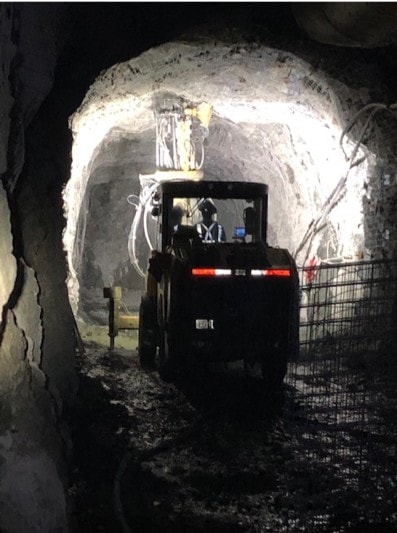
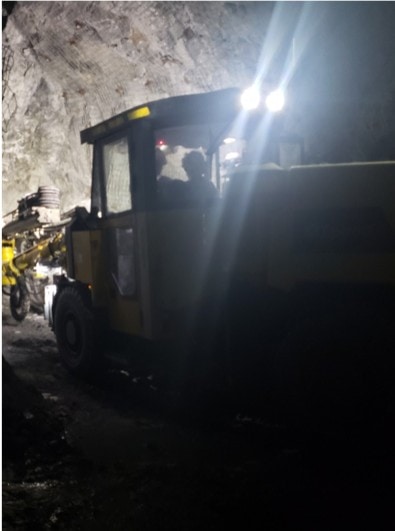
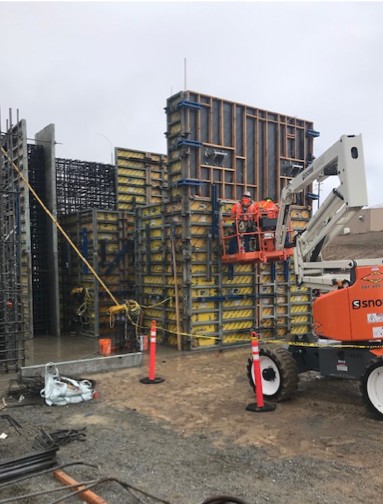
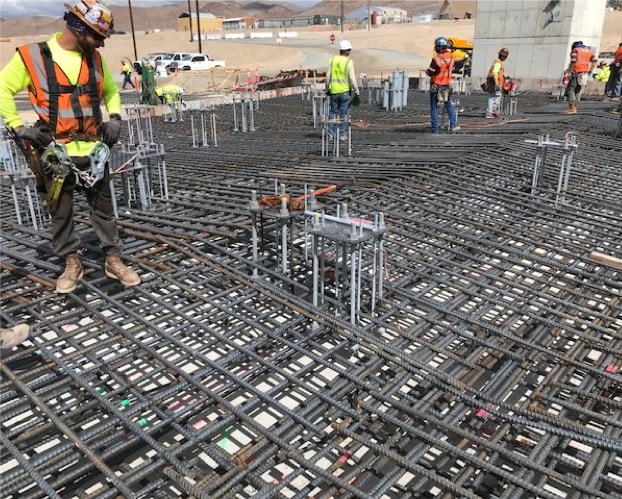
Matt Gili the CEO, President, and Director of Nevada Copper (TSX: NCU | OTC: NEVDF) sits down with Maurice Jackson of Proven and Probable to discuss the value proposition of Nevada Copper, which is on target for U.S. production in Q4 2019. Mr. Gili, provides updates on the flagship Pumpkin Hollow Project, which hosts both an underground and open-pit deposits. We provide an overview on the supply an demand fundamentals on Copper, where a prudent speculator may position themselves to take advantage of the copper supply deficit.

VIDEO

AUDIO

TRANSCRIPT

Source: Maurice Jackson for Streetwise Reports  (3/18/19)

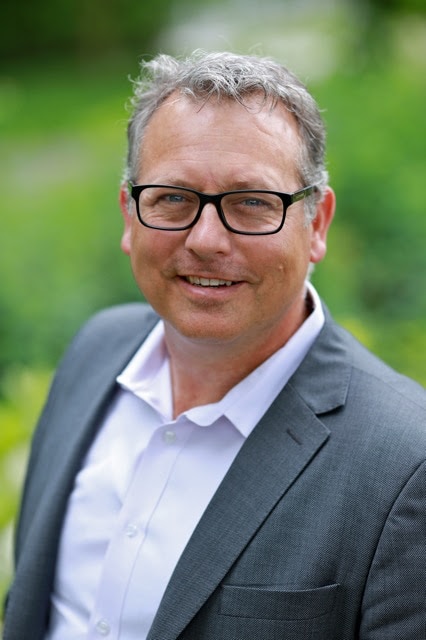
Maurice JacksonMatt Gili, CEO of Nevada Copper, talks with Maurice Jackson of Proven and Probable about his company’s progress in beginning copper production by the end of the year.

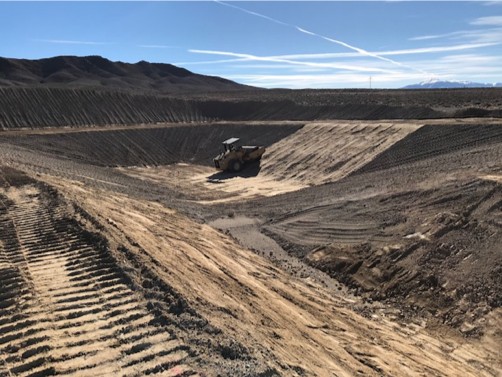
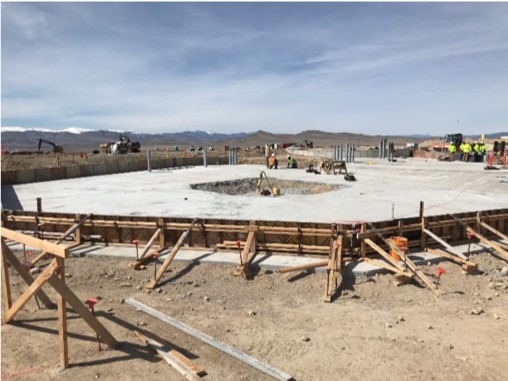
Pumpkin Hollow

Pumpkin Hollow
Maurice Jackson: Joining us for a conversation is Matt Gili, president, CEO and director of Nevada Copper Corp. (NCU:TSX), which is on target to U.S. copper production by Q4 2019.
Nevada Copper has a number of successes to share with reader. But, before you share the unique value preposition of Nevada Copper, Mr. Gili, for readers who may not be familiar with the supply and demand fundamentals regarding copper, please provide us with a 10,000-foot overview.

Matt Gili: When you look at the copper fundamentals, we see a very steady and predictable increase in demand of copper, modest amount, 1.5% per year. We see the move towards electrification of vehicles consuming more copper. We see other things that are offsetting that, but overall, a steady predictable 1.5% increase in the global demand for copper. Where the story really gets exciting, from the Nevada Copper standpoint, is with regards to the supply for copper. What we’re seeing is a lot of restrictions in future supply. We’re seeing a lot of difficulties on bringing on a future supply and backed up by work done by Wood Mackenzie and others, we’re projecting that by 2025, the world will be in a supply deficit of upwards of 6 million tonnes of copper per year. This just really supports what we’re doing in Nevada Copper in setting up the next copper mine.
Maurice Jackson: Now that we have an overview of the supply and demand fundamentals for copper, Matt, let’s discuss how someone listening may position himself prudently as a beneficiary. For someone new to the story, can you give us a very quick overview of Nevada Copper?

Matt Gili: Certainly. Nevada Copper, who’s Nevada Copper? We have an asset in Nevada called Pumpkin Hollow. This is our chief asset. It consists of two deposits: an underground deposit and an open-pit deposit for copper. We’re currently in the construction phase for the underground project with production from that underground project coming online later this year. I think we’ll talk more about that later. Regarding the open pit, we’re currently in the process of wrapping up the prefeasibility study for the open pit. You’ll see that being published in April of this year. Then, we have a regional land package of well over 15,000 acres that we are looking at really understanding, really unlocking the full value from that land package. That’s really Nevada Copper, building a copper mine coming into production later this year, with a lot of expansion into an open-pit mine, as well as regional exploration.

Maurice Jackson: Let’s provide readers the latest updates on Nevada Copper, as the company has been very proactive on a number of fronts. Please provide us with an update on the construction progress. I would like to begin with the multi-million dollar question, are we on track to enter production in Q4 of this year?
Matt Gili: Yes, Maurice, we are on track to enter production in Q4 of this year. We are very proud of that. The team’s doing a fantastic job. We have construction activities both on surface with Sedgman building the process plants, as well as underground cementation, both sinking shaft and doing lateral development on our main shaft. All that’s coming together very nicely. We are absolutely on track for commissioning of the plant in the fourth quarter of this year.
Maurice Jackson: As Nevada Copper is preparing for production this year, have you increased your staffing to meet the growing demands?
Matt Gili: That’s a really good question and yes, we have. We’ve increased our staffing. It’s an operational readiness question that you’re asking. This is where I want to stress to you and readers that this concept of operational readiness is foremost in our thoughts and how we’re planning for really becoming, not just building a great mine, but operating a great mine. When you look at the staffing, so far, our staffing, by design, is quite modest. We’re looking at a total workforce of Nevada Copper employees of around 30. That is because this is our model, a very lean, efficient operation. We utilize high-quality, expert service providers as necessary, to make sure that we are operating very efficiently.
Maurice Jackson: Is Nevada Copper still actively recruiting and if so, what positions?
Matt Gili: Yes, we are actively recruiting. Most of our positions open are technical and specialist positions, and would be part of the management team. I absolutely encourage anyone interested in what we’re recruiting for to contact the Nevada Copper website. You’ll see the complete listing of opening jobs there, as well as information on how to apply for any of these positions if you’re interested.
Maurice Jackson: Pumpkin Hollow is unique in that you have both an underground and an open-pit mine. Let’s discuss exploration and expansion potential. What initiatives is Nevada Copper taking to optimize the full potential of the Pumpkin Hollow project?

Matt Gili: We are in the process of constructing the underground, which has a large amount of upside potential. We’ll really only explore that upside potential when we’re underground, after we’re in production. We really look forward to updates on that front in 2020, and the reason for that is very simple. It’s just much more efficient to drill out the prospective areas of the underground from the underground; the holes are shorter. It’s just much easier. That’s really where the underground sits right now, in a holding pattern as far as expansion potential. When you look at the open pit, that’s where a lot of great energy is going into expanding the open pit, understanding the open pit better, really getting that ore body knowledge to allow you to build a world-class operation. That is part of the PFS, which is coming out in April of this year.

That PFS will include the drilling campaign that we completed in 2018, the 26 hole drilling campaign. It will include those results in the resource model. That’s going to give you an even better idea of the full potential of the open pit. The real excitement that we have is with regards to the region itself, a large region, relatively unexplored, but with large amounts of historical copper production, as well as great physical outcroppings of copper mineralization. This is really where we’re going to focus our efforts during 2019, to really get a chance, now that we’ve tied up this land package, to understand what we have.
Maurice Jackson: Speaking of the region, there was a regional survey conducted that led you to staking more land. Can you share the results with us?

Matt Gili: We staked a section a land that we refer to as the Teddy Boy Claims. This is about 5,700 acres of land to our northeast. We are very glad to have this in our portfolio. The criteria for that selection was we brought together experts on this region and experts in copper mineralization. They identified that as a really prospective area and where we should be really focused on. We’ve staked that land, secured it for our ability to explore over the next several years.
Maurice Jackson: Does Nevada Copper plan to drill the new area at some point this year?
Matt Gili: We plan on drilling this year. I really haven’t put out the entire drill program for 2019. We’re still pulling that together and analyzing where to best spend the monies we have available for exploration. We would like to drill that this year. Some more prospective holes, really not an in-depth blanket campaign, but probe a few really interesting areas over there and get a better idea for the drill campaign.
Maurice Jackson: It’s one thing to have tonnage and grade, but you must equally have astute business acumen to make the numbers work. Now, Nevada Copper is in discussions regarding an ECA-backed project finance facility to further optimize the balance sheet, as well as lining up a working capital facility and further offtake agreements to improve the economics of Pumpkin Hollow. Please provide us with the details.
Matt Gili: You kind of said it all. I can’t really provide you with any more details, but I can surely stress what you’ve just said, Maurice. We are in discussions with this export, credit agency style backed project financing. This is going to provide us the opportunity to substantially reduce the cost of our debt service, as well as attract strong and robust financial partners for potential future open-pit developments. Something we’re very excited about and it’s part of really creating Nevada Copper as a world-class company.
Maurice Jackson: Let’s get into some numbers. Please share your capital structure.

Matt Gili: The capital structure is well defined. We have $8 million in long-term debt. We have $153 million of cash or cash equivalents. When you look at the financing package specifically for the underground, we’re fully financed, including the working capital facility to take us through operation ramp up. The inputs into that are an equity raise that we did in the middle of last year, as well as a streaming deposit with regards to a stream arrangement on the precious metals strictly from the underground deposit. We also have a $25-million subordinated debt package. Really a standby loan facility that we can use if necessary.
Maurice Jackson: In closing, I have a multilayered question. What is the next unanswered question for Nevada Copper? When can we expect a response? What determines success?
Matt Gili: I would not classify our successful completion of underground construction and bringing them in operation as an unanswered question. That is going to happen, and I’m very proud of the activities that have happened so far. The real unanswered question for the investors out there, is what is the true potential of the open pit? There’s been a lot of great work done, a lot of exploration done, last year. That’s all been incorporated. I’m really going to be excited when the PFS is released and we can share the details of the open pit potential with the public. They are going to be very impressed and they’re going to see the picture. They’re going to see what we see when we get so excited about Nevada Copper.
Maurice Jackson: Speaking of the prefeasibility study, give us a timeline on that, sir.
Matt Gili: We’ll release that in April. I’m being careful. I don’t want to be too specific. It will be in April of this year. Next month.
Maurice Jackson: Mr. Gili, last question. What did I forget to ask?
Matt Gili: Maurice, forget to ask? You’re always very thorough, so I wouldn’t say you forgot to ask anything. What I would say is I want to reiterate something that we at Nevada Copper have been thinking about over the last month. Unfortunately, for the world, the last month has been a month marred with tragedies, with risk and with unexpected events. What we’re really stressing, with Nevada Copper, is the risk management of Nevada Copper. We are an operation that is on private land. We’re not waiting for any permits. We’re not waiting for records of decision. We’re utilizing EPC contractors, who have that fixed price nature, reduced risks. We’re building a dry stack tailing facility. We’ll never have a wet tailing storage facility at Pumpkin Hollow.  We’re doing this all with a proven, experienced team of mine builders and operators. Really wrapping that up, that concept of low risk, risk mitigation. We are going to build and operate the next mine and there’s very little risk to that execution.
Maurice Jackson: Matt, if investors want to get more information about Nevada Copper, please share the website address.
Matt Gili: Absolutely, www.nevadacopper.com. We love to get your input. You’ll see our investor presentationsthere in our latest news. Let us know what you think.
Maurice Jackson: For our audience, we wish to remind you that Nevada Copper trades on the TSX symbol, NCU, and on the OTC symbol NEVDF. For additional inquiries, please contact Richard Matthews at (877) 648-8266 or you may email RMatthews@nevadacopper.com. Nevada Copper is a sponsor and we are proud shareholders for the virtues conveyed in today’s message.
Last but not least, please visit our website, provenandprobable.com, for mining insights and bullion sales. You may reach us at contact@provenandprobable.com.
Matt Gili of Nevada Copper, thank you for joining us today on Proven and Probable.
Maurice Jackson is the founder of Proven and Probable, a site that aims to enrich its subscribers through education in precious metals and junior mining companies that will enrich the world.
Disclosure: 
1) Maurice Jackson: I, or members of my immediate household or family, own shares of the following companies mentioned in this article: Nevada Copper. I personally am, or members of my immediate household or family are, paid by the following companies mentioned in this article: None. My company has a financial relationship with the following companies mentioned in this article: Nevada Copper is a sponsor of Proven and Probable. Proven and Probable disclosures are listed below.
2) The following companies mentioned in this article are billboard sponsors of Streetwise Reports: None. Click herefor important disclosures about sponsor fees.
3) Statements and opinions expressed are the opinions of the author and not of Streetwise Reports or its officers. The author is wholly responsible for the validity of the statements. The author was not paid by Streetwise Reports for this article. Streetwise Reports was not paid by the author to publish or syndicate this article. The information provided above is for informational purposes only and is not a recommendation to buy or sell any security. Streetwise Reports requires contributing authors to disclose any shareholdings in, or economic relationships with, companies that they write about. Streetwise Reports relies upon the authors to accurately provide this information and Streetwise Reports has no means of verifying its accuracy.
4) This article does not constitute investment advice. Each reader is encouraged to consult with his or her individual financial professional and any action a reader takes as a result of information presented here is his or her own responsibility. By opening this page, each reader accepts and agrees to Streetwise Reports’ terms of use and full legal disclaimer. This article is not a solicitation for investment. Streetwise Reports does not render general or specific investment advice and the information on Streetwise Reports should not be considered a recommendation to buy or sell any security. Streetwise Reports does not endorse or recommend the business, products, services or securities of any company mentioned on Streetwise Reports.
5) From time to time, Streetwise Reports LLC and its directors, officers, employees or members of their families, as well as persons interviewed for articles and interviews on the site, may have a long or short position in securities mentioned. Directors, officers, employees or members of their immediate families are prohibited from making purchases and/or sales of those securities in the open market or otherwise from the time of the interview or the decision to write an article until three business days after the publication of the interview or article. The foregoing prohibition does not apply to articles that in substance only restate previously published company releases.
Proven and Probable LLC receives financial compensation from its sponsors. The compensation is used is to fund both sponsor-specific activities and general report activities, website, and general and administrative costs. Sponsor-specific activities may include aggregating content and publishing that content on the Proven and Probable website, creating and maintaining company landing pages, interviewing key management, posting a banner/billboard, and/or issuing press releases. The fees also cover the costs for Proven and Probable to publish sector-specific information on our site, and also to create content by interviewing experts in the sector. Monthly sponsorship fees range from $1,000 to $4,000 per month. Proven and Probable LLC does accept stock for payment of sponsorship fees. Sponsor pages may be considered advertising for the purposes of 18 U.S.C. 1734.
The Information presented in Proven and Probable is provided for educational and informational purposes only, without any express or implied warranty of any kind, including warranties of accuracy, completeness, or fitness for any particular purpose. The Information contained in or provided from or through this forum is not intended to be and does not constitute financial advice, investment advice, trading advice or any other advice. The Information on this forum and provided from or through this forum is general in nature and is not specific to you the User or anyone else. You should not make any decision, financial, investments, trading or otherwise, based on any of the information presented on this forum without undertaking independent due diligence and consultation with a professional broker or competent financial advisor. You understand that you are using any and all Information available on or through this forum at your own risk.
Images provided by the author.
Categories
Base Metals Energy Exclusive Interviews Junior Mining Project Generators

(VIDEO) FISSION 3.0 Prospect Generator in Position for Uranium Turnaround

Ross McElroy the COO and Chief Geologist for Fission 3.0 (TSX.V: FUU | OTCQB: FISOF) sits down with Maurice Jackson of Proven and Probable to discuss the value proposition of Fission 3.0 and their Property Bank. In this interview Mr. McElroy provides the macro economics for uranium and how one may allocate their uranium holdings in a Uranium Project Generator with a Property Bank with projects located in high-grade uranium districts, with proven management and technical team that has a 20 year history of delivering success to shareholders.

VIDEO

AUDIO

TRANSCRIPT


Original Source: https://www.streetwisereports.com/article/2019/03/16/prospect-generator-in-position-for-uranium-turnaround.html
Maurice Jackson: Joining us for a conversation is Ross McElroy, the COO and chief geologist for Fission 3.0 Corp. (FUU:TSX.V; FISOF:OTC.MKTS): A Uranium Project Generator and Property Bank. Ross McElroy, glad to have you back on the program to share the value proposition of Fission 3.0. Before we begin, Ross, I’d like to begin with some basic fundamentals regarding uranium. For someone new to the uranium sector, what is uranium, and where is it used?
Ross McElroy: Uranium is really all about energy. The way we use uranium is for nuclear fuel. That’s basically the fuel that runs reactors.
Globally nuclear power constitutes between 15% and 20% of the electrical requirements. That’s really where the majority of the uranium is used. There is some uranium that’s used for strategic purposes on a country by country basis, more for the Department of Defense reasons. But really, the vast, vast majority of uranium is used to fuel nuclear reactors.
Maurice Jackson: Provide us with some metrics on how abundant uranium is in the Earth’s crust, and correlate that to the average grade that is found versus the grade that is needed to define an ore deposit in a future mine?
Ross McElroy: Well, uranium is actually one of the most abundant elements in the Earth. It’s kind of ubiquitous. You’ll see it throughout the Earth’s crust; there is trace amounts of uranium present primarily in volcanic and igneous rocks and sedimentary rocks.
On a deposit level, there’s actually a number of uranium deposits around the world, in every continent on the planet and in many countries. On a global basis, the average grade of a uranium deposit worldwide is around 0.1 to 0.15% U308.
Now, if you compare that to say, the deposits in Canada, they’re orders of magnitude higher grade in Canada. We’re talking orders of magnitude that are 10 to 20 times that of the global grade.
Although I’ve given you the average grade, most of those deposits at those lower grades, the average grades are really uneconomic deposits. We need grades that are generally much higher than the 0.1%–0.15% if it’s going to be an economic deposit. And that’s what Canada has. Canada has very high-grade deposits, so the economic metrics are just that much more attractive in Canada.
Maurice Jackson: Now that we’ve identified uranium’s utility, what can you share with us from a supply and demand perspective?

Ross McElroy: Well, it’s fairly simple to understand what the demand for nuclear energy is, in other words, uranium. We can just multiply the number of reactors around the world that are currently operating, and the known fuel consumption rate for a 1000 megawatt reactor is just under 500,000 pounds of uranium a year. If we look at the global reactors, there are around 450 reactors around the world. You can see that the need for uranium on an annual basis is around the realm of almost 200 million pounds of uranium.
Maurice Jackson: How does the nuclear plant in Fukushima, Japan, fit into this narrative?
Ross McElroy: Japan historically, up until the Fukushima event in 2011, was one of the main users on a country basis worldwide. Japan I think consumed almost 20% of the world’s nuclear power, in other words, 20% of the world’s annual production of uranium was used to run the Japanese reactors.
In 2011, of course, we had the magnitude 9 earthquake followed by a tsunami, and that’s what damaged the Fukushima facility. Interestingly enough, even with that magnitude of an earthquake and the soon-to-follow tsunami, the reactor still did not breach. The housing that surrounded the reactor was damaged, and this is where some of the radiation leaks came from, but the reactor itself actually held, and so the damage was actually very, very limited and manageable.
What happened is overnight, Japan shut down all of its nuclear reactors, in other words, all 52 reactors I think they had working at that time, went offline. That caused disruption to the supply/demand situation globally.
What’s happened since then is Japan is slowly coming back on. Japan’s alternatives for power are pretty limited as the country doesn’t have very much of its own resources, if any at all. It imports whatever energy that it needs, be it in natural gas now, in nuclear.
It’s important for Japan to be able to operate these factories that they’re running. I mean, it’s an exporting country around the world, so it does have high energy requirements. It also has the requirements for inexpensive power.
Japan is coming back on to the scene as far as nuclear power. There are eight reactors that are currently back up and operating, and 17 reactors that are in the near-term licensing for approval to get them restarted again.
I think the bottom line is, prior to Fukushima, Japan depended on nuclear energy for at least 25% of its electricity demands. I think by the time 2030 approaches, Japan is supposed to be right back up to those same levels. The country is coming back on, it has always been an important major consumer of nuclear power. I think we’ll see it right back to the equation again in the very near future.
Maurice Jackson: Uranium, next to gold, is known as the other yellow metal, and here’s why. Ross, let’s step back to the bull market in uranium. If one was selective with the uranium holdings, they would’ve had generational changes in their portfolio. What was the spot price during the last bull market?

Ross McElroy: Well, in 2002, uranium was around, I don’t know, about $15 a pound. This is on the spot market. That’s what uranium was trading for.
In 2003–2004, we really saw the lift off of the price of uranium. In fact, it peaked at 2007 to around $140 a pound. It went almost a 10-fold increase in the price of the commodity between 2003 and 2007. The peak at 140 didn’t last particularly long, but it had a slower decline until about 2008—2009, it stabilized, and then it peaked back up again.
Really, it was holding steady. I guess this is the point I would want to make, is that we were starting to see a steady state price of between $50 to $70 a pound, and then the Fukushima event hit that we talked about in 2011, and that really threw the whole pricing structure right out the window. We’ve been working on our recovery ever since.
Maurice Jackson: What is the spot price for uranium today?
Ross McElroy: Currently we’re about $28 a pound for uranium. It has recovered; we’re off the bottoms of $17, $18 a pound just a couple of years ago. Uranium is making its way back.
Maybe the important point here to note is we’re still at prices that the majority of mines around the world are not profitable. Even the lowest cost producers are really not operating in an environment where they can make money with uranium prices what they’re at right now.
What we’ve seen is that the supply is starting to be restricted as the producers are taking a lot of that uranium off market; they’re not supplying it to the utilities at this cheap price, because it’s not a working business model to lose money in the long run on the mining of the commodity.
We are seeing an improvement in the price of uranium, and it’s been about a year and a half in the making. It’s gone up from the $18 that I mentioned to about $28 a pound, but it certainly has a lot more room to move upwards even before we can start to get production back online to meaningful levels.
Maurice Jackson: What is that spot price that companies right now, uranium companies I should say, for them to earn their cost of capital? Is the number around $60 for a spot price of uranium?

Ross McElroy: I believe you are correct. We’re seeing prices that globally, they have to be in the $60 to $70 a pound really to bring on any meaningful production.
One of the clues that I look at when we look at the best uranium mines out there, the lowest cost producers, those would be McArthur River deposit in Canada’s Athabasca Basin in Northern Saskatchewan. That is one of the best uranium mines in the world, certainly the largest highest-grade operating mine. Cameco took that offline because of the prices of uranium where they were at, they weren’t making any money on the mining of this deposit.
There are some indications that Cameco won’t turn that mine back on into being a producer until the price of uranium is somewhat north of $40, maybe $45. Something in that realm.
I don’t have an exact number there, but it does tell you that if you’re going to even bring back the best of those deposits, you really need prices that are something of $40 to $45. As we mentioned earlier, the price for many of the other deposits around the world are probably closer to $60 or $70. You can see, there’s still lots of room for improvement.
Maurice Jackson: The current price of uranium does not support the fundamentals. What correlations do you see today that may exceed the returns from the last bull market?
Ross McElroy: Well, it’s sort of an elastic situation. I think that the longer that we keep depressed prices, yet the demand is still there and growing, reactors are being built, the need to fuel these reactors, that’s not stopping.
In fact, it’s growing. You have the primary suppliers of uranium, i.e., the mines that are not supplying it, the longer that the prices are low, the more rapid that climb will be in the price of uranium when it does correct.
I think there’s a possibility, as I’ve heard some analysts call it, a violent reaction upwards to the price of uranium. I think we’re going to see some substantial price increases within some short vision of time, maybe a year or two or three. Something in that realm that I think will be quite meaningful.
We’ll see what happens, but the longer it stays depressed, the more likely and quicker the rise will be when it does come.
Maurice Jackson: Ross, you’ve provided a compelling case on the fundamentals for uranium. I know readers may be asking, how will all of this demand for uranium be met? Mr. McElroy, please introduce us to Fission 3.0.
Ross McElroy: Fission 3.0 is a uranium explorer. This is a company that we spun out of Fission Uranium Corp. (FCU:TSX; FCUUF:OTCQX; 2FU:FSE), our larger company, back in 2014 when we bought out our partner on the Patterson Lake project, and in so doing with that process from that arrangement, we spun out our non-core assets, the more grassroots exploration projects.
We’ve been able to build up an exploration portfolio, primarily focused in the Athabasca Basin. Remember, the Athabasca Basin is Canada’s only producing uranium field. That’s where the McArthur River deposit is, this is where Fission Uranium has the Triple R deposit. There’s some fantastic deposits out there.
That’s what we’re exploring for in Fission 3.0. We’re looking for the next high-grade uranium deposit in the Athabasca Basin.
Maurice Jackson: You referenced that you’re a project generator. There’s a lot of ambiguity regarding project generators. Please share the virtues and why Fission 3.0 took on the project generator business model?
Ross McElroy: Project generators are really all about sharing the risk. In our case, what we do very well is pick ground. We’ve been able to strategically stake ground in the Athabasca Basin, we’ve made discoveries on two of our properties, the first one in the company called Fission Energy that we made the discovery at our Waterbury Lake property, and later on in Fission Uranium Corp on our PLS property.
That have been situations where we’ve had joint-venture partners sharing the risks, sharing the costs with others. To use the model, what we do is we use our brands and other peoples’ money. That’s really what we’re good at, that’s basically the model that we have.
We have a very highly trained technical team that’s exceptional at picking out high-quality projects. We attract other people who are looking to get into the uranium business, looking to partner up with a team such as ours and join us for the ride to make a discovery.
It’s really all about sharing risk. That’s really what the project generator model does. It’s our land, and we partner with good quality people that can fund a project, and that’s how they earn into it as well.
Maurice Jackson: Do you currently have a joint-venture partner? If yes, who and what are the terms of the relationship?
Ross McElroy: We have had joint-venture partners in the past, and very successful ones. As I mentioned earlier on our Waterbury project, we had a partner with the Korean utility called KEPCO. It earned in by spending a certain amount of money on the property each year over the course of a three-year period.
What we did with that, we were able to make a discovery, using the money in that project, we made a discovery, built up the resource estimate on there, and eventually sold that asset. That was how our shareholders were able to take advantage of our monetizing on the property.
I guess we could say the same at the PLS project, which we now own 100% of it, but that was also a partnership. We shared in the risk early on and in the money early on with our partner. We eventually bought them out in 2014. That was another example of a successful joint venture partnership.
Each one of the deals would be a little bit different from each other. It is a model that we think works very well. I will note that in our property down in Peru as well, we have a partnership that we’re still looking to finalize the deal. This is one where another group has approached us, said it’s interested in the potential of a property down in Peru. It will spend a significant amount of money having us as the operator. Hopefully we’ll make a discovery down in Peru as well.
Maurice Jackson: Well, you’ve just alluded to my next question. Fission 3.0 has 18 projects in its project bank. Now, it is strategically located in premier, high-grade uranium districts in Canada and Peru. Mr. McElroy, introduce us to the Fission 3.0 Project Bank (click here).

Ross McElroy: We have 18 properties in the Athabasca Basin. Our properties, we think that everywhere in the Athabasca Basin has the potential to host high-grade uranium projects.
One of the keys that we seek to identify are deposits that will be shallow. In other words, the closer a deposit is to surface, the easier it is to build a case that this could be a project that could go into production. It’s an easier mine to develop the closer it is to the surface.

Really deep deposits are challenging. They still exist, but they’re challenging. Eventually they cost more money to find and cost more money to get out of the ground. They’re just another level of challenge.
If you look at our 18 properties, they’re all in and around the edge of the Athabasca Basin, where we’ve had a great deal of success finding near-surface mineralization.
Our PLS project that hosts the Triple R deposit in Fission Uranium is a great example of a near-surface deposit. The mineralization starts at 50 meters below the surface, so 150 feet below the present-day surface is where the high-grade mineralization starts. That makes it a potentially open-pit deposit, which is generally low cost and gives you a lot of flexibility.
This is the sort of thing that we’re looking for in Fission 3.0. We’ve got very good properties that are in known mining districts, conversely, we have a good portfolio of ground around the southwest side of the basin where our PLS project in Fission Uranium is hosted, and also NexGen’s Arrow deposit, it’s all in that same area. We have the significant land package that surrounds that area.

We also have a good strategic land package in and around the Key Lake area on the southeast side of the basin. This has been, and still currently is the hot bed of uranium mining in Canada right now. This is the side of the basin where the McArthur River and Cigar Lake deposits are located.

McArthur shut down for economic reasons waiting for higher uranium prices. It was an operating mine up until about a year ago, and Cigar still is in operation. You’ve also got the Key Lake mine.
It’s a strategic area to have a good land package. We think there’s lots of opportunities in and around land in that area to make a new discovery.

And probably third for us is the land package that’s up in the northwest side of the basin, in the old uranium city Beaverlodge district where uranium mining in Saskatchewan first got started back in the 1950s and was the going concern back in the ’50s and the ’60s, I think there were about 52 operating mines up in that area, pretty small scale most of them, but still lots of high-grade uranium. That’s an area where we think that there’s still plenty of exploration potential.
Between all those areas, we’re going to be active and we’re going to be looking for the next high-grade uranium deposit in Saskatchewan.
Maurice Jackson: Speaking of being active, is there active drilling going on right now in these projects?
Ross McElroy: There is active drilling. We did drill in the southwest side of the basin. We were drilling in January on our PLN project. That project is just immediately north of Fission Uranium’s PLS project.
You’re really talking about the same area where the latest discoveries have been found, where you’ve got the Triple R deposit, you’ve got NexGen’s Arrow deposit. These are two of the best new deposits that have been found in the Athabasca Basin in the last 15 years.
We have a package around there called PLN, and we did drill six holes in there earlier this year. It has the potential to host another one of these fantastic deposits, so we are going to continue looking there. We see all the signs present that tell us that this is where we’ll make that discovery.
As we’re speaking right now, we’re drilling over in the Key Lake area that I described earlier. This is over on the southeast side of the basin, about 200 kilometers to the east of the PLS drilling. That is a program where we’ll drill probably eight or nine holes, just south of the Key Lake Mill and the old historical Key Lake deposits. There’s areas of activity there. We’ll continue drilling throughout the rest of 2019 on a number of our projects.
Fission 3.0 is active. We were able to raise some significant money early in the year, in late 2018. We’re going to be active. This is how we’ve been successful in the past, is by being aggressive, looking in places where people probably haven’t looked for a while or never even thought to look, and putting our technical team to work. Yes, you’ll see pretty good news flow out of Fission 3 this year.
Maurice Jackson: Ross, let’s expand the narrative on the project bank portfolio and go south into Peru. What can you share with us there?

Ross McElroy: Peru is a really interesting area. Where our projects are is called the Macusani Plateau, located in southern Peru, near the Bolivian border. The Macusani Plateau has shown at least over 100 million pounds in near-surface uranium deposits.

There’s a company down there that’s quite dominant called Plateau Energy. Plateau has been able to stake a lot and consolidate a land package in the area, and consolidated all these old deposits. It has amassed around 100 million pounds of uranium in these uranium deposits.

However, even more significant, Plateau made a discovery of high-grade lithium in the same area, and in fact, that’s within five kilometers of our southern property boundary on our Macusani plains. Not only do we have the potential now to host near-surface uranium deposits, and we have shown in fact that we do have mineralization on our property for uranium, we’ve mapped it, we’ve drilled, we’ve trenched and found high-grade uranium, but now the potential’s there for hosting high-grade lithium.
This is really a new dimension that we have down in that area, that we wouldn’t have had say, two or three years ago when we were last down drilling. You’ve got uranium, and now we have lithium. It’s a very interesting up-and-coming area as well.
Maurice Jackson: Switching gears, Fission 3.0 has the right projects in the right place at the right time. But that’s only part of the story. Equally important are the people that are responsible for increasing shareholder value. Mr. McElroy, please introduce us to your board of directors.
Ross McElroy: Thank you, and I appreciate that. We do have a very successful team. Our founder of Fission 3.0 is also the same CEO and founder of Fission Uranium, and previously Fission Energy before that, and Strathmore.
Dev Randhawa has been involved in this company right from the get-go in its first iteration back in 1996, and also heading up Fission 3.0. Dev is the longest running CEO in the uranium sector.
Myself, I’ve been involved with Dev 12, 13 years now. We’ve had a great successful relationship. We’re able to raise money, raise attention, put that money to work, make discoveries, and basically build shareholder value right from the bottom up.
This is the group that I think, we’ve been able to deliver in the past, and we’re going to be able to deliver shareholder value as we move forward in this much improving uranium sector.
A lot of the same players that we’ve had all the way along, still keep also in the Fission 3 group.
Maurice Jackson: Who is on your management team?

Ross McElroy: The management team is composed of our CEO Dev Randhawa and chairman. I am the chief operating officer, and also the chief geologist. We have maintained the same structure that we have in Fission Uranium, is the same that we have in Fission 3.0. It’s a fairly lean team. Phil Morehouse is president of Fission 3.0. We kept a pretty lean mean machine in Fission 3.
Don’t forget, we’ve had up until just recently in the last six months, it’s been a very quiet company, there hasn’t been a lot of exploration activities in the uranium sector. I think as we start to ramp up, with our level of activity increasing, we’ll start to draw more and more people into roles and developing roles within the company as we begin to be active, get out and start marketing the story more, get on the ground and back that up with real results, we’re going to continue to build our team.
Maurice Jackson: Before we move on to your impressive technical team, in the natural resource basis, why is it wise to follow proven winners? Ross, you alluded to it earlier, you and CEO Dev Randhawa have a proven pedigree of success. How were shareholders rewarded as far as returns for their loyalty to sticking with your team?
Ross McElroy: Well, if you owned the original company at the beginning, which would’ve been Strathmore Minerals, and you’d held on it to all the way throughout, over the last 20 years since about 1996, 97, you’d probably own about five different companies right now.
What’s happened is we’ve moved on to a new phase, we’ve made discoveries, advanced projects, sold different projects to different groups. What we’ve been able to do is form new companies, split off new companies in what they call a butterfly transaction.
You have shares in the new company, still maintain your shares in the old company, so you would’ve received essentially what would look like dividends in the way of different shares for five different companies since that time. The shareholders that have been loyal and sticking with us would’ve succeeded quite handsomely all the way along.
Maurice Jackson: Your technical team is exceptional. I had an opportunity to meet them in the summer of 2016 at the site visit there. Please, introduce us to them.
Ross McElroy: We’re very, very proud of this group. This has been the team we’ve had, the same core group of people with us since 2010. With that same group, we were able to make our discovery on the Waterbury Lake project, and then followed up in 2012 with the discovery of PLS. It’s the same group that is very core and important to us in Fission 3.0.
I do head up the team and the technical group, so I would be the team leader or chief geologist for the technical team. My right hand guy is Raymond Ashley, he’s the VP of exploration. Ray is an excellent geoscientist who I’ve had the pleasure to work with for over 30 years in this sector, so we’ve been working pretty close together. Definitely a proven mine finder.
We’ve basically held the same group of people together on the project managers, all the structural scientists, geochemists. We’ve kept the same core group together over the last almost 10 years or so.
To me, that’s really the key. You want a team that works together well, good chemistry with each other, the ability and the environment to think outside of the box. Really, the goal for each and every one of us is to responsibly make world-class discoveries. That’s what we’re all about.
We’ve got an excellent team. All the key people are listed on the website. You’ll be able to go there and see the roles of the various groups there in the technical team, but there’s about seven or eight of us that have been able to be what I consider the core team for the last decade or so.
Maurice Jackson: Let’s get into some numbers. Please share your capital structure.

Ross McElroy: In Fission 3.0, we have 142 million shares outstanding. We were able to raise a significant amount. We have just under $7 million in the treasury right now, that’ll allow us to be active over the next two years or so.
Maurice Jackson: What is your burn rate?
Ross McElroy: The burn rate, because it’s exploration, it’s pretty discretionary spending. We have $7 million that we have in the treasury right now, that’ll certainly carry us over the next two to three years of pretty aggressive exploration spending on our key projects. We can dial that kind of number up, and we can dial it back as conditions warrant. That’s the benefit of being in exploration.
The burn rate is actually pretty minimal. In other words, we run a pretty lean shop as far as the number of management and corporate costs. Really, the majority of the costs are exploration spending, which is really entirely discretionary.
Maurice Jackson: How much debt do you have?
Ross McElroy: We have no debt. We’ve not taken on any debt. Basically, the money that we raise have been through equity share offerings. No debt in Fission 3.0.
Maurice Jackson: Who are your major shareholders? What is their level of commitment?
Ross McElroy: When we spun off Fission 3.0 back in December of 2014, it was the same shareholders that were shareholders of Fission Uranium, were the same shareholders in Fission 3.0. We would’ve had a lot of the same loyal, large shareholders, including JP Morgan, even investment from others that we’ve had along the way. It’s been the same loyal group.
We have significant new shareholders now with the financing that we did back in 2018, which was led by the Sprott Global Resources Group out of California. I think we have some new players back to the game, but we have a lot of shareholders that have been with us over the long haul.
These are people that have a good vision of the uranium sector. They know that the good times are around the corner. It’s a point that we believe really strongly, and we think that the sector is improving a great deal.
This is how our loyal shareholders are going to be rewarded, by being a much better market with an aggressive team like Fission 3.0, and the new shareholders will probably be long term loyal shareholders too if we’re successful and able to build value for them as well.
Maurice Jackson: What is the float?
Ross McElroy: Fully diluted, we have 227 million shares. We’ve got shares outstanding, we’ve got options and warrants that we’re a part of financing as well, so 227 million shares out in total. We trade around 240,000 shares a day, I think that’s our average volume.
Maurice Jackson: Multi-layered question. What is the next unanswered question for Fission 3.0? When can we expect a response? What determines success?
Ross McElroy: Well, we are going to be successful through work. We know that a better market should buoy the price up of everybody involved in the nuclear sector. They’re starting to get some life back in the exploration world.
Really, we’ve always built value by our success. We’ve been successful with making discoveries. We now have the money, we have the team, we’re putting them to work. I would look to us as being one of the most dynamic uranium explorers out there. That’s something that I think people can follow, they can see our news release cycle, they’ll see how we’re marketing our story, and just look at the results. I think they’ll speak for themselves.
We’re looking at our projects, we’ll be active throughout the calendar year. I think the news flow will be very strong and steady. People that are interested in following the company will always see that there’s a continuing narrative out there. We want to take advantage of this and improve the uranium market, the fact that we are well financed, and we have the properties that we want to explore. I think there’s a very good opportunity for readers to look at Fission 3.0 as a sector leader in the uranium exploration business.
Maurice Jackson: Mr. McElroy, last question. What did I forget to ask?
Ross McElroy: I think we’ve covered a lot of ground here, and a lot of important ground. One of the takeaways that I want readers to know is we really do believe in the nuclear sector. We think that we have turned the corner and that conditions are improving.
If people are looking to invest in the uranium sector, I think it’s important for them to look at a group that has done it before. Your track record is very indicative of what your future has the potential to look like. I always find myself, when I’m investing, I like to back teams with a proven track record.
We have that in our group. We’ve got an exceptional management team. We’ve done it before. We’ve been able to capitalize on our discoveries by selling assets. We have a unique technical team that has the ability to make discoveries.
So better sector, very good team. Strong management. Those are the ingredients we need to be successful.
Maurice Jackson: Ross, for someone listening that wants to get more information about Fission 3.0, please share the website address.
Ross McElroy: Our website address is www.fission3corp.com.
Maurice Jackson: For direct queries email ir@fission3corp.com, or you may call (778) 484-8030. Fission 3.0 trades on the TSX:V, symbol FUU, and on the OTC, symbol FISOF.
For audience, we’ve been proud shareholders of Fission 3.0 since 2014. Last but not least, please visit our website, provenandprobable.com, for mining insights and bullion sales. You may reach us at contact@provenandprobable.com.
Ross McElroy of Fission 3.0, thank you for joining us today on Proven and Probable.
Maurice Jackson is the founder of Proven and Probable, a site that aims to enrich its subscribers through education in precious metals and junior mining companies that will enrich the world.
Disclosure: 
1) Maurice Jackson: I, or members of my immediate household or family, own shares of the following companies mentioned in this article: Fission 3.0. I personally am, or members of my immediate household or family are, paid by the following companies mentioned in this article: None. My company has a financial relationship with the following companies mentioned in this article: None. Proven and Probable disclosures are listed below.
2) The following companies mentioned in this article are billboard sponsors of Streetwise Reports: None. Click herefor important disclosures about sponsor fees.
3) Statements and opinions expressed are the opinions of the author and not of Streetwise Reports or its officers. The author is wholly responsible for the validity of the statements. The author was not paid by Streetwise Reports for this article. Streetwise Reports was not paid by the author to publish or syndicate this article. The information provided above is for informational purposes only and is not a recommendation to buy or sell any security. Streetwise Reports requires contributing authors to disclose any shareholdings in, or economic relationships with, companies that they write about. Streetwise Reports relies upon the authors to accurately provide this information and Streetwise Reports has no means of verifying its accuracy.
4) This article does not constitute investment advice. Each reader is encouraged to consult with his or her individual financial professional and any action a reader takes as a result of information presented here is his or her own responsibility. By opening this page, each reader accepts and agrees to Streetwise Reports’ terms of use and full legal disclaimer. This article is not a solicitation for investment. Streetwise Reports does not render general or specific investment advice and the information on Streetwise Reports should not be considered a recommendation to buy or sell any security. Streetwise Reports does not endorse or recommend the business, products, services or securities of any company mentioned on Streetwise Reports.
5) From time to time, Streetwise Reports LLC and its directors, officers, employees or members of their families, as well as persons interviewed for articles and interviews on the site, may have a long or short position in securities mentioned. Directors, officers, employees or members of their immediate families are prohibited from making purchases and/or sales of those securities in the open market or otherwise from the time of the interview or the decision to write an article until three business days after the publication of the interview or article. The foregoing prohibition does not apply to articles that in substance only restate previously published company releases.
Proven and Probable LLC receives financial compensation from its sponsors. The compensation is used is to fund both sponsor-specific activities and general report activities, website, and general and administrative costs. Sponsor-specific activities may include aggregating content and publishing that content on the Proven and Probable website, creating and maintaining company landing pages, interviewing key management, posting a banner/billboard, and/or issuing press releases. The fees also cover the costs for Proven and Probable to publish sector-specific information on our site, and also to create content by interviewing experts in the sector. Monthly sponsorship fees range from $1,000 to $4,000 per month. Proven and Probable LLC does accept stock for payment of sponsorship fees. Sponsor pages may be considered advertising for the purposes of 18 U.S.C. 1734.
The Information presented in Proven and Probable is provided for educational and informational purposes only, without any express or implied warranty of any kind, including warranties of accuracy, completeness, or fitness for any particular purpose. The Information contained in or provided from or through this forum is not intended to be and does not constitute financial advice, investment advice, trading advice or any other advice. The Information on this forum and provided from or through this forum is general in nature and is not specific to you the User or anyone else. You should not make any decision, financial, investments, trading or otherwise, based on any of the information presented on this forum without undertaking independent due diligence and consultation with a professional broker or competent financial advisor. You understand that you are using any and all Information available on or through this forum at your own risk.
Images provided by the author.